
Underwater Volcano axial Seamount Expected to Erupt in Late 2026
Scientists have revised their prediction for the next eruption of Axial Seamount, the most active underwater volcano in the northeastern Pacific Ocean, now anticipating activity in mid-to-late 2026. This is a shift from earlier estimates that pointed towards a 2025 eruption.
Located off the coast of Oregon along the Juan de Fuca Ridge – a boundary where tectonic plates are moving apart – Axial Seamount is heavily monitored due to its frequent activity.Historical eruptions have occurred in 1998, 2011, and 2015.
Researchers base their predictions on measurements of seafloor inflation, or swelling, caused by rising magma. While inflation reached 95% of the level observed before the 2015 eruption in 2024, it later decreased in April 2025. This slowdown has prompted scientists to adjust their models.
Bill chadwick of Oregon State University explains that the threshold for triggering an eruption appears to be higher than initially thought, potentially requiring an additional 20 centimeters of inflation. This phenomenon is similar to observations at Mount Krafla in Iceland, where previous eruptions have increased the density of the Earth’s crust, requiring greater pressure for magma to break through.
A team from the Geohazards Crisis Observatory is conducting ongoing experiments to refine real-time eruption prediction methods. They are utilizing physics-based models designed to be transparent and minimize bias. To ensure data integrity, monthly predictions are cryptographically hashed and archived before public release.
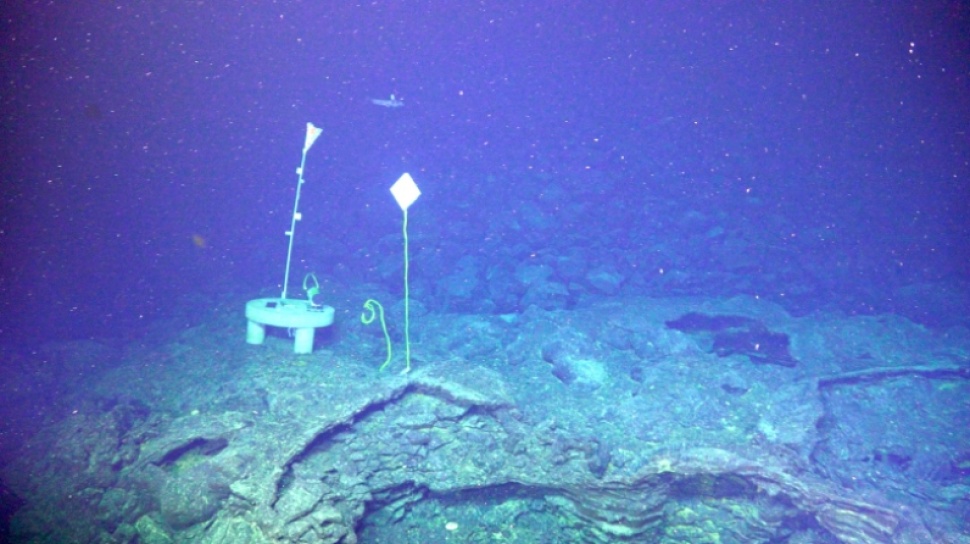
Axial Seamount is equipped with extensive monitoring equipment, including seabed pressure sensors and seismometers that continuously record earthquake activity and surface changes.These detailed observations are crucial for identifying pre-eruption signals.
while preventing eruptions is impossible, accurate predictions are vital for mitigating risks to shipping, marine research, and underwater infrastructure. Scientists emphasize the broader goal is to develop a robust prediction framework applicable to volcanoes globally, improving volcanic disaster preparedness. The ongoing work at Axial Seamount aims to build public confidence in scientific forecasting within the field of oceanic volcanology.
