
Music Therapy Offers Healing Space for Boston’s Chinese elders
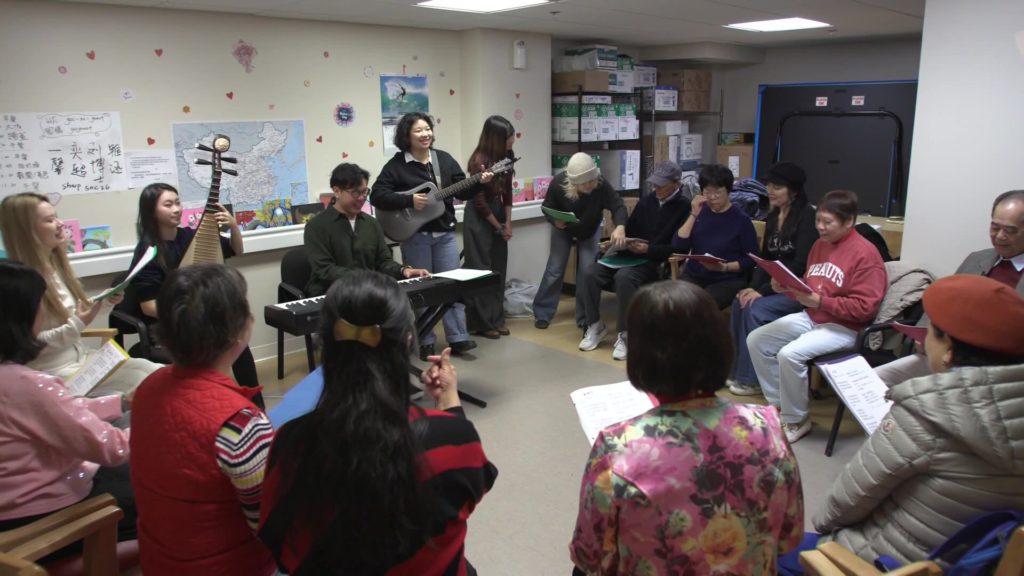
BOSTON,MA – A unique music therapy programme at the Greater Boston Chinatown Golden Age Center is providing a vital outlet for Chinese elders grappling with past trauma and isolation,offering a pathway to improved emotional wellbeing and cognitive function.The initiative, spearheaded by students and faculty from Berklee College of Music, is gaining recognition as a promising model for culturally sensitive mental health care within immigrant communities.
For many first-generation Chinese immigrants, experiences of war, famine, and political upheaval remain deeply embedded, frequently enough unspoken. Coupled with the challenges of adapting to a new culture and navigating language barriers, these traumas can lead to notable mental health concerns, especially among the elderly. Recognizing this need, Berklee students are applying music therapy techniques – focusing on singing, rather than dance – to help participants process emotions, reconnect with their heritage, and build community.
“A lot of music therapy goals, we aim to make them transferable,” explains Jie wen Ong, a 21-year-old Berklee student from Hong Kong and Singapore, who helps lead the sessions as part of her clinical training. “What that means is that we design goals in the session, such as, preventing cognitive decline, or engaging with participants, or increasing happy emotions. And through that, we hope that participants would transfer those skills into their own life.”
The program’s approach integrates psychology and music,allowing participants to explore and express feelings through sound. Irene Chow,a 23-year-old Berklee student majoring in piano and music therapy,describes the power of this connection: “Music therapy brings our psychology and music together. As I play piano, I can feel really different emotions through playing different chords. And I want to let the clients…feel different emotions through music as well. I think that’s so powerful.”
Researchers are increasingly focused on understanding the physiological impact of music on the brain. Ming Yuan Low, a professor at Berklee College of Music, highlights the ongoing neuroscience studies: “There’s so much we are working on right now to understand what is happening to us physiologically as human beings when we’re experiencing music, and we haven’t even scratched the surface yet.”
Currently, Berklee is prioritizing patient-centered care, focusing on understanding and responding to the specific needs and desires of the community it serves. This small but impactful program represents a growing field, demonstrating the potential of music therapy to enrich lives and address the unique mental health challenges faced by immigrant populations.
