
Diamond-Based Quantum sensors Achieve Unprecedented Sensitivity
Researchers at Princeton University have developed a novel quantum sensor utilizing diamonds with artificially created defects, achieving a sensitivity 40 times greater than previous comparable techniques. The findings,recently published in Nature,open new avenues for observing and measuring extremely subtle magnetic fields and nanoscale structures.
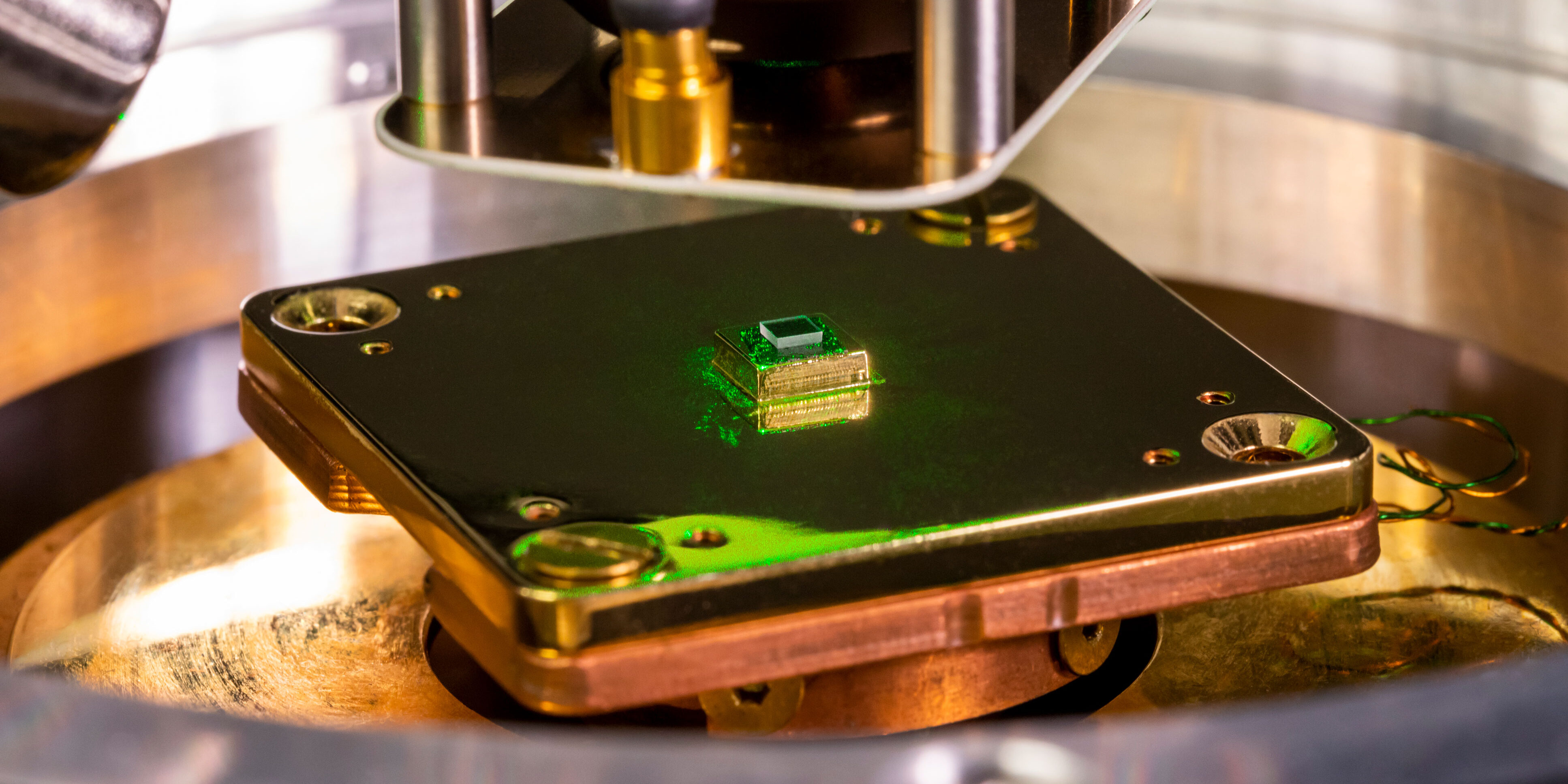
The core of this advancement lies in exploiting ”nitrogen vacancy” (NV) centers – tiny imperfections within the diamond’s atomic lattice, created by missing atoms. Thes defects, present in lab-grown diamonds roughly the size of a grain of sea salt, are highly responsive to magnetic fields.
Traditionally, NV centers are used as individual measurement points. The Princeton team innovated by strategically implanting two NV centers in extremely close proximity, inducing a state of quantum entanglement between them.This entanglement, a phenomenon described by Einstein as ”spooky action at a distance,” causes the two defects to act in perfect synchronicity, regardless of their separation.
this synchronized measurement allows for a unique form of signal processing. Because the entangled sensors measure at slightly different locations, they can effectively “triangulate” and pinpoint disruptive magnetic fluctuations, isolating them from the desired measurement signal. This capability reveals magnetic fluctuations previously obscured by statistical noise.
“You have a entirely new playground here,” explained Nathalie de Leon, professor of electrical engineering and data technology and lead author of the study. “With conventional techniques you just can’t see these things.”
The breakthrough is notable as it enables the direct examination of real materials, rather than relying on complex, artificial atomic arrangements.Philip Kim, an experimental physicist at Harvard not involved in the research, emphasized this point: “This is a whole new way of running this quantum sensor that allows us to study something that hasn’t been possible before…Therein lies its significance.”
Kim is already utilizing the new sensor in her own research, focusing on materials like graphene and superconductors, aiming to unlock their potential for wider applications.
the original publication can be found here: https://www.nature.com/articles/s41586-025-09760-y
