
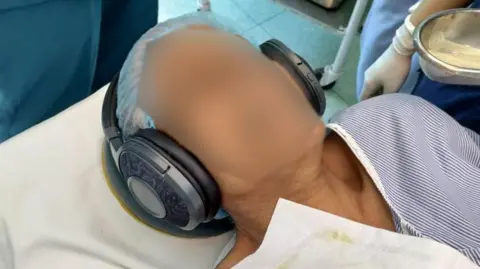
Music Soothes Patients During surgery, Indian Study finds
New Delhi – An Indian study has revealed that playing music too patients under anaesthesia can significantly reduce the amount of medication required during surgery, leading to smoother recoveries and lower stress levels. The research, conducted by a team led by Dr. Wadhawan and Dr. Husain, marks a potential shift towards more holistic and patient-centered surgical care.
The findings, stemming from a pilot study of eight patients and a subsequent full trial involving 56 adults randomly assigned to two groups, demonstrate that patients exposed to music required lower doses of both propofol and fentanyl. Researchers observed improved blood pressure control, reduced cortisol (a stress hormone), and a generally more stable recovery process in the music group. “Since the ability to hear remains intact under anaesthesia,” the researchers wrote in their published work, ”music can still shape the brain’s internal state.”
The study builds on the long-understood phenomenon that brain activity doesn’t simply cease under anaesthesia. While conscious recall is typically absent,the auditory pathway remains active. “you may not remember the music, but the brain registers it,” explained Dr. Wadhawan. This suggests the unconscious mind is capable of processing and responding to external stimuli,possibly mitigating the stress associated with surgery.
Instances of “intraoperative awareness” – where patients recall fragments of operating room conversations while under anaesthesia - have long intrigued scientists, supporting the idea that the brain continues to function, albeit at a subconscious level, during surgical procedures. If the brain can register and remember stressful experiences during surgery, researchers reasoned, it could also benefit from positive stimuli like music.
Music therapy is already established in fields like psychiatry, stroke rehabilitation, and palliative care. Though, its application within the highly technical environment of anaesthesia represents a novel approach. Dr. Husain emphasized the potential for this intervention to “humanise the operating room.”
The research team is now preparing further studies to explore music-aided sedation, building on these initial findings. The implications of this research extend beyond simply reducing medication; it suggests a simple,non-pharmacological intervention could significantly improve surgical wellbeing and potentially reshape hospital protocols. The data indicates that even while the body is at rest and the mind is asleep, gentle auditory stimulation can contribute to the healing process.
