
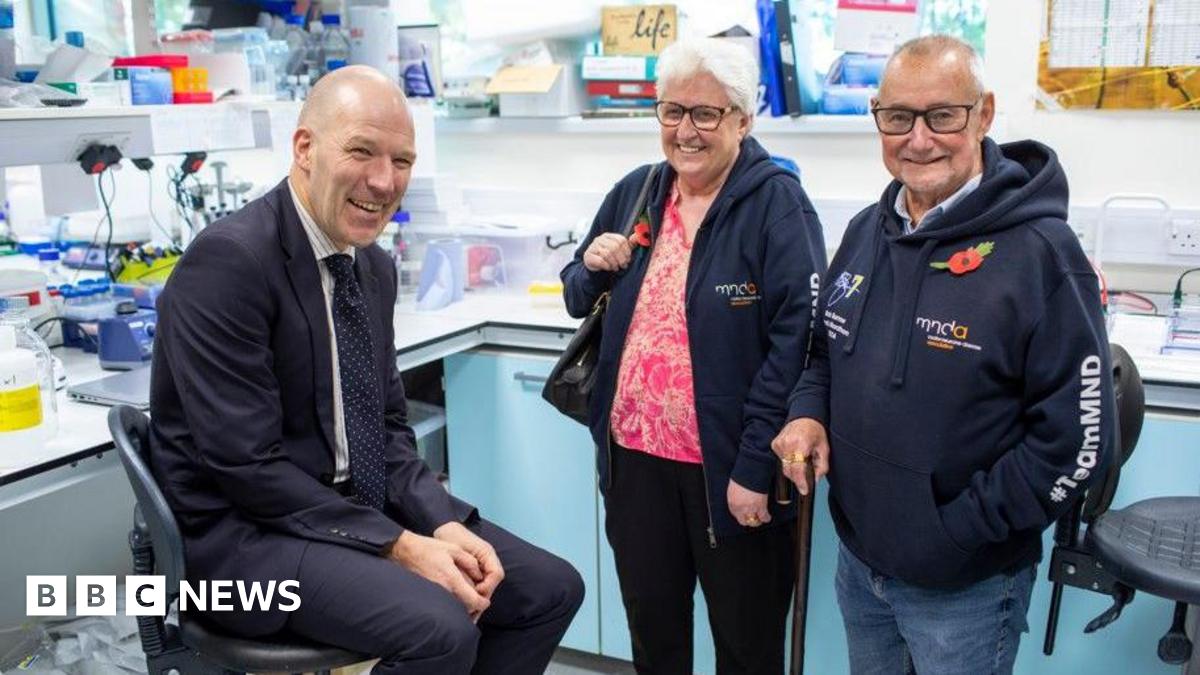
Sheffield Neurologist Awarded First Rob Burrow Professorship in Fight Against Motor Neurone Disease
Sheffield, UK – A leading neurologist at the sheffield institute for Translational Neuroscience has been awarded the inaugural Rob Burrow professorship, a newly established position funded by the MND Association to accelerate research into motor neurone disease (MND). The professorship recognizes the dedication of former rugby league player Rob Burrow, who was diagnosed with MND in 2019 and has since become a powerful advocate for research into the debilitating condition.
Dr. Cooper-Knock’s research will focus on understanding the essential origins of MND,shifting the focus from solely examining the motor neurons themselves to investigating how these cells interact with surrounding tissues. “Instead of only looking at the motor neurons – the cells that die – we’re studying how they interact with every other cell around them,” explained Dr. Cooper-Knock. “Focusing on the whole picture is our best chance to find the hidden gene faults which can then become new drug targets to slow down or treat MND.”
The MND association hopes this novel approach will unlock new avenues for treatment and ultimately, a cure for the disease. Dr. Brian Dickie, chief scientist at the MND Association, stated, “this award recognises Rob’s drive to find effective treatments for MND and his determination to accelerate MND research so no one else would have to face the same diagnosis.”
The professorship is a direct result of the extensive fundraising efforts led by Rob Burrow and his family. Geoff Burrow, rob’s father, expressed his pride, saying, “Rob worked so hard to fundraise to help find treatments and I am so proud this Professorship, funded by the MND Association, is in his name.” He added that continued funding for research provides the family with hope “that one day there will be an end” to MND.
MND, also known as amyotrophic lateral sclerosis (ALS), is a progressive neurodegenerative disease that affects the motor neurons in the brain and spinal cord, leading to muscle weakness, paralysis, and eventually, respiratory failure. There is currently no cure for MND, but research is ongoing to develop effective treatments and improve the quality of life for those living with the condition.
