
Unlocking Ancient Secrets: New Bacteriophage Structure Offers Hope in Fight Against Antibiotic Resistance
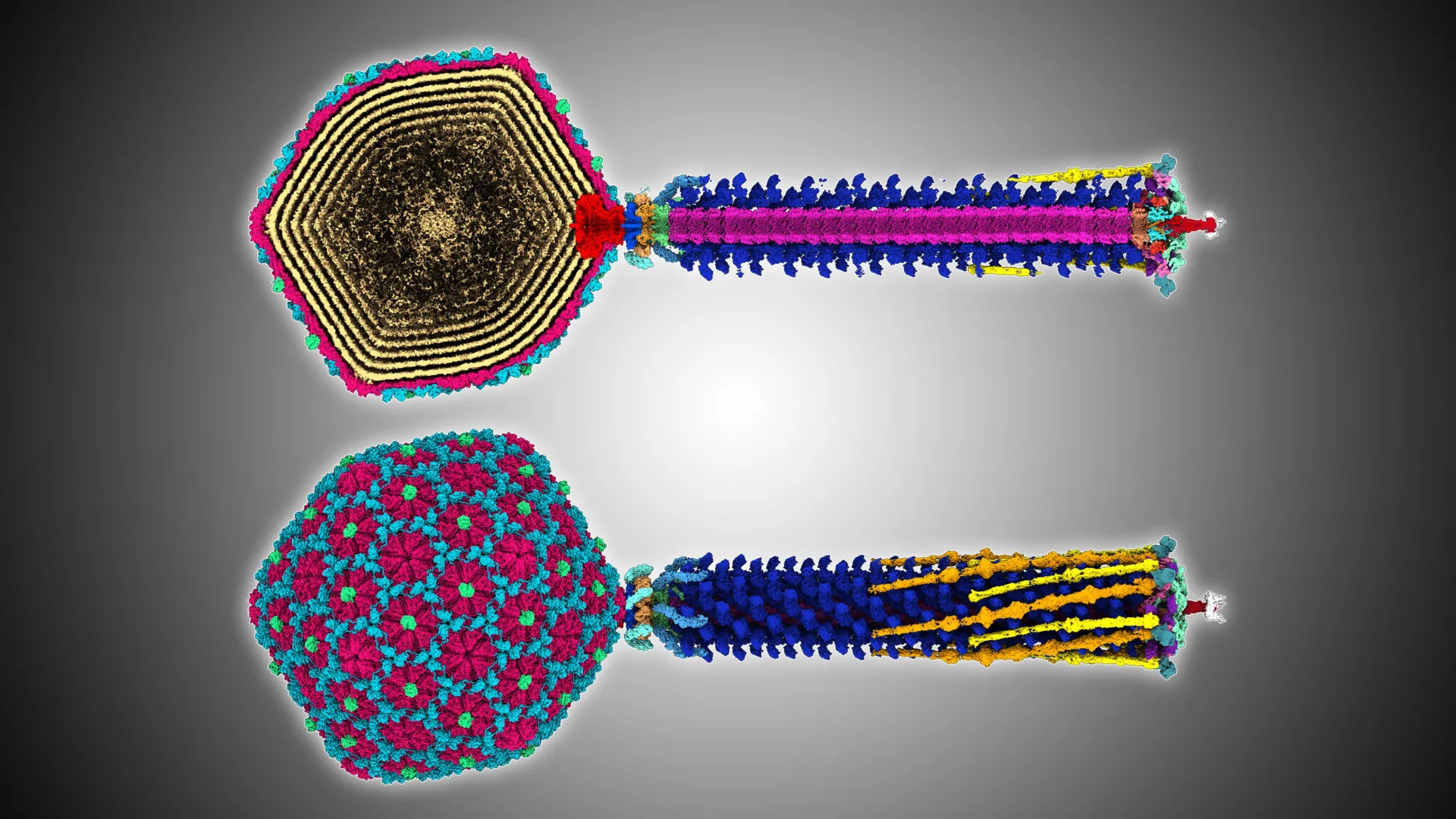
A team led by Ōtākou Whakaihu Waka has unveiled a detailed structural map of a bacteriophage – a virus that infects bacteria - providing crucial insights into their potential as a weapon against increasingly drug-resistant infections. The research, published in Science Advances, focuses on Bas63, a bacteriophage targeting E. coli.
“Bacteriophages represent a tremendously exciting avenue for researchers seeking alternatives to traditional antibiotics,” explains Dr. James Hodgkinson-bean, lead author and recent PhD graduate from the Department of Microbiology and Immunology. “Their ability to selectively target and eliminate specific bacteria, without harming human or animal cells, makes them ideal candidates for ‘phage therapy’ – a promising approach to combatting infections resistant to multiple drugs.”
The study utilized advanced 3D analysis to reveal the intricate mechanics of the phage’s tail, the structure it uses to infect bacterial cells. Understanding this process is key to optimizing phage selection for therapeutic applications and interpreting observed behaviors in laboratory settings.
Associate Professor Mihnea Bostina, senior author from Otago’s Department of Microbiology and Immunology, emphasizes the growing importance of this research. “With antibiotic resistance escalating and global food security threatened by plant pathogens, bacteriophages offer a vital alternative. This detailed structural blueprint will accelerate the rational design of phage-based solutions for a wide range of applications,from treating infections to controlling biofilms in food processing and water purification.”
Beyond practical applications, the team’s findings offer a fascinating glimpse into the deep history of life on Earth. The 3D data reveals unique structural features – including rare whisker-collar connections, hexamer decoration proteins, and diverse tail fibers – that provide clues to viral evolution.
“while DNA is often used to trace evolutionary relationships in complex organisms, the three-dimensional structure of a virus is a more powerful tool for understanding its ancient origins,” says Dr. Hodgkinson-Bean. “Our analysis revealed connections to viruses previously thought to be distantly related,even linking bacteriophages to the Herpes virus family – a relationship stretching back billions of years,to a time before multicellular life even existed.”
He adds, with a sense of wonder, “Looking at bacteriophage structure is like looking at living fossils, primordial beings. It’s truly a beautiful concept.”
This research builds upon the team’s previous work, recently published in nature Communications, detailing the structure of bacteriophages impacting potato diseases, further solidifying their position at the forefront of phage research. The detailed structural data generated by this work also holds potential beyond the scientific realm, inspiring creativity in fields like art, animation, and education.
