
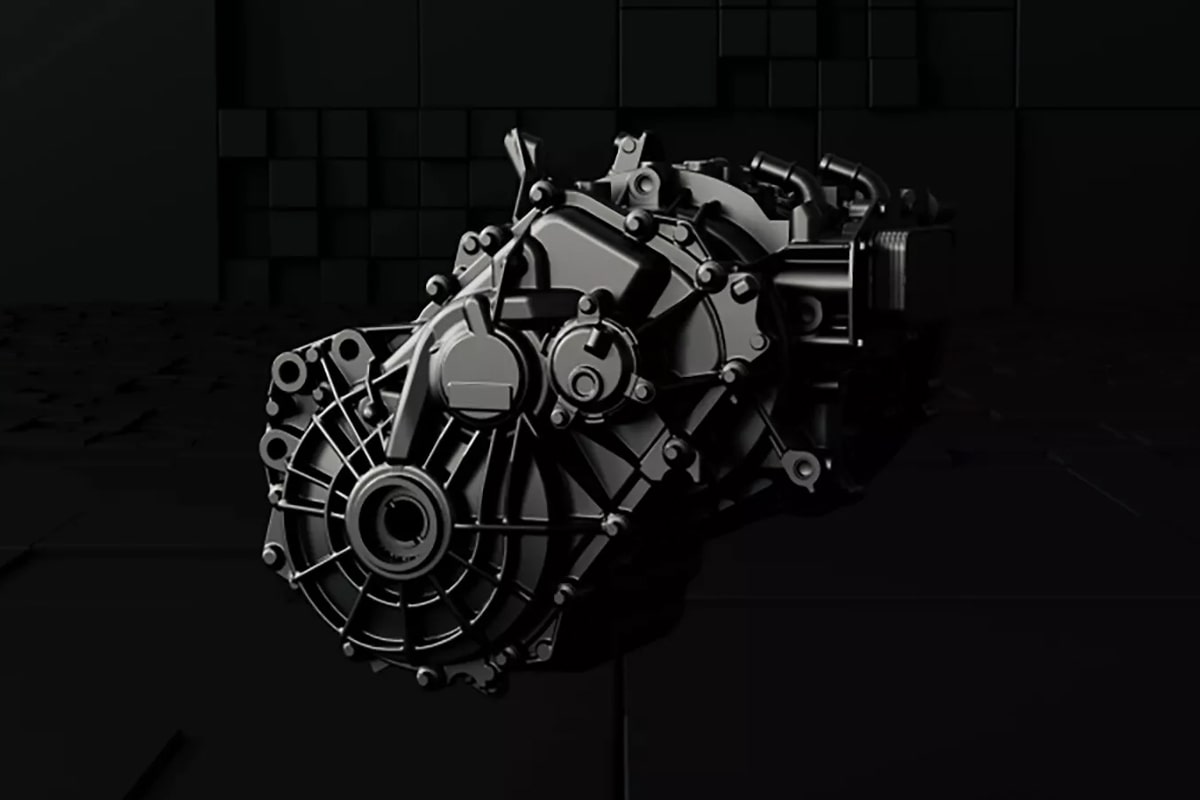
Renault Considers Chinese supplier for Key Component of New Electric Motor, Shifts from Valeo Partnership
Renault is re-evaluating its plans for the development of its next-generation E7A electric motor, perhaps sourcing the stator – a critical component – from a Chinese supplier, according to a report by Reuters citing two sources familiar with the matter. This marks a shift from previous plans involving French supplier Valeo.
Renault has utilized engines without rare earth materials as 2012 adn announced in October 2023 a collaboration with Valeo on the third generation of electric motors, initially targeting a 2027 market readiness for the E7A.However, Valeo is now reportedly no longer involved in the project.
“The E7A motor project will be carried out entirely in-house across the entire value chain, with the exception of the stator, which could be sourced from a Chinese supplier,” one insider told Reuters.The move is reportedly driven by the need for cost reductions, with Chinese suppliers offering competitive pricing.
Renault has neither confirmed nor denied the change in strategy. A spokesperson for Renault subsidiary Ampere acknowledged to Reuters that “a Chinese partner is a possibility,” but stated that no final decision has been made. The spokesperson also indicated that locating the stator production in France is under consideration. Valeo declined to comment on the matter.
Despite the potential change in stator sourcing, Renault intends to continue manufacturing the E7A motor at its plant in Cléon, France. STMicroelectronics is already confirmed as the supplier of the silicon carbide modules for the E7A’s inverter.
The E7A motor is slated to power renault’s next generation of compact electric vehicles, scheduled for launch in 2028. The power unit is expected to support 800 volts and deliver 200 kW of power – a 25% increase over the current generation - while maintaining a rare-earth-free design to bolster supply chain resilience.
This potential shift highlights the increasing cost pressures facing Renault. While the company generally prioritizes value creation within France and Europe – previously promoting the E7A development with Valeo as “innovation made in France” – the company appears to be adapting its strategy. Renault recently employed a Chinese engineering team to expedite the development of its new E-Twingo model, demonstrating a willingness to be pragmatic.
Meanwhile, Valeo is continuing to develop its own magnet-free electric motor, the iBEE, in partnership with German supplier Mahle. The iBEE is designed to deliver up to 350 kW of power and is also expected to be available in 2028.
This article is based on a report originally published by Cora Werwitzke for electrive’s german edition.
