
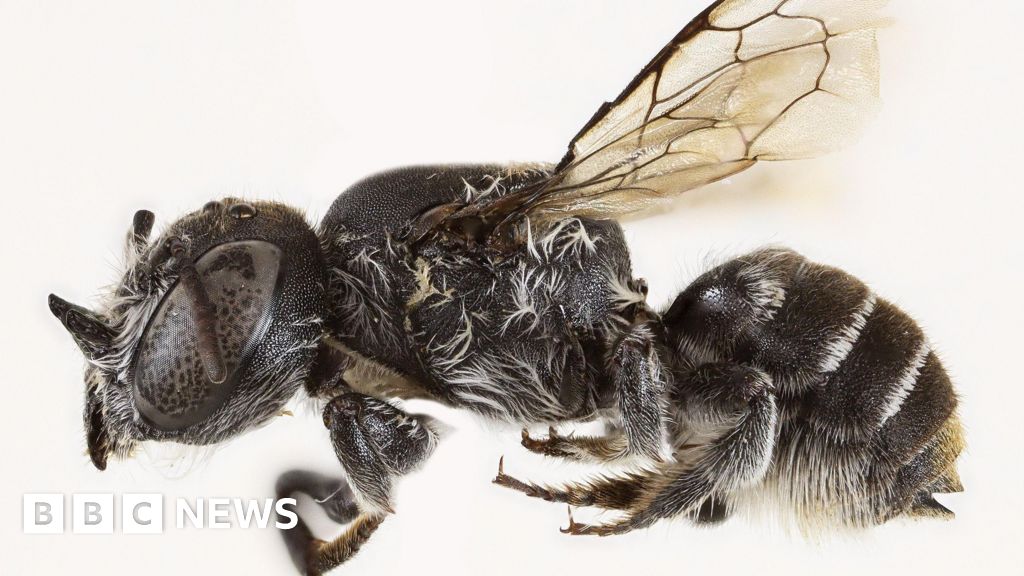
New Bee Species with Distinctive “Horns” Discovered in Western Australia, Named Megachile Lucifer
PERTH, AUSTRALIA – A new species of native bee, notable for prominent horns on the females, has been discovered in the remote Bremer Ranges of Western Australia’s Goldfields region, approximately 470km (292 miles) east of Perth. Researchers have named the bee Megachile Lucifer, a moniker inspired by the netflix series of the same name, and a nod to “shining a light” on the critical need for native bee conservation.
The discovery, published in the Journal of Hymenoptera Research, was made while observing a rare wildflower unique to the area. Dr. Kit Prendergast, from Curtin university and lead scientist on the study, explained the unusual feature of the bee. ”the female had these amazing little horns on her face,” she said. “When writing up the new species description I was watching the Netflix show Lucifer at the time, and the name just fit perfectly.I am also a huge fan of the Netflix character Lucifer so it was a no-brainer.”
The function of the horns remains under inquiry, but scientists beleive they may serve as a defense mechanism, aid in pollen or nectar collection, or assist in gathering nesting materials like resin. this is the first new member of the Megachile group identified in two decades.
The researchers are urging for the immediate protection of the area where Megachile Lucifer and the endangered wildflower were found. The report calls for the land to be “formally protected and gazetted as conservation land that cannot be cleared,” citing the vulnerability of both species to habitat disturbance and climate change.
“Because the new species was found in the same small area as the endangered wildflower, both could be at risk,” Dr. Prendergast stated. She also highlighted a gap in environmental impact assessments, noting that “many mining companies do not include native bees when assessing the environmental impact of their operations.”
The team fears that many undescribed bee species, potentially vital to threatened plants and ecosystems, might potentially be overlooked. “Without knowing wich native bees exist and what plants they depend on, we risk losing both before we even realise they’re there,” Dr. Prendergast warned.
