
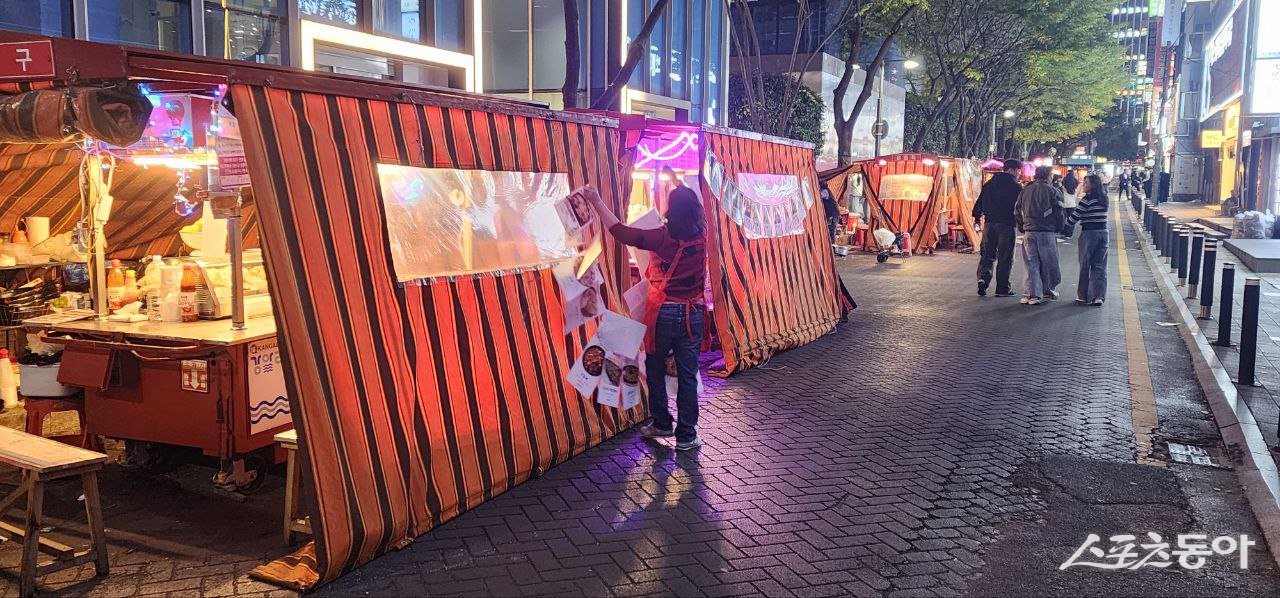
Seomyeon Street Food Stalls Undergoing Transformation, Balancing Tradition with Modernization
Busan, South Korea – Busanjin-gu is initiating a revitalization project for the Seomyeon commercial district, focusing on the area’s famed street food stalls. The approach, as emphasized by Busanjin-gu Office head Kim Young-wook, isn’t immediate demolition, but a search for a “new model that allows the commercial district and the public to coexist while guaranteeing the livelihood rights of existing business owners to a certain extent.”
the current efforts,described as “Seomyeon City Reorganization 2.0,” involve a crackdown on illegal businesses alongside plans for improvements aimed at addressing cleanliness and noise concerns. These actions are seen as a starting point for both purifying the streets and reviving the broader commercial district.
Several alternatives are being considered to integrate the street food culture into a more enduring and appealing environment. These include a ‘food truck permit system’ operating as a public night market, the creation of pedestrian-only streets with enhanced nighttime landscaping, and the development of working stations linked to cultural spaces.
To facilitate this transformation, an ‘urban coexistence council’ will be formed, bringing together representatives from the district office, the merchants’ association, and food stall operators. The council will be responsible for securing a budget for urban design improvements linked to the redevelopment plan.
Public and merchant reactions are mixed. While some citizens appreciate the atmosphere of the stalls, others cite concerns about cleanliness. Mr. A (37), an office worker from yeonje-gu, Busan, noted the need for maintenance, while Mr. B (31) from Sacheon, Gyeongnam, expressed satisfaction with the current cleanliness and safety. A Pusan National University student, Mr. Lee (24), argued for improvement over demolition, stating the stalls are “a symbol of Seomyeon.”
Nearby commercial owners have voiced concerns about negative impacts on their businesses. Mr. B (49), a local business owner, highlighted sales damage due to trash and noise, advocating for prioritizing the cleanup of illegal operations. Urban experts have advised a focus on coexistence rather than demolition, emphasizing the need to preserve Seomyeon’s cultural and tourist value.
Kim Young-wook acknowledged the complexities of the situation,stating,”It is difficult to solve the problem through crackdowns alone. We will create a win-win structure in which food stall owners, merchants, residents, and administration all participate and promote Seomyeon to become a pleasant and attractive space for all citizens and tourists.”
He further added that the district is actively reviewing choice business spaces and support measures for stall owners, and exploring the potential to leverage the seomyeon street food stall culture as a tourism resource.
(Source: Sports Donga, Kim Tae-hyeon, localbuk@donga.com)
