
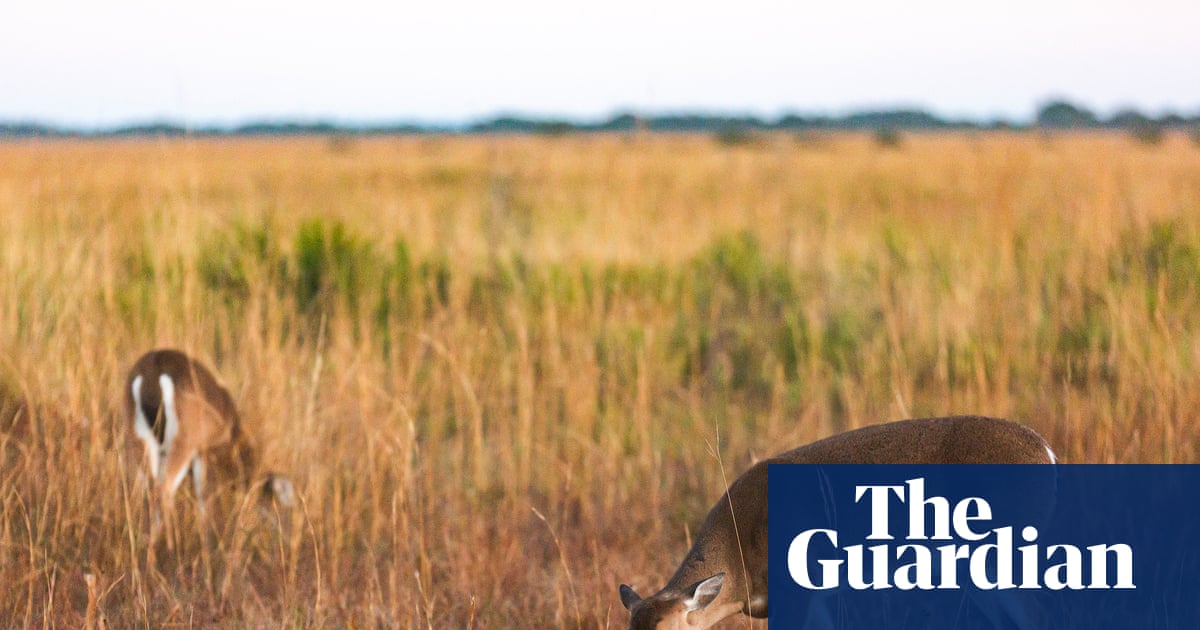
Florida Confirms Second Case of Chronic Wasting Disease in Deer Population
Holmes County,FL – florida wildlife officials have confirmed a second case of Chronic Wasting Disease (CWD) within the state’s deer population,prompting increased surveillance and management efforts. The discovery, announced recently, represents a significant threat to the state’s estimated 700,000 white-tailed deer, a popular game animal with roughly 100,000 harvested annually.
CWD, ofen referred to as “zombie deer disease” due to the neurological symptoms it causes, is a fatal prion disease affecting deer, elk, and moose. Infected animals can live for years without showing symptoms, but eventually succumb to brain tissue damage, exhibiting weight loss, behavioral changes, loss of coordination, excessive salivation, and ultimately, death.
The Florida Fish and Wildlife Conservation Commission (FWC) has established a special management zone in Holmes and neighboring Jackson and Washington counties, implementing enhanced surveillance and monitoring. Test results are currently pending on 90 animals.
“This disease right now is probably the greatest threat to deer and deer hunting in North America,” said wildlife biologist steven Shea, who manages over half a million acres of species habitat in central Florida. He added that containment efforts have historically been unsuccessful, and agencies are now focused on slowing the disease’s spread.
FWC implemented special rules for the 2023 deer hunting season within the management zone, including mandatory carcass checking. Hunters are considered a crucial component of disease management.
“Hunters are our first line of defense in managing this disease. Each sample helps us track the spread of the disease and informs our strategies to manage it effectively,” stated James Kelly, the commission’s CWD surveillance coordinator.
Shea expressed concern over potential impacts to deer populations and wildlife funding if hunter participation declines due to CWD-related testing requirements and potential meat disposal. ”Hunters have to send a head in for testing, they’re waiting on the meat, and if it comes back positive they have to discard the meat,” he explained. “Hunters provide one of the largest revenue sources that supports all fish and wildlife management in North America and if fewer hunters are hunting there’s less money that comes in to seed programs that help all wildlife, not just white-tailed deer.”
Florida’s early detection of CWD offers a “best-case scenario” for management,according to Kelly,as a smaller outbreak is more manageable. Details on CWD and the FWC’s response can be found on the FWC website and at the University of Florida’s department of wildlife ecology and conservation.
