
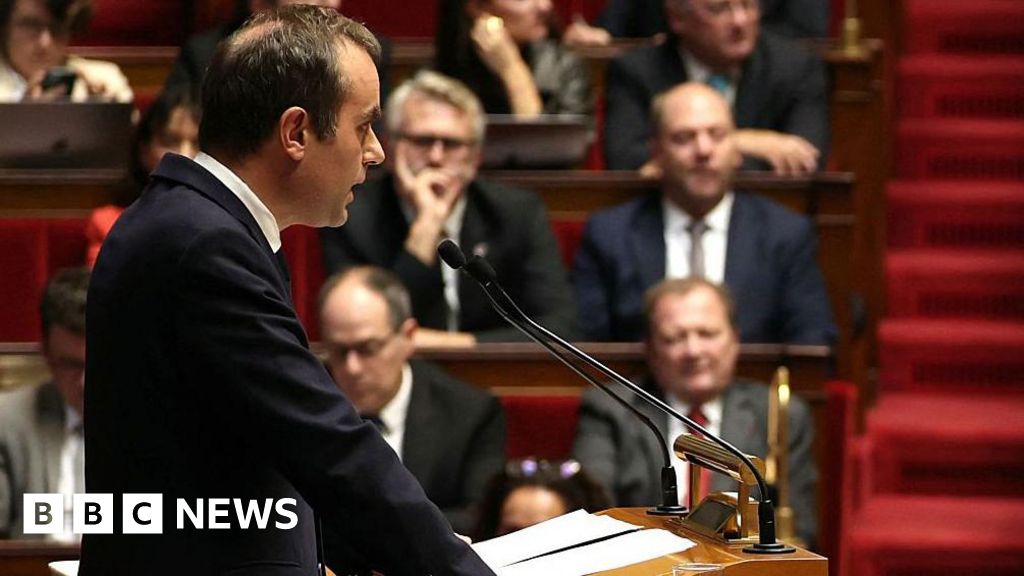
French Prime Minister Sébastien Lecornu announced Tuesday he supports suspending the controversial 2023 pension reforms in a bid to secure the support of Socialist MPs and prevent a vote of no-confidence that could topple his government. The reforms,a key initiative of President Emmanuel Macron‘s administration,raised the retirement age from 62 to 64.
Lecornu told parliament he will propose a suspension of the reforms until after the 2027 presidential election, a move applauded by left-wing parties. “This autumn I will propose to parliament that we suspend the 2023 pension reform until the [2027] presidential election,” he stated.
The proclamation comes after Lecornu was reappointed prime minister last week following a brief resignation. He requires the backing of Socialist MPs to ensure his government’s survival, as opposition parties on the far right and far left have scheduled “censure” votes for Thursday morning, demanding parliamentary elections.
Socialists have indicated they will onyl support the government if it promises a “complete suspension” of Macron’s pension changes. “If he does not explicitly say the words ‘immediate and complete suspension of the pension reform’, it will be censure,” Socialist MP Laurent Baumel saeid on French TV. “He is holding his destiny in his own hands.He knows what he has do if he doesn’t wont to be the prime minister who resigns every week.”
The pension reforms were pushed through parliament in March 2023 using a constitutional mechanism known as 49:3, bypassing a formal vote after months of strikes and protests. Lecornu himself acknowledged last week that the method was perceived by many as a “wound on democracy.”
Suspending the reforms will come at a financial cost, estimated at €400 million in 2026 and €1.8 billion in 2027, which Lecornu said would need to be offset by “other savings.”
Lecornu is France’s third prime minister in the past year and faces the additional challenge of passing a budget to address a budget deficit projected to reach 5.4% of GDP this year, alongside a public debt of €3.4 trillion - almost 114% of GDP.
Economist Philippe Aghion, a recent Nobel laureate, also voiced support for suspending the reforms, arguing the cost of instability from a government collapse would be greater.Lecornu’s willingness to reconsider the reforms, despite being a long-time Macron ally, underscores the president’s desire to avoid further political turmoil.
