
Trump‘s National Guard Deployments Spark Legal Battles Over Presidential Authority
Recent attempts by former President Donald Trump to deploy National Guard troops to address protests and protect federal property are facing critically important legal challenges, raising questions about the limits of presidential power and the proper use of the Guard. The disputes echo a past standoff between the federal government and state authorities, specifically referencing a confrontation with Governor George Wallace at the University of alabama during the Civil Rights era.
According to William Banks, a Syracuse University law professor specializing in constitutional and national security law, Trump’s stated justification for deploying troops – protecting federal property and personnel – differs from historical uses of federal power to enforce civil rights laws passed by Congress. Banks notes that National Guard members are restricted in their duties, unable to enforce local laws, control traffic, or perform typical police functions, rendering their deployment “more symbolic than helpful.”
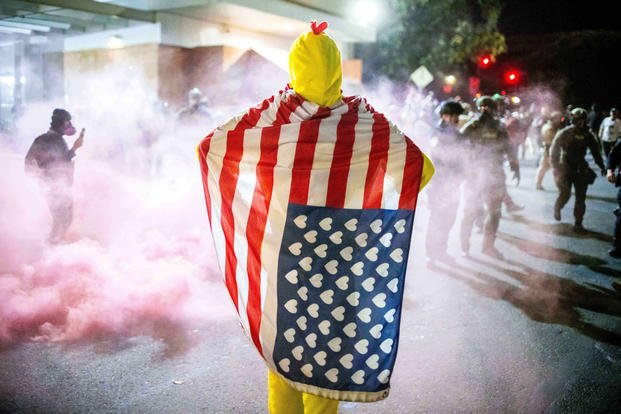
The legal clashes are unfolding on multiple fronts. Leaders in Illinois, Oregon, and California have filed lawsuits challenging the deployments. A Trump-appointed judge initially blocked the deployment in Portland, Oregon, a decision that drew sharp criticism from within Trump’s circle. Stephen Miller, a senior Trump advisor, argued via social media (X) that a district court judge has no authority to restrict the President’s ability to defend federal lives and property, and characterized protests against Trump’s immigration policies as “domestic terrorism.”
Legal experts, though, anticipate that judges will focus on whether Trump’s orders adhere to constitutional principles and federal laws governing National Guard usage. Trump’s opponents have increasingly turned to the court system to counter his policies, particularly given the limited oversight from the Republican-controlled Congress during his presidency.
While Trump officials have expressed disdain for unfavorable judicial rulings, they have so far avoided outright defiance of court orders. Though, experts warn that such defiance woudl be deeply concerning. “The potential that they would defy an order from a federal court is very worrisome,” Banks stated. “That’s our backstop. That’s what we have in the United States to keep our democracy on the rails.”
Elizabeth Goitein, senior director of the Liberty and National Security Program at New York University’s Brennan Center for Justice, described Trump’s attempt to deploy California National Guard members to Oregon as a “clear violation of the law” and an attempt to circumvent the judge’s ruling.She also expressed concern that Trump and Defense Secretary Pete Hegseth viewed these domestic deployments as training exercises for overseas conflicts, noting, “What the military is trained to do is to fight and destroy enemies of the United States. The president of the United States wants soldiers to practice this battle training in the streets of american cities.”
This report includes contributions from Associated Press writers Chris Megerian, Seung Min Kim, and Nathan Ellgren.
© Copyright 2025 Associated Press. All rights reserved. This material may not be published,broadcast,rewritten or redistributed.
