
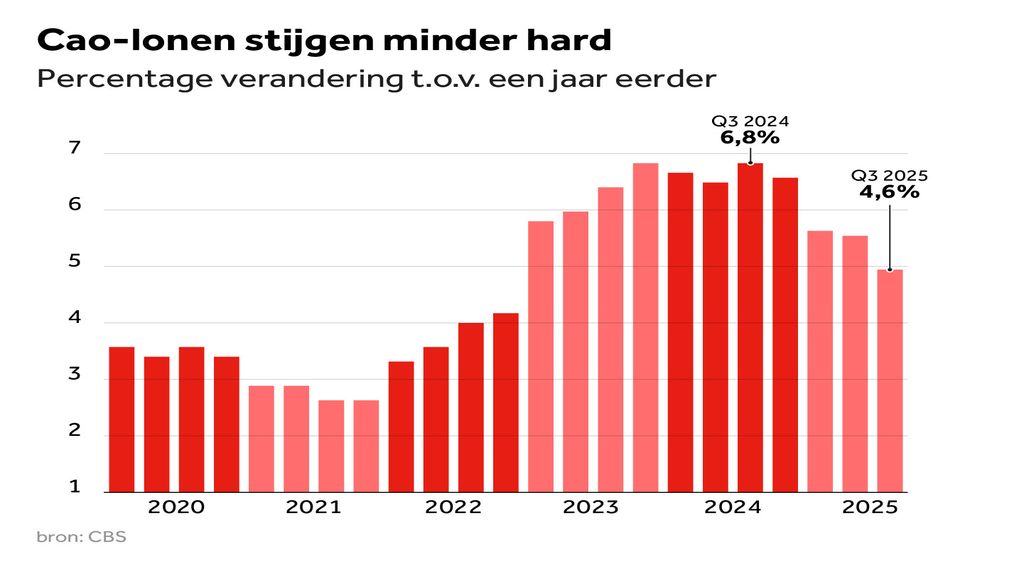
Wage Growth Cools as Labor Market Loosens, But Gains Still Outpace Inflation
The Netherlands – After three years of sharp increases, wage growth in the Netherlands is beginning to moderate, though remains above 4 percent and continues to outpace inflation, according to recent analysis. The slowdown reflects a cooling labor market and a potential peak in wage demands, even as unions push for substantial increases in collective labor agreements (CLAs).
This shift impacts millions of Dutch workers and employers, signaling a potential stabilization in the cost of living and business expenses. While employees have seen importent purchasing power gains recently – the largest in over 20 years - the pace of betterment is expected to slow. The current situation sets the stage for upcoming negotiations between unions and employers, with FNV demanding a 6 percent wage increase and CNV seeking rises between 3.5 and 5 percent for the coming year, both exceeding current price level increases.
The continued, albeit slower, wage growth is attributed to a combination of factors. A still-tight labor market, with more vacancies than job seekers, continues to exert upward pressure on wages.Together, existing CLAs secured with trade unions are ensuring wages keep pace with inflation. “The wages keep up with inflation, agreements have been made with the trade unions and they will continue to work for a while,” an analyst noted.
However, the labor market is becoming less strained than in recent years, leading to a natural deceleration in wage increases.”The wages have now risen so fast for so long. The rack may have been out now,” according to observers.
Despite the cooling trend, purchasing power is still projected to rise. The Central Planning Bureau (CPB) forecasts a 1.3 percent increase in purchasing power for the coming period, building on the substantial gains seen last year.
