
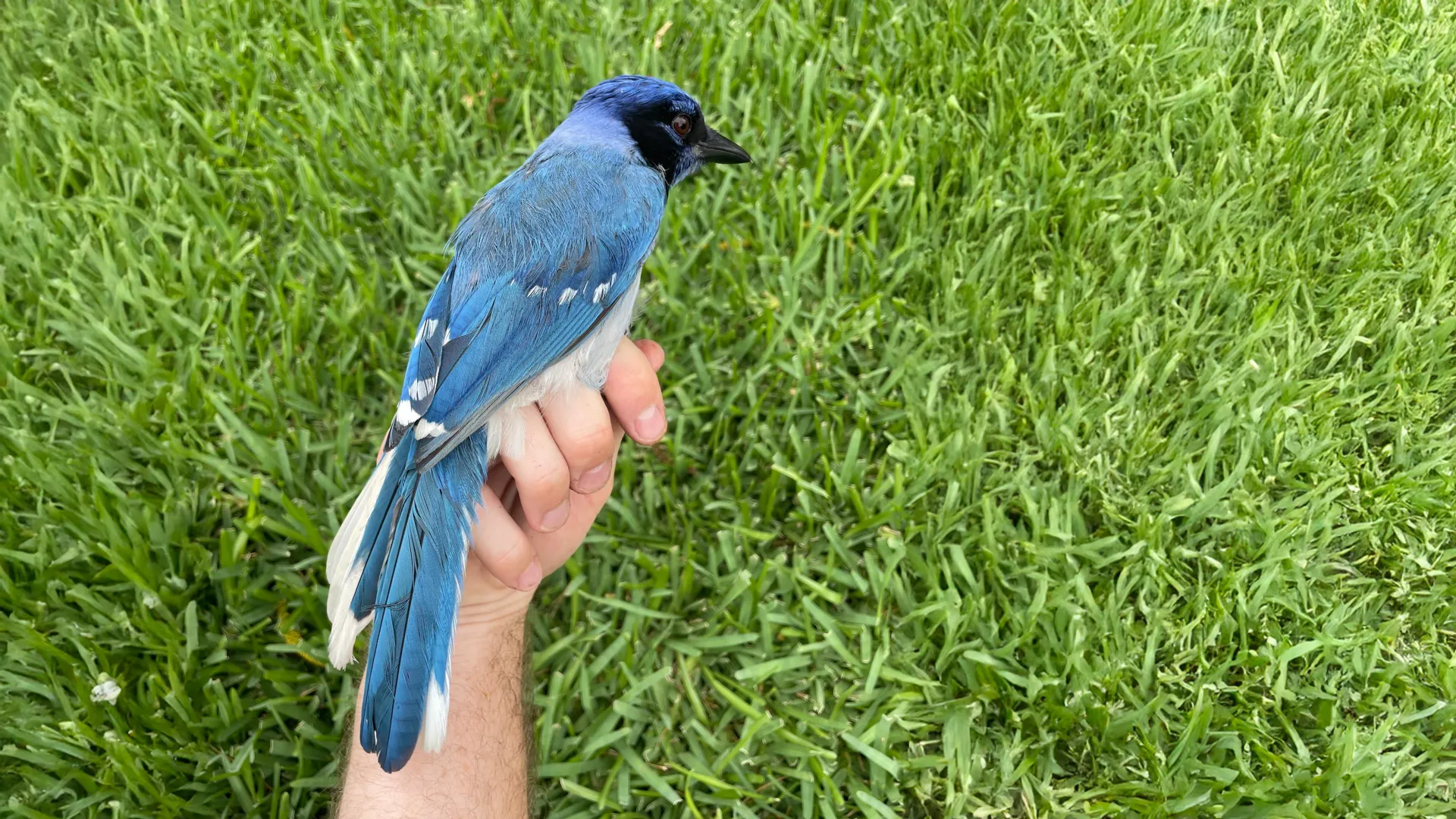
A Sign of Changing Times: The Hybrid Jay of Texas
A groundbreaking discovery in texas suggests a new outcome of climate change: hybridization between previously distinct species. Researchers at the University of Texas at Austin have identified the first documented case of a vertebrate hybrid resulting from the range expansions of both parent species driven, at least in part, by shifting weather patterns. This differs from previous vertebrate hybrids, which typically arose from human intervention like invasive species introductions or the expansion of only one species’ territory.
The story centers on a unique bird observed near San Antonio, Texas – a hybrid offspring of a green jay and a blue jay. historically, the ranges of these two species rarely overlapped. Green jays,a tropical species,extended only slightly north from Mexico into South Texas in the 1950s,while blue jays,a temperate bird,reached no further west than Houston. however, as the climate has changed, green jays have been pushing northward and blue jays westward, leading to a convergence of their territories.
Brian Stokes, a UT graduate student and lead author of the study published in Ecology and Evolution, stumbled upon the first evidence of this hybridization through online birding communities. A grainy photograph posted by a local birdwatcher depicted an unusual blue bird with a distinctive black mask and white chest. Intrigued, Stokes visited the woman’s property and, after a patient two-day effort using a mist net – a nearly invisible nylon mesh – successfully captured the bird.
A rapid blood sample confirmed his suspicions: the bird was a hybrid, with a green jay mother and a blue jay father. This finding mirrors a similar, artificially created hybrid produced in captivity in the 1970s, now preserved at the Fort Worth Museum of Science and History. The captured bird was banded for future tracking and released, and remarkably reappeared in the same yard in June 2025 after a period of several years. Stokes attributes the discovery to a lucky coincidence, noting that a slightly different location could have meant the bird went unreported.
Stokes and his advisor, Tim Keitt, beleive this hybridization event is likely more common than currently understood, hampered by the difficulty of observing and reporting such occurrences in the wild. Physical separation often prevents interbreeding, but as climate change continues to reshape habitats, opportunities for hybridization may increase across various species. The research was supported by grants from UT System, the Texas EcoLab Program, and Planet Texas 2050, a UT Austin initiative. While the researchers chose not to formally name the hybrid, it joins the ranks of other naturally occurring hybrids known by nicknames like “grolar bear,” ”coywolf,” and “narluga.”
