
Millions Face Coverage Loss as Part-Time Workers Lag Behind in Employer-Sponsored Health Benefits
WASHINGTON D.C. – A new analysis reveals a stark disparity in health insurance access, with part-time workers significantly less likely to receive coverage through their jobs than their full-time counterparts, a gap that could widen as federal policy changes loom. Only 6 in 10 part-time workers are eligible for health coverage offered by their employer, compared to nearly all full-time workers, according to recent data.
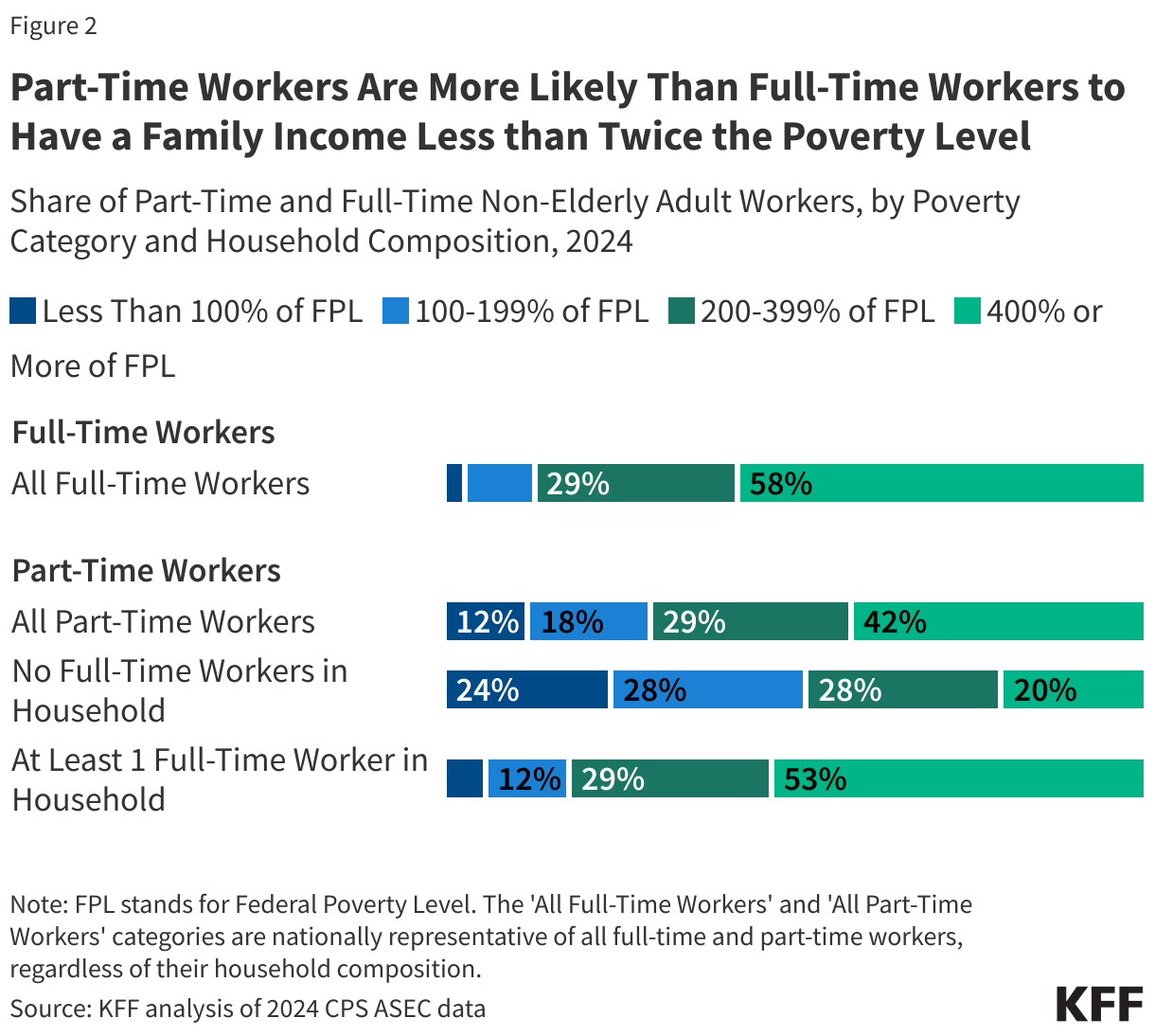
The lack of access disproportionately impacts lower-income individuals, notably those in households without a full-time worker. Even when offered, cost remains a major barrier to enrollment for many part-time employees, who struggle with premiums and cost-sharing requirements. While those with employer-sponsored plans, on average, spend 3.9% of their income on premiums and out-of-pocket costs, this financial burden is substantially higher for households earning less. Approximately 15% of workers have household incomes below 200% of the federal poverty level.
Employer-sponsored insurance remains the primary source of coverage for non-elderly working adults,but the data highlights a growing vulnerability for those with limited hours or lower wages. Upcoming federal policy shifts threaten to exacerbate the problem.The Congressional Budget office projects that changes to Medicaid and the Affordable Care Act (ACA) stemming from the 2017 tax and spending package could lead to 10 million more uninsured americans by 2034. Moreover, the potential expiration of enhanced premium tax credits for ACA Marketplace coverage beyond 2025 could result in an additional 4.2 million losing their insurance.
Some employers are attempting to address the issue. In 2024,14% of firms with 200 or more employees offered health plans with reduced benefits and lower premium contributions specifically designed for low-wage workers. Additionally, a small percentage of firms – 3% of small businesses and 14% of large companies – that don’t offer standard coverage to part-time workers are providing voluntary benefits like financial assistance for hospitalization or telehealth services.However, thes efforts are not widespread enough to close the coverage gap for many part-time employees.
