
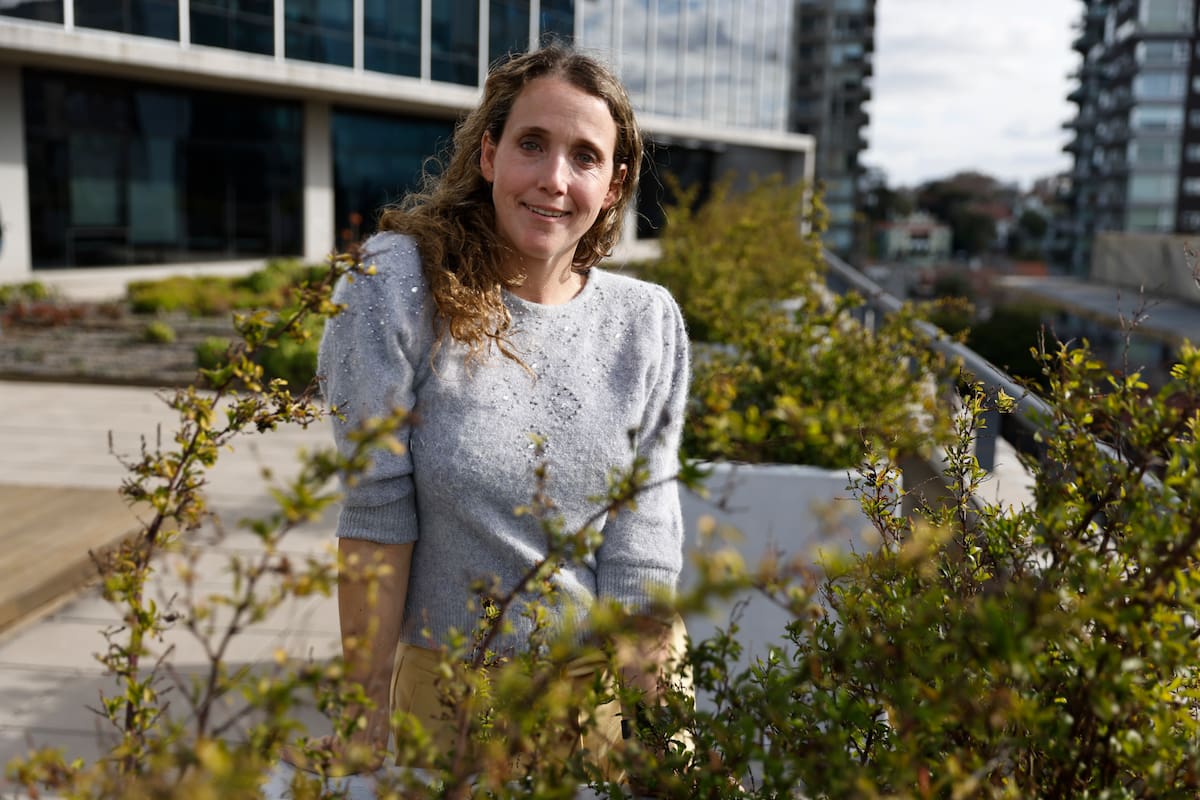
From Patient to Practitioner: The Nutritionist Who Remissioned Two Autoimmune Diseases Through Diet
This nutritionist’s approach to healing is deeply rooted in personal experience.Having battled and overcome two autoimmune diseases through a radical dietary shift, she now dedicates her practice to helping others unlock their own internal healing potential. Her journey has shaped her into a uniquely empathetic and effective practitioner,understanding the challenges patients face beyond just the clinical aspects of illness.
The nutritionist emphasizes that eliminating food groups isn’t inherently risky, “unless [it’s] an eating disorder. In that case, we would be talking about another topic.But if it is a conscious diet, in which other quality foods are incorporated, there is no risk.” She believes a return to “our roots, to the natural” is key, advocating for obtaining nutrients from whole foods rather than relying heavily on supplements. While acknowledging supplements can be helpful in specific circumstances – she herself utilized them during the initial stages of her own illness to “buy time” – she stresses that a natural, food-based approach is “more real,” even if slower.
Her personal experience profoundly impacts her work. She understands the difficulties patients encounter, “how hard it can be to cook when you are sick; The exhausting thing is to see as many doctors and how all that demotivates you. The bad news, the ups and downs, the feeling that your body does not answer you.” She recalls feeling as though her own body had “betrayed” her, but ultimately came to a pivotal realization: “the symptom is the desperate cry of our soul.” Ignoring these signals, she explains, leads to stronger, more persistent symptoms. “There I understood that it comes to heal us.”
At the heart of her nutritional approach is a focus on supporting gut health and empowering individuals to tap into their innate healing abilities. She describes it as activating an “internal toolbox that we must learn to activate.”
For those grappling with autoimmune diseases, she offers a message of hope and agency.She firmly believes a diagnosis is not a life sentence, stating, “that you can do much more than you think to get out of where you are. That the diagnosis is not a sentence.” She acknowledges the limitations of conventional medicine,but emphasizes the power individuals hold in their own healing process. “The possibility of healing depends only on you. It is an invitation to take charge: you are the most interested in healing you.” She encourages a shift in outlook,from seeking external fixes to recognizing the internal capacity for wellness,concluding with a powerful message: “Everything happens. Today is not forever. Sowing the present with conscience, we are going to reap a better tomorrow.”
