
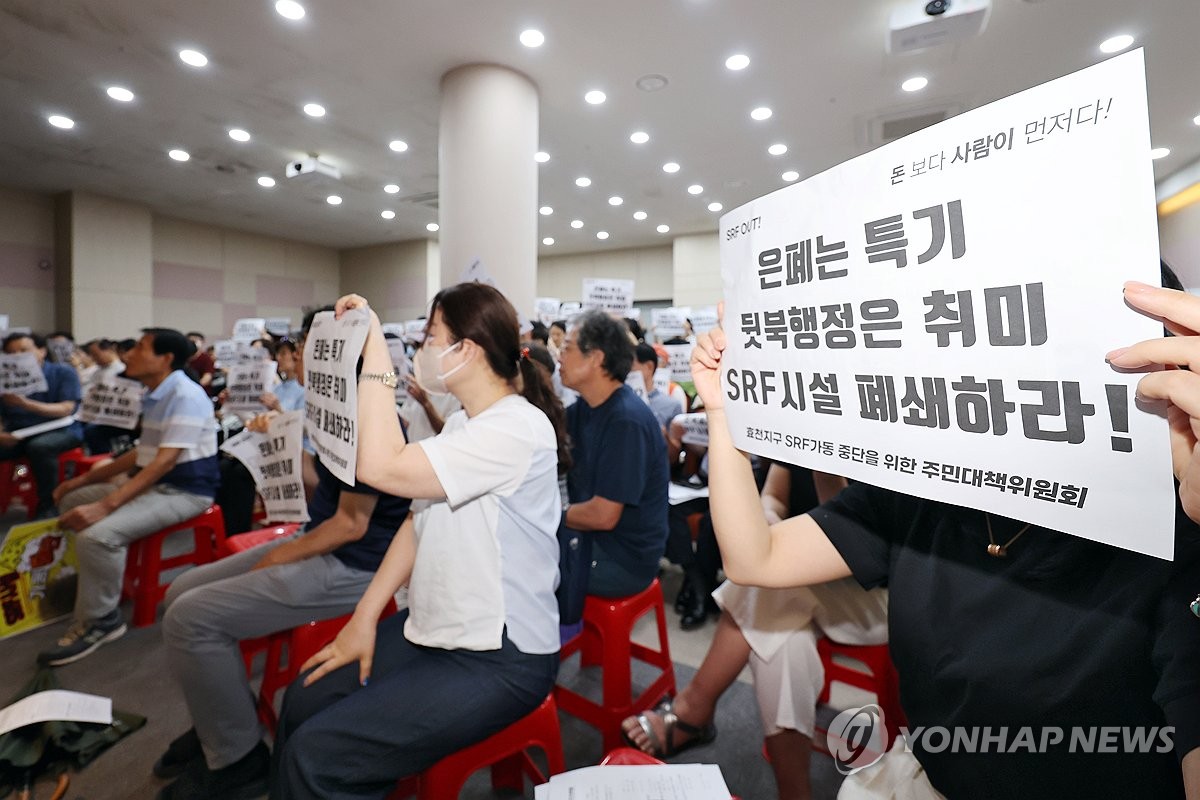
Gwangju SRF Operator Faces Renewed Scrutiny Over Persistent Odor Issues
Table of Contents
Gwangju, South Korea – Residents of Gwangju’s Nam-gu district continue to grapple with noxious odors emanating from a Solid refuse Fuel (SRF) facility operated by POSCO E & C, despite the company’s efforts to address complaints. The facility, located in Yanggu-dong, underwent a significant change in odor control technology last year, shifting from incineration to a chemical cleaning tower, a move now under intense scrutiny from local civic groups.
The controversy centers on whether the new system adequately mitigates the complex odors produced by the SRF process. While POSCO E & C maintains the change was prompted by resident concerns regarding white smoke from the incinerator, critics argue the chemical cleaning tower is less effective, leading to an increase in odor-related grievances. The situation has escalated, with measurements revealing odor levels exceeding legal standards on multiple occasions since June, raising concerns about potential health impacts.
Shift in Technology Sparks Debate
In April 2024, POSCO E & C installed the new chemical cleaning tower as an choice to the existing incineration facilities. Both systems are designed to remove odors, but the company explained to a public-private joint task force (TF) on September 4, 2025, that complaints about white smoke persisted with the incineration method. The TF, comprised of residents, city and district council members, and environmental experts, is currently evaluating potential solutions.
The core of the dispute lies in the differing effectiveness of the two odor removal methods. Incineration, which burns odor-causing compounds, is generally considered more efficient, particularly for complex odors. Chemical cleaning, conversely, relies on acidic (tea hydrochloric acid) and basic (caustic soda) solutions to neutralize odor components based on pH levels.
Did You Know? …
Incineration breaks down odor molecules, while chemical cleaning attempts to neutralize them. Experts suggest incineration is superior for complex odor profiles.
Civic Groups Allege Cost-Cutting Measures
The Gwangju Citizens’ Countermeasures Committee, representing 67 civic groups, issued a statement alleging that POSCO E & C opted for the chemical cleaning tower primarily to reduce operating costs, despite its limitations. POSCO E & C has set up a cleaning tower with excellent incineration facilities and limitations due to the reduction of operating costs.
they stated.
Odor Removal Methods Compared
| Method | Effectiveness | Cost | Complexity |
|---|---|---|---|
| Incineration | High | Higher | Suitable for complex odors |
| Chemical Cleaning | Moderate | Lower | Best for simpler odor profiles |
POSCO E & C has temporarily suspended operations at the SRF facility until September 19, 2025, to implement further odor reduction measures. The TF is actively working to develop a comprehensive plan to address the ongoing concerns of residents.
Pro Tip: …
Understanding the chemical composition of the SRF waste stream is crucial for selecting the most effective odor control technology.
“Complex odors that exceed legal standards have been measured several times since June, and the controversy over the health rights of residents has continued.”
What steps should be taken to ensure the health and well-being of residents affected by the SRF facility’s odors? Do you think a return to incineration is the best solution, or should POSCO E & C explore alternative odor control technologies?
Background on Solid Refuse Fuel Facilities
Solid Refuse Fuel (SRF) facilities process non-recyclable waste materials into a fuel source. These facilities are becoming increasingly common as a means of reducing landfill waste and generating energy. However, they can also be a source of environmental concerns, particularly related to odor emissions. Effective odor control is essential for ensuring the sustainable operation of SRF facilities and maintaining positive community relations.
Frequently Asked Questions
- What is an SRF facility? An SRF facility processes non-recyclable waste into a fuel source, reducing landfill waste.
- Why is odor control significant at SRF facilities? Effective odor control is crucial for protecting public health and maintaining community acceptance.
- What is the difference between incineration and chemical cleaning for odor removal? Incineration burns odors, while chemical cleaning neutralizes them.
- What is the role of the Gwangju TF? The TF is a joint public-private group working to address odor issues at the SRF facility.
- What is POSCO E & C doing to address the odor problem? POSCO E & C has temporarily suspended operations and is implementing additional odor reduction measures.
If you’ve been affected by the odors or have further details, please share your thoughts in the comments below. Don’t forget to share this article with your network to raise awareness about this critically important issue!
