
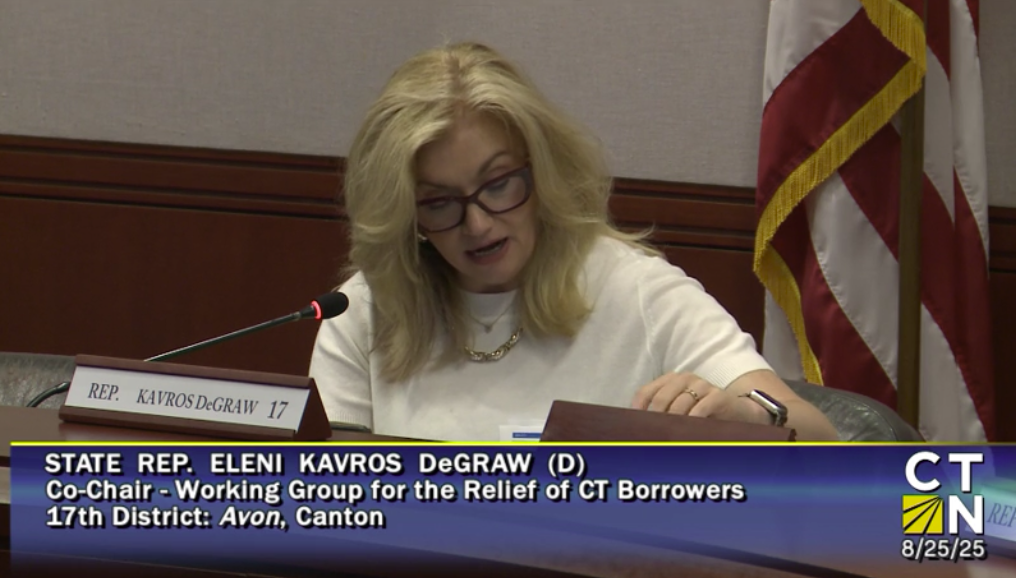
Avon Representative’s Remarks About Working Class Spark Outcry
AVON, CT – State Representative Eleni Kavros DeGraw (D-Avon) drew criticism this week after reportedly referring to skilled-trade workers as a “burden” during a working group session focused on student loan debt relief. The remarks, made during a meeting of the Student Loan Relief Program (SLRP) working group, have ignited a backlash from labor unions who endorsed her 2024 reelection campaign.
The incident highlights a growing tension between political rhetoric and the economic realities of Connecticut‘s workforce. Kavros DeGraw’s comments contradict the vital role non-degree workers play in the state’s economy,raising questions about her commitment to the constituencies she represents and the direction of state policy regarding affordability and economic support. The working group was convened to explore options for debt relief, but the exchange underscores a broader debate: whether to focus on alleviating debt symptoms or addressing the root causes of rising costs and limited economic opportunity.
According to attendees, Kavros DeGraw, co-chair of the working group, made the comments while discussing potential eligibility criteria for debt relief programs. She suggested that individuals in trades – carpenters, electricians, linemen, and others without four-year degrees – were more likely to rely on state assistance programs like SNAP and Medicaid.
this statement stands in stark contrast to the endorsements Kavros DeGraw received from several skilled-trade unions during her 2024 reelection bid, including the Connecticut State Building Trades Council and CWA district 1. These unions represent workers who contribute significantly to Connecticut’s economy through construction, infrastructure maintenance, and logistics.Union representatives and advocates for working-class families argue that these workers are not a drain on the system, but rather essential contributors who pay taxes and fuel economic growth. They point out that non-degree workers are critical to building and maintaining the state’s infrastructure and providing essential services.
The working group’s original charge was to investigate avenues for student loan debt relief, but the discussion has now broadened to encompass the underlying issues driving financial hardship for many Connecticut residents. Lawmakers are now grappling with whether to prioritize debt relief measures or address systemic problems like tuition inflation and a lack of affordable career pathways.
The incident leaves a elaborate message for the trades: Connecticut relies on their labor and contributions, yet a key policymaker tasked with affordability issues has publicly questioned their economic value. The SLRP working group is expected to continue it’s deliberations and present recommendations to the legislature in the coming months.
