
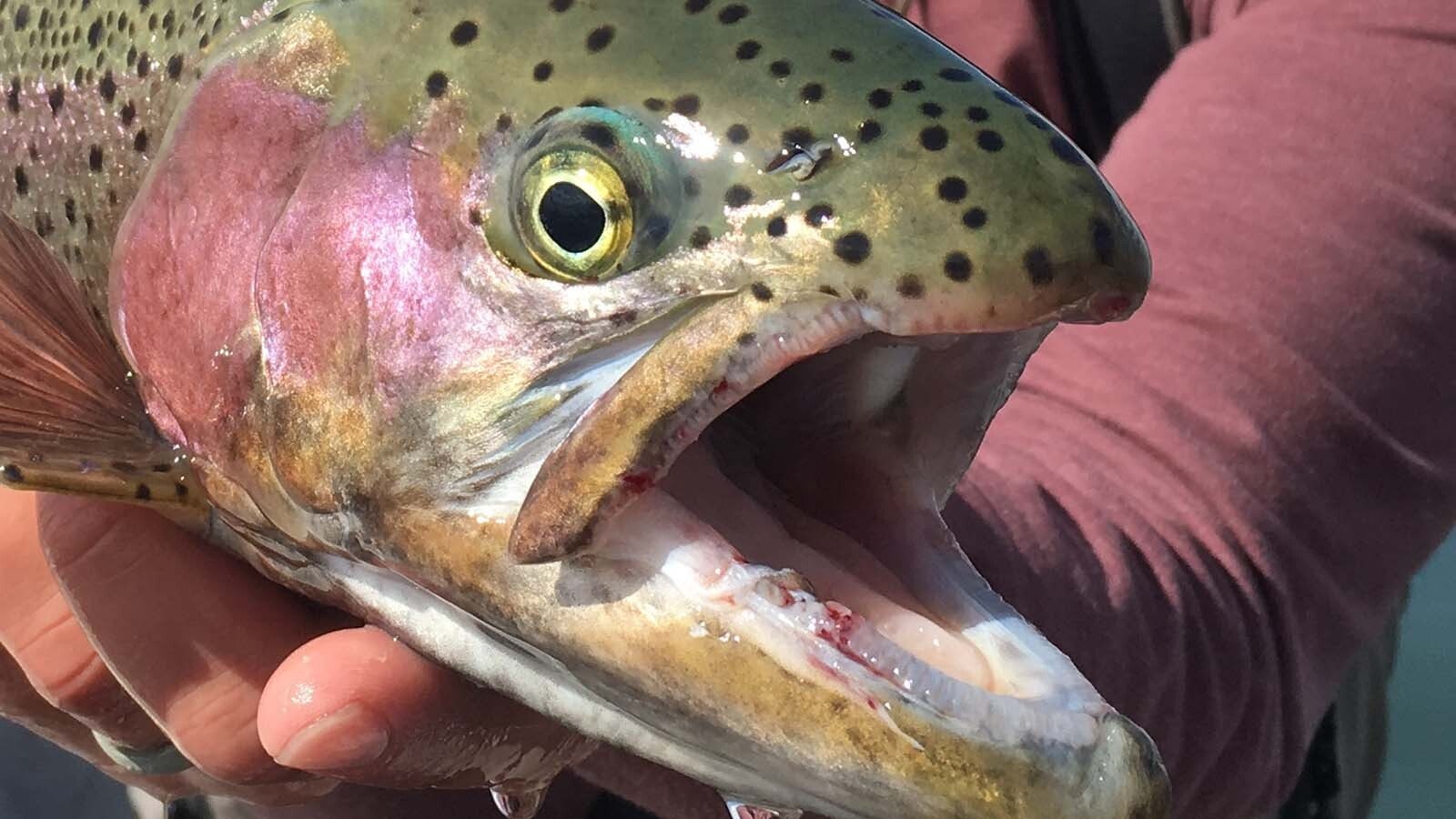
Wyoming Anglers Increasingly practice Catch-and-Release, Raising Concerns About Fish Injuries
FLAMING GORGE RESERVOIR, WYOMING – A growing trend toward catch-and-release fishing among Wyoming anglers is prompting concern about potential injuries to fish, notably at Flaming Gorge Reservoir. While teh shift reflects a changing ethos among some fishermen, it also means more fish are surviving with hook wounds, a situation wildlife officials are monitoring closely.The increase in catch-and-release isn’t necessarily due to anglers choosing to forgo eating their catch, according to fishing guide Valdez. He notes a possible correlation between a rise in the number of lines in the water and a corresponding increase in hook injuries. He expressed gratitude for the barbed hook ban implemented in his area, which aims to minimize damage. “Catch-and-release angling has long seemed to be the rule,rather than the exception,when it comes to fly-rod fishing,even though I’m not sure why,” Valdez said.Flaming Gorge, straddling the Wyoming-Utah state line, presents a unique situation. Wildlife agencies in both states have recently lifted possession limits on burbot and smaller lake trout. This decision stems from the fact that both species prey heavily on the popular kokanee salmon. Anglers are now encouraged to harvest these predatory fish, as both lake trout and burbot are considered good to eat. “We’ve been smoking them (smaller lake trout) and selling the meat in our store,” Valdez added.
The reservoir’s older, larger lake trout – some potentially exceeding 40 years in age – frequently enough bear visible scars. Valdez explains these aren’t typically from current anglers, but remnants of past fishing practices. Prior to around 2010, fishermen utilized a controversial method involving cable fishing line and flat lures dragged along the reservoir bottom. “Just dragging along the cable could cause damage to the fish, even fish that may never have been landed by the anglers. Barbaric, to say the least, but very effective on big fish. So, scars could be as old as 40-plus years,” Valdez stated.
The shift to catch-and-release, coupled with the ongoing presence of older injuries, underscores the importance of responsible angling practices and continued monitoring of fish populations at Flaming Gorge and other Wyoming waters.
