
Delft Lab Pioneers 3D-Printed Tissues to Personalize Cancer Treatment
Delft, Netherlands - Researchers at the Accardo Lab are leveraging advanced 3D printing techniques to grow both healthy and diseased human tissues in vitro, aiming to revolutionize cancer treatment and implant technology. The lab’s work, conducted in collaboration with the Amsterdam University Medical Center, focuses on creating realistic tissue models to study disease behavior and test treatment efficacy before submission in patients.
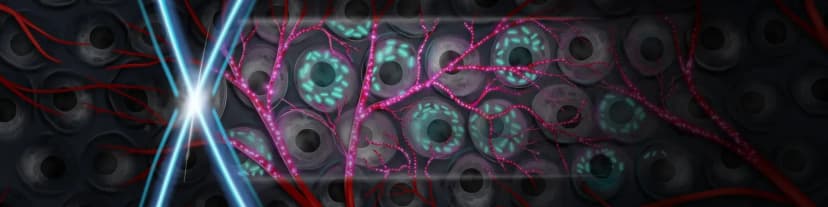
The team utilizes micro-digital light processing (µ-DLP) to construct porous hydrogel scaffolds that mimic the mechanical properties of different tissues, including brain and bone. “In this way the cells can easily grow in the scaffold, multiply and simulate the behavior of human brain cells,” explains researcher Jacobs. Currently, growing thes tissues takes a few weeks, allowing scientists to analyse cell behavior, morphology, and gene expression.
while initial efforts center on understanding Tuberous Sclerosis Complex (TSC)-affected brain cells, the lab is also tackling the challenges of bone tissue regeneration – a material a million times stiffer than brain tissue. They are collaborating with the Biomechanical Technology department to design “metabiomaterials” for bone scaffolds, crucial for successful implant integration, such as in total hip replacements. “Scaffolds with these properties can directly influence how bone cells behave,” the researcher stated, emphasizing the importance of good contact between the body and any future implant.Ultimately, the Accardo Lab envisions a future of personalized medicine. “My dream is that in ten years we can use our approach for the treatment of glioblastoma to perform minimally invasive biopsy in the tumor of a patient,” Accardo said. “We take those cells, grow them in our laboratory, see which dose of proton therapy works best, and use it as a guideline to treat the patient immediately.” This approach promises to optimize treatment plans and improve outcomes for patients facing complex conditions.
