
Indonesian Sailor’s Descendants Reunited with Australian Aboriginal Family After Century
Ancient Songlines Bridge Cultures in Historic Ceremony
A remarkable initiative has successfully reunited families separated for over a hundred years, bridging continents and cultures through the enduring power of oral history and art.
A Sailor’s Legacy Across Continents
The deep historical connection between Indonesian traders and Indigenous Australian communities, particularly the Yolngu people of Arnhem Land, has been brought to light through an artistic endeavor. This relationship began centuries ago with Makassar fishermen trading sea cucumbers, profoundly influencing local culture and language.
Central to this story is Husaing Daeng Rangka, a Makassar sailor also known as Yuching by the Yolngu. He established families in both Makassar and Australia. However, new immigration laws enacted in 1906 tragically separated him from his Australian family, preventing his return.
Unearthing Memories Through Songlines
The effort to reconnect these lineages relies on both Australian government archival records and, crucially, the traditional chants of the Yolngu tribe. These “songlines” carry the ancestral memories and stories of the Makassar sailors, serving as a living archive.
While formal records are scarce from the Makassar side, the oral traditions passed down through generations of sailors’ descendants proved vital. A dedicated team of artists and academics managed to identify a fifth-generation descendant of Husaing Daeng Rangka, tracing his lineage on both the Makassar and Yolngu sides.
A Sacred Reunion by the River
The reunion culminated in a significant gathering on the banks of the Jeneberang River in Makassar, a location steeped in the history of the Gowa Kingdom. This event transcended a mere family reunion; it was a sacred ritual.
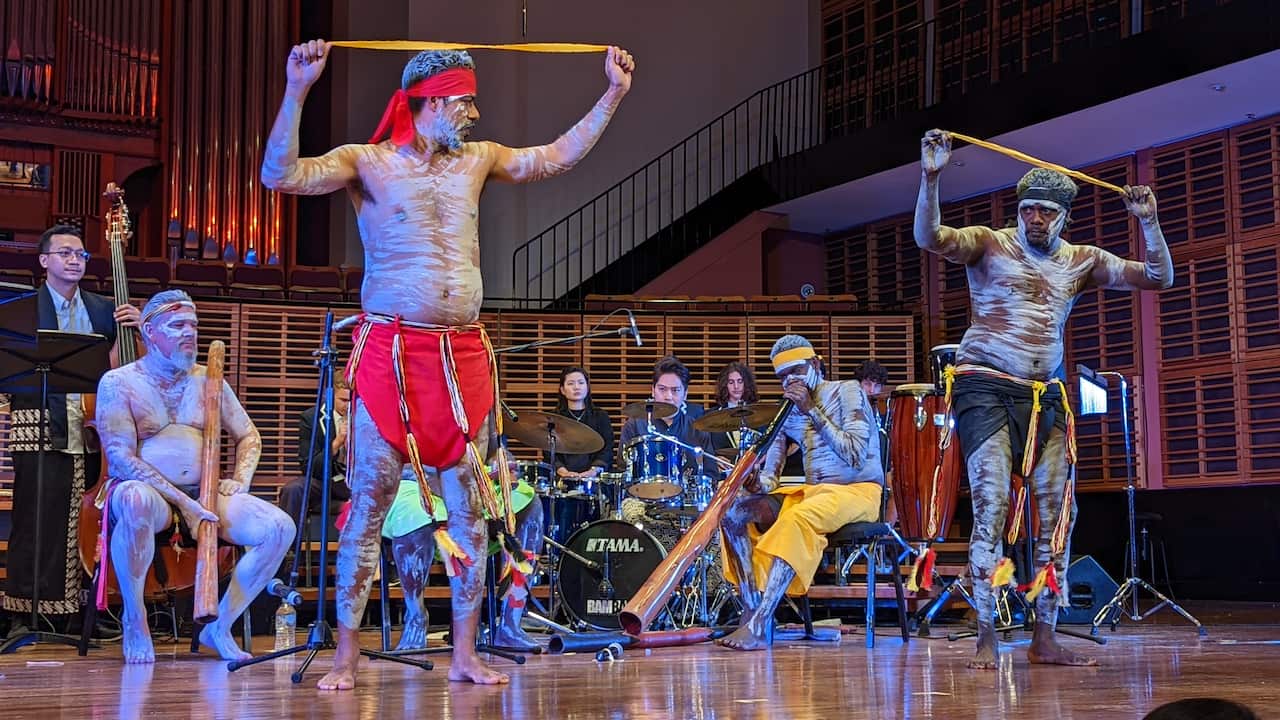
Attendees included descendants from Makassar, the Yolngu community, and Aboriginal elders from South Australia. The ceremony was enhanced by traditional Makassar music and dance, interspersed with the Yolngu chants that reaffirmed the shared history and collective memory of both peoples.
Preserving Untold Histories
This profound reconnection underscores how history thrives not only in official documentation but also within folklore and oral traditions. It highlights the critical importance of recognizing and documenting Indigenous narratives, which are often marginalized in mainstream educational curricula.
For instance, the National Museum of Australia reports that Indigenous Australians have the oldest continuous living culture on Earth, stretching back over 65,000 years (National Museum of Australia). This story adds another layer to that rich, ancient tapestry.
Daeng Abdi Karya, an artist involved in the initiative, expressed hope that such stories will continue to be uncovered and immortalized through artistic expression. His vision is to make these connections accessible to a broader audience, thereby strengthening the bonds between Indonesia and Australia.
