
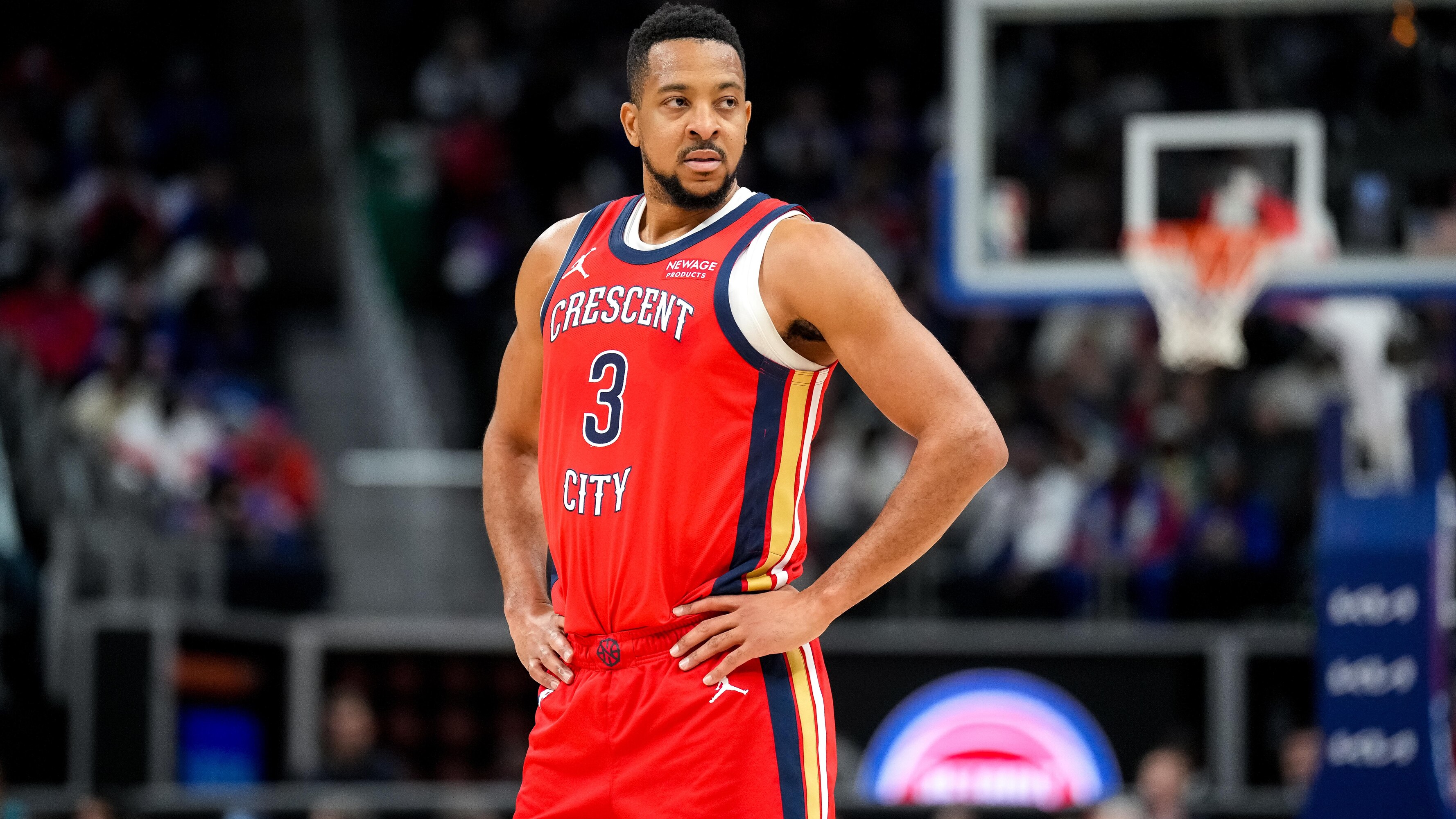
CJ McCollum, the former president of the National Basketball Players Association (NBPA), has voiced his concerns regarding the current NBA Collective Bargaining agreement (CBA) and its impact on team-building, notably for franchises aiming for championship contention. McCollum, who led the players’ negotiations for the 2023 CBA, highlighted the restrictive nature of the second tax apron, a key provision introduced in the new agreement.
The second tax apron imposes notable limitations on teams that exceed a certain payroll threshold. These teams are barred from using cash or future first-round draft picks (seven or more years out) in trades. Furthermore, they cannot aggregate multiple player salaries to match the salary of a single player they acquire in a trade, nor can they utilize the taxpayer mid-level exception in free agency. While teams operating above this apron can still retain their own players, doing so can push them further into restricted territory, exacerbating their financial and roster-building challenges.
McCollum, who served as NBPA president from 2021 until Fred VanVleet’s election earlier this month, believes that players who are drafted and developed should be retainable, especially during periods when a team has a genuine possibility to compete for a championship. he argued that overly stringent restrictions hinder such competitive aspirations.
As an illustration, mccollum pointed to the Oklahoma City Thunder, the reigning NBA champions. He suggested that the Thunder might face difficult roster decisions in the future due to the second tax apron. With their star players, Shai Gilgeous-Alexander, Jalen Williams, and Chet Holmgren, having signed contract extensions, these deals are set to impact the team’s payroll substantially starting in the 2026-27 season. This financial escalation could potentially force the Thunder to part ways with important contributors like isaiah Hartenstein, Alex Caruso, and Lu Dort.
McCollum acknowledged that the basic purpose of a salary cap is to promote competitive balance, and that tough decisions have always been a part of managing a roster under such constraints, even before the introduction of the second apron. Still, he anticipates that the apron system will remain a central point of discussion as the current CBA approaches its expiration at the end of the 2029-30 season. The ongoing dialog between the league and the players’ union on these matters is expected to continue.
