
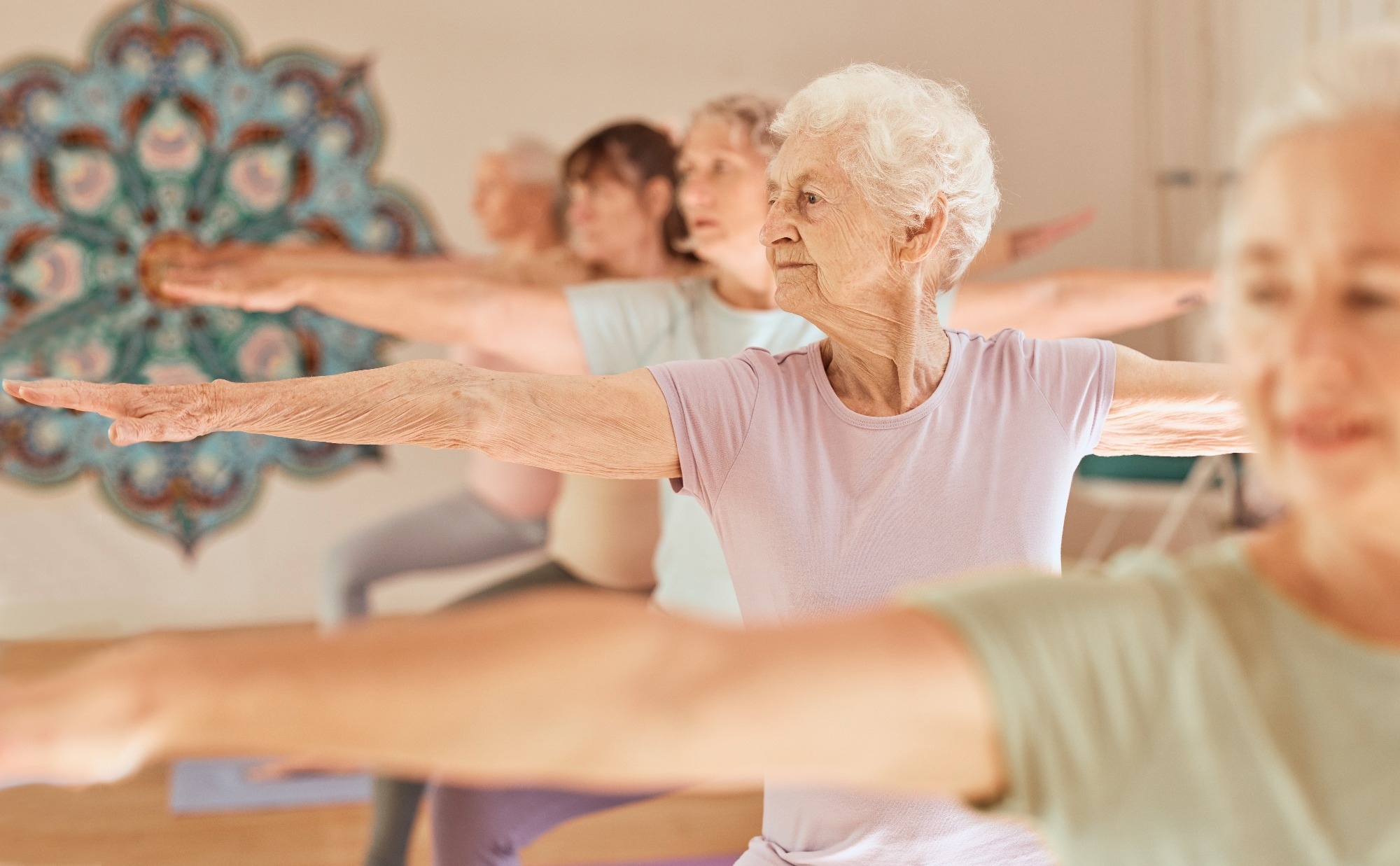
Tai Chi, Yoga Outperform Workouts in Reversing Senior Frailty
Mind-Body Exercise Offers Cost-Effective Path to Healthier Aging
New research highlights that mind-body exercises, like tai chi and yoga, are significantly more effective than other forms of physical activity in combating frailty and improving daily functioning in older adults.
Unlocking Resilience in Aging
Frailty, a condition affecting up to 25% of seniors, is marked by decreased strength, slower walking speed, and reduced endurance. As the global population ages, this condition poses a growing challenge, especially in lower and middle-income countries. While exercise is known to build resilience and combat frailty, the most effective modalities remained unclear until now.
A comprehensive network meta-analysis, published in Frontiers in Public Health, compared mind-body training, aerobic exercise, strength training, and mixed physical activity programs. The study reviewed 35 randomized controlled trials involving 2,905 participants with an average age of 72. Interventions typically lasted 18 weeks.
Mind-Body Dominance in Frailty Reduction
The findings revealed that mind-body training was the most potent intervention for reducing frailty, demonstrating an 81% greater effectiveness compared to all other exercise types. It also led to the most substantial improvements in quality of life (QoL). While aerobic training showed a notable advantage in improving activities of daily living (ADLs) by 74% over other forms, mind-body and mixed activities also yielded similar positive impacts on ADLs, with strength training showing a more modest effect.
Crucially, the benefits of community-based programs were found to be comparable to those in hospital settings, supporting a move towards localized interventions. Sessions lasting 50-60 minutes, performed at least three times weekly, were associated with the greatest improvements. These positive outcomes remained consistent across different continents, socioeconomic statuses, and baseline fitness levels, underscoring the broad applicability of this approach.
Cost-Effective and Accessible Intervention
The study’s cost analysis indicated that each quality-adjusted life year (QALY) gained through mind-body training was approximately one-third the cost of current pharmacological fall-prevention programs. This positions exercise as a low-risk, high-reward pathway for enhancing resilience in aging.
“Mind-body training emerged as most effective in alleviating frailty and enhancing overall quality of life, making it particularly suitable for severely frail individuals with restricted mobility.”
Recommendations for Practice and Policy
The research emphasizes that exercise modality is a critical factor in tailoring movement for seniors. While mind-body training excels in addressing frailty and QoL, aerobic workouts are beneficial for maintaining daily independence. Mixed and strength training also offer valuable complementary benefits.
These exercise forms not only surpass clinically meaningful thresholds but are also easily integrated into community settings, proving both safe and cost-effective. Healthcare providers are encouraged to recommend one-hour sessions combining mindfulness and physical exertion at least three times weekly. Policymakers can confidently invest in local mind-body programs, while continued research into adherence, biological mechanisms, and cost-effectiveness is warranted.
Globally, older adults are being encouraged to embrace mind-body practices, such as those offered by the National Institute on Aging, to foster greater independence and well-being in their later years.
