
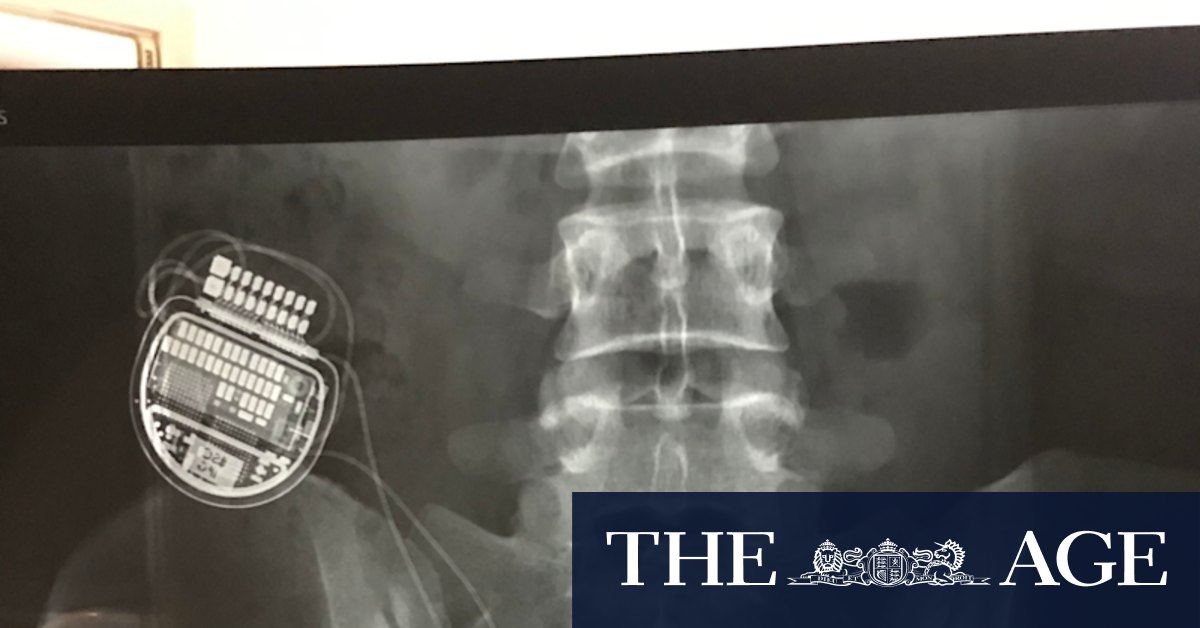
Spinal Cord Stimulators Under Fire: Experts Question Efficacy and Cost
Research suggests devices offer little benefit for chronic pain, despite high price tag
Concerns are mounting over the value and effectiveness of spinal cord stimulators, with leading researchers asserting that the substantial risks and exorbitant costs far outweigh any likely benefits for patients suffering from chronic pain.
Challenging Device Claims
Dr. Caitlin Jones, lead author of a new study from the University of Sydney’s Institute of Musculoskeletal Health, stated that the evidence clearly indicates the devices pose significant risks with minimal chance of positive outcomes. Patients should know they are taking on a substantial risk, that is exorbitantly expensive, with very little likelihood of any benefit.
However, the Medical Technology Association of Australia (MTAA), representing device manufacturers, has strongly refuted these claims. A spokesperson maintained that stimulators are a demonstrably safe and effective alternative to long-term drug therapies, notably opioids.
The MTAA asserted that suppliers stand behind the safety, quality and efficacy of our SCS technologies that have demonstrated positive outcomes for patients, which are backed by robust clinical trial data and real-world evidence.
Evidence vs. Industry Claims
Spinal cord stimulators are comprised of a small battery pack implanted under the skin, connected to several electrodes. The intended mechanism involves electrical pulses disrupting pain signals sent from nerves. Despite manufacturers’ assurances of safety and efficacy, independent reviews paint a different picture.
Associate Professor Michael Vagg, director of professional affairs for the Australian Faculty of Pain Medicine, acknowledged that chronic pain, particularly “failed back surgery syndrome,” presents formidable treatment challenges, often leading practitioners to explore options with less robust evidence. Nothing in pain management has bulletproof evidence,
he commented.
Crucially, Cochrane reviews, widely regarded as the gold standard for synthesizing scientific evidence and designed to minimize industry bias, have concluded that these devices are unlikely to be beneficial for individuals with chronic pain or back pain.
Associate Professor Adrian Traeger, an academic at the University of Sydney who led one of these reviews, was unequivocal. We are talking about an ineffective treatment,
he stated. People are accepting these high costs and risks for a treatment that was proven no better than placebo. Why?
He suggested that the continued prescription of stimulators implies the risk versus benefit profile is not being fully explained to patients.
Patient Experiences and Regulatory Scrutiny
Marcus Barlow, who endured decades of chronic lower back pain, described his decision to receive a stimulator, saying, You’d do anything.
He recalled the presence of a manufacturer’s representative during his surgery and the severe pain he experienced upon waking. My leg, it was almost like it was on fire,
he recounted. Despite seeking frequent adjustments, he found the device ineffective: I was kidding myself it worked. It never worked. It never helped me at all.
The high cost of these procedures is significant. Private Healthcare Australia indicated that, on average, each patient receiving a stimulator cost private insurers $55,635, in addition to patient out-of-pocket expenses, according to the study. The MTAA countered that the use of private insurer data, which they suggest has a vested interest in avoiding payment for stimulators, could introduce bias into the study’s findings.
Following an investigation by this publication in 2022, Australia’s federal Department of Health initiated a review of spinal cord stimulators. In August of the previous year, the Therapeutic Goods Administration (TGA) cancelled the registrations of 12 devices and imposed conditions on 52 others. The TGA has stated that the evidence it has reviewed suggests an acceptable risk-benefit profile.
Effective Alternatives for Back Pain
For those seeking relief from chronic back pain without resorting to spinal cord stimulators, a range of evidence-based options exist. Professor Chris Maher, director of the Institute for Musculoskeletal Health, highlights lifestyle modifications and increased physical activity as foundational treatments. A 2021 Cochrane review found moderate evidence supporting exercise as being more effective than placebo for improving back pain.
Given the significant neurological component of chronic low back pain, psychological therapies, particularly cognitive behavioural therapy (CBT), have demonstrated considerable efficacy. Advanced treatments like cognitive functional therapy (CFT), a combined approach of physical and mental strategies to re-establish the brain’s connection with the back, are also effective. A course of eight CFT sessions with a physiotherapist costs under $1000, a fraction of the price of spinal cord stimulators, which Professor Maher contends do not work.
In comparison, studies have shown that physical therapy interventions for chronic low back pain can be highly cost-effective, with a study in the *Annals of Internal Medicine* suggesting that personalized physical therapy plans can save thousands of dollars per patient in long-term healthcare costs.
