
Nissan’s Electric Pioneer Gets a Crossover Makeover
Icon Reborn: The All-New Nissan LEAF
The Nissan LEAF, a groundbreaking electric vehicle, is undergoing a major transformation. This redesign sees the pioneering EV adopt a crossover format, aiming to reclaim its position in a rapidly changing market and broaden its appeal. This evolution marks a significant shift for a car that once held the title of the most popular electric vehicle globally.
Launched in 2010, the original LEAF was a pioneer, selling 700,000 units. However, its popularity waned. Now, Nissan is attempting to recapture its former glory by reimagining the LEAF as a crossover.
Design and Dimensions
The redesigned LEAF sports a more robust and balanced aesthetic, marking a departure from the previous generations’ distinctive look. The new silhouette is more appealing, with a focus on aerodynamics, achieving a drag coefficient of just 0.25. It has a more premium appearance, particularly at the rear, which features a black mask and a 3D lighting effect.
Notably, the new LEAF is shorter than its predecessor, a trend reversal in today’s automotive world. It measures 13 cm less in length (4.35 m), 1 cm taller, and 2 cm wider. Despite the reduced length, the interior space has increased, providing more room for passengers in the rear.
Interior and Technology
Inside, the transformation is equally dramatic. The new LEAF features two 14.3-inch screens, which redefine the in-car experience. The system is powered by Google Automotive, offering full integration with the Google ecosystem.

This integration allows for seamless navigation with Google Maps, including features like battery preconditioning. The LEAF also offers wireless Android Auto and Apple CarPlay, a premium sound system from Bose, and a panoramic roof.
The technology mirrors the Renault Scenic’s solarbay system. The new LEAF offers a V2L function (up to 3.7 kW), allowing it to be used as a power source for small appliances.
Performance and Range
The new LEAF will be available in two battery configurations. The first, with 52 kWh, offers a range of up to 436 km; the second, a 75 kWh battery, extends the range to 604 km. Highway range at 130 km/h is estimated at 224 km (52 kWh) and 330 km (75 kWh).
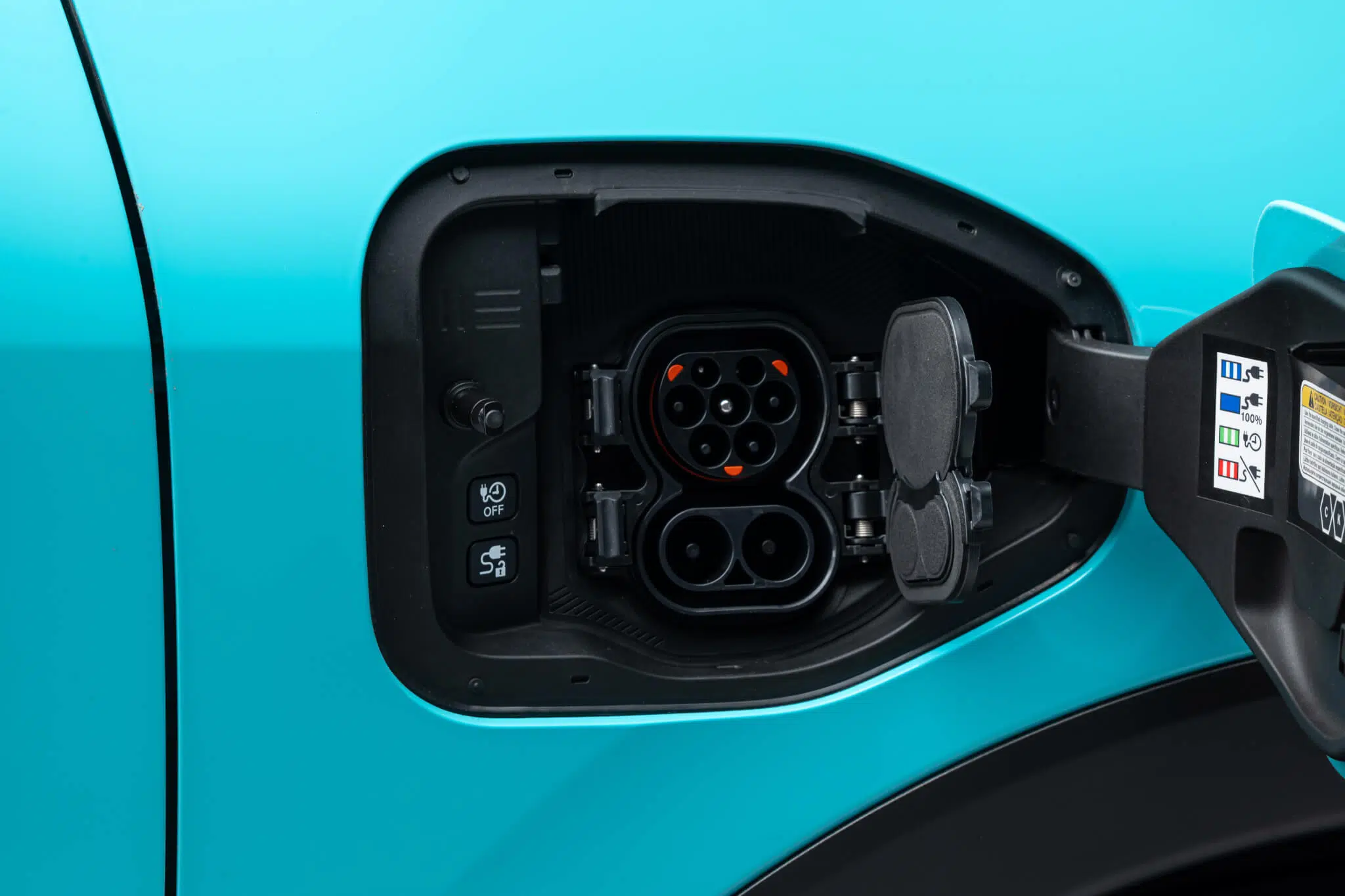
Charging supports up to 105 kW (smaller battery) and 150 kW (larger battery) DC fast charging, and 7.4 kW or 11 kW AC charging. The electric motor was developed specifically for this model.
The maximum power output remains the same as the previous model. The more powerful version, equipped with the 75 kWh battery, delivers 160 kW (218 hp) and 355 Nm of torque. It accelerates from 0 to 100 km/h in 7.6 seconds. The base model, paired with the 52 kWh battery, provides 130 kW (177 hp) and reaches the same speed in 8.6 seconds. According to recent data, the global EV market continues to grow, with sales projected to reach 26.8 million units by 2030 (Statista 2024).
Dynamic Capabilities
The new platform introduces a multi-link rear suspension and enhanced structural rigidity, which promises improved driving dynamics. This should result in a more engaging driving experience.
Market Arrival
The new LEAF is expected to arrive in Portugal in the beginning of the second quarter of 2026. Pricing for the Portuguese market has not yet been announced.
