
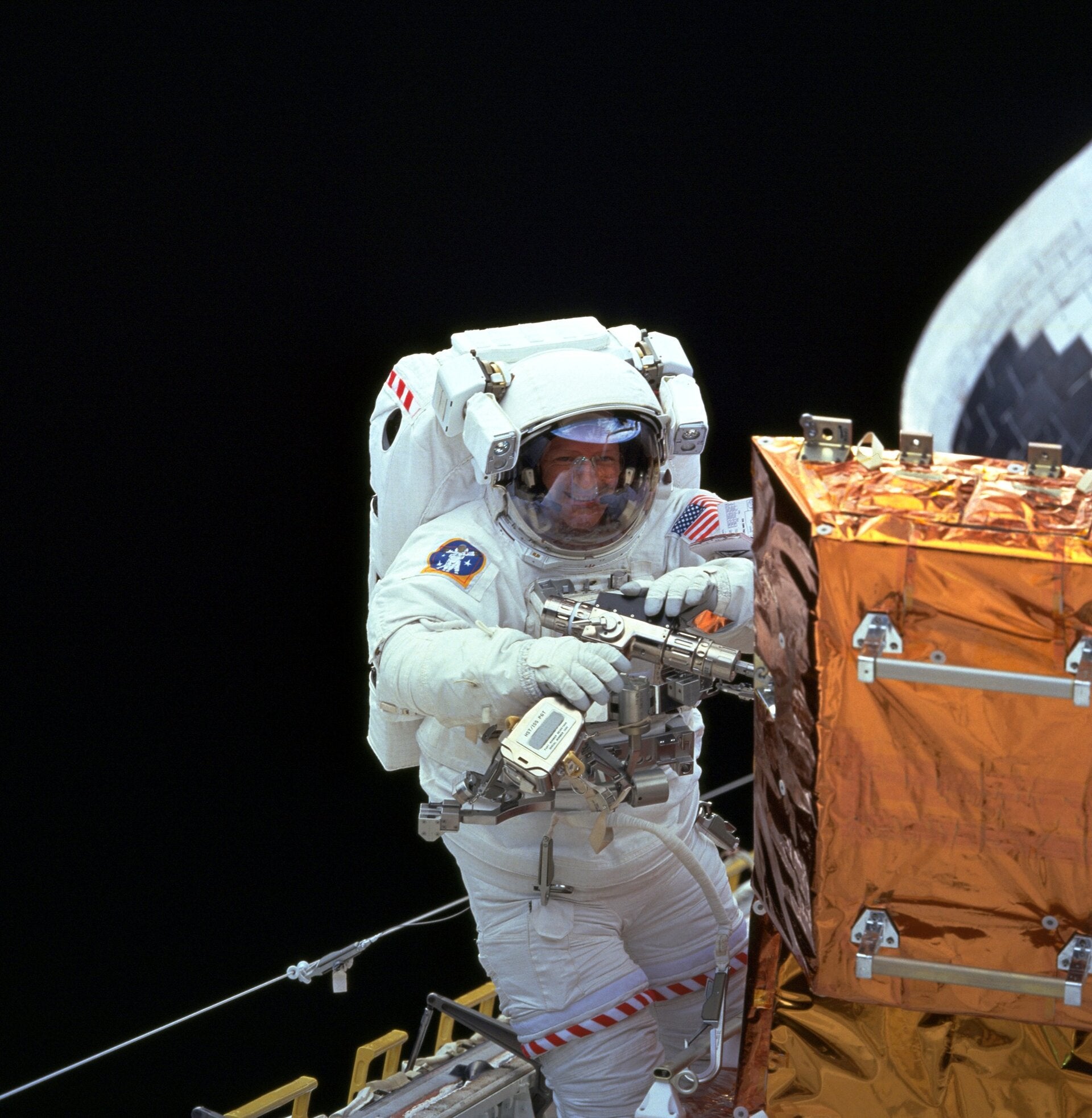
Wearable Tech Shields Astronauts From Space’s Harsh Realities
New Devices Monitor Health, Predict Risks on Long-Duration Missions
The human body faces extreme challenges in space, from muscle weakening and bone density loss to the dangers of radiation. As missions extend beyond low Earth orbit, innovative technologies are crucial for safeguarding astronaut well-being. Flexible wearable devices are emerging as a key solution, providing continuous health monitoring and real-time data.
Revolutionizing Space Medicine
These advanced tools are lightweight, adaptable, and equipped with sensors that adhere to the skin. They gather vital data on heart rate, respiration, sleep patterns, movement, and radiation exposure, offering a constant stream of information to doctors on Earth without hindering astronauts’ performance.
The unique space environment—characterized by microgravity, intense radiation, and temperature extremes—demands constant health surveillance. Without the ability to track the body’s response, even minor health issues could escalate into major emergencies far from medical assistance. According to NASA, approximately 80% of astronauts experience some form of vision impairment during or after long-duration spaceflight, highlighting the need for proactive monitoring. NASA
The Physiological Toll of Space Travel
In the absence of gravity, fluids shift upwards, causing blood to pool in the chest and head, potentially reducing heart strain but also leading to facial puffiness. Over time, the heart may diminish in size, impacting its pumping efficiency. Blood pressure regulation also changes, making readaptation to Earth’s gravity difficult.
Radiation exposure is another significant risk. Without Earth’s protective magnetic field, astronauts are vulnerable to cosmic rays and solar particles that can damage DNA and increase cancer risk. Temperature fluctuations are also extreme, ranging from intense heat to freezing cold in seconds.
Monitoring Mental Wellbeing
The psychological stresses of isolation, confinement, and high-stakes missions can impact mental health. New wearables are being designed to track emotional wellbeing through changes in sleep, movement, and skin temperature, signaling potential stress or anxiety.
Advanced Device Capabilities
Flexible wearable devices are constructed with resilient materials capable of bending, stretching, and withstanding harsh conditions. They incorporate biosignal electrodes, motion sensors, and environmental hazard detectors, functioning as miniature health labs when applied to the skin.
These devices can simultaneously record heart rate, detect movement, monitor skin temperature, and assess radiation exposure. The goal is to understand the body’s real-time reactions and anticipate potential problems.
These systems are vital for identifying early warning signs in heart and lung function, muscle control, and circadian rhythms. This allows space crews to respond quickly, whether through rest, exercise, medication, or emergency return to Earth.
A key benefit is the non-invasive nature of the diagnosis—no needles or blood samples are required, which is particularly important in the limited medical environment of space.
Challenges and Future Directions
Despite their promise, several challenges remain. Ensuring device reliability in the unforgiving space environment—withstanding microgravity, radiation, and temperature swings—is critical. Sensor failure could lead to missed warning signs.
Data privacy and security are also concerns. Astronauts may be hesitant to share sensitive health information in the confined environment of a spacecraft. Systems must ensure data encryption and secure transmission.
Data fusion—integrating diverse signals like heartbeats, muscle activity, and radiation levels—requires sophisticated algorithms to provide a comprehensive understanding of an astronaut’s health.
Future research focuses on material science, sensor development, smart algorithms, and device design and integration. Collaboration between scientists, engineers, doctors, and astronauts is essential to ensure these devices are effective and meet the needs of those who rely on them.
The use of flexible wearable technology is becoming integral to space exploration. As agencies plan missions to the Moon, Mars, and beyond, continuous innovation will be essential for keeping astronauts safe during extended journeys.
These evolving wearables are transforming from simple heartbeat trackers into full-body systems linked to Earth-based control centers, enabling real-time health monitoring, problem prediction, and remote treatment. It’s telemedicine at its most advanced.
