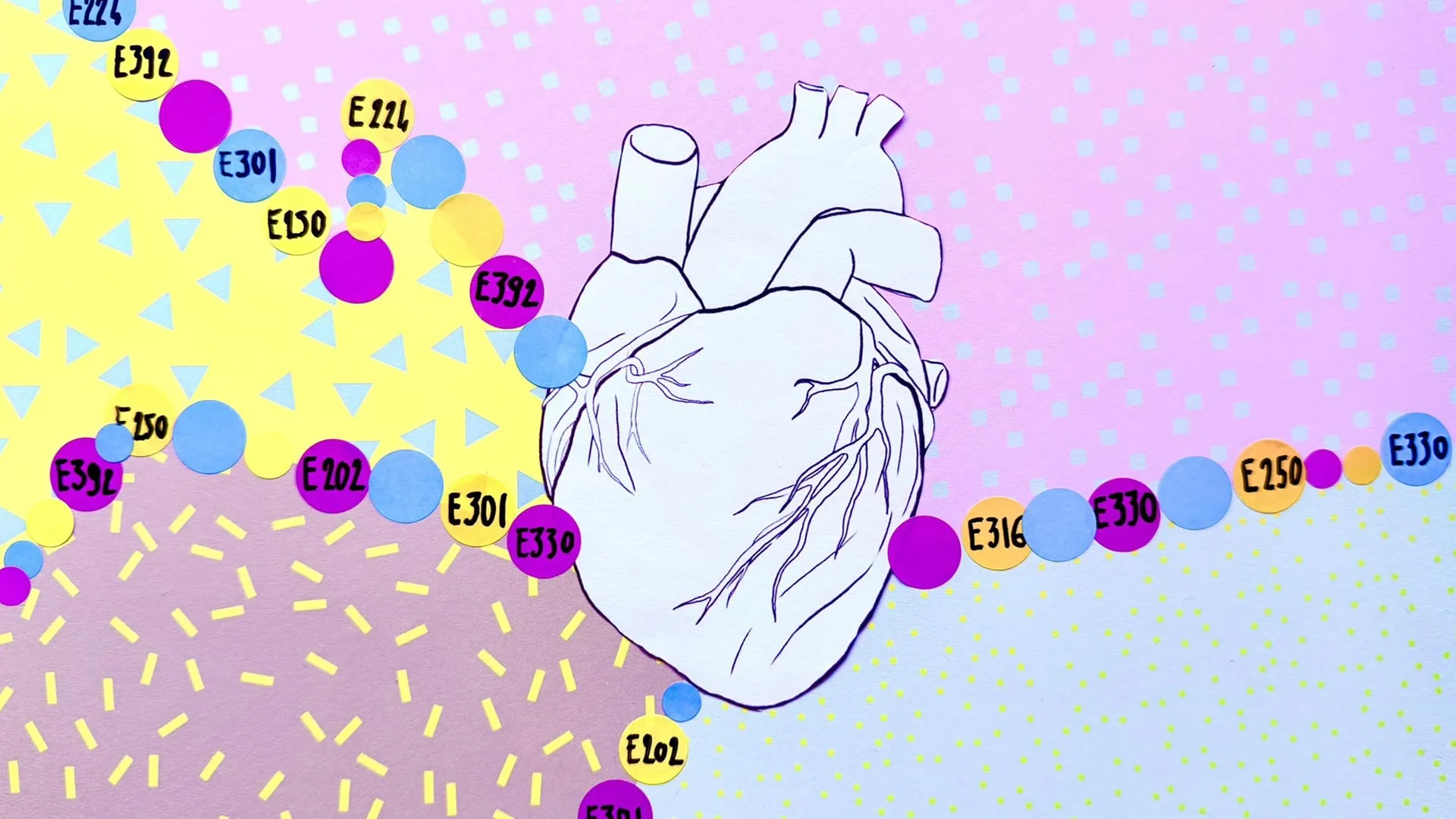
8 Common Food Additives Linked to High Blood Pressure and Heart Disease
Recent epidemiological data published in the European Heart Journal links eight common food additives to an increased risk of high blood pressure and cardiovascular disease, highlighting the widespread presence of non-antioxidant and antioxidant preservatives in modern diets. According to a longitudinal study tracking more than 112,000 participants in France, individuals consuming the highest levels of non-antioxidant preservatives faced a 29% higher risk of hypertension and a 16% higher risk of heart attack and stroke compared to those with minimal intake.
- High intake of non-antioxidant preservatives—agents designed to prevent microbial growth—correlates with a 29% increase in hypertension risk.
- Antioxidant food preservatives are associated with a 22% higher risk of developing high blood pressure over time.
- During the initial two years of the study, 99.5% of participants consumed at least one food item containing these common preservatives, underscoring their ubiquity in ultra-processed foods.
The Clinical Framework and Epidemiological Findings
Led by the Nutritional Epidemiology Research Team at the French National Institute for Health and Medical Research (INSERM), researchers utilized repeated 24-hour dietary records to evaluate the consumption patterns of over 112,000 adults. Anaïs Hasenböhler, lead study author and PhD student with the research team, notes that regular exposure to these chemical agents frequently co-occurs with diets heavy in ultra-processed products.
Participants ingest these substances through a vast array of shelf-stable goods. Dr. Mathilde Touvier, study co-author and head of the Nutritional Epidemiology Research Team, coordinated tracking health metrics alongside dietary inputs. The analysis isolated two distinct categories of chemical preservatives:
| Preservative Category | Primary Function | Associated Cardiovascular Risk |
|---|---|---|
| Non-Antioxidant Preservatives | Inhibit microbial growth and spoilage | 29% higher hypertension risk; 16% higher risk of myocardial infarction and stroke |
| Antioxidant Preservatives | Prevent oxidation and discoloration | 22% higher risk of developing high blood pressure |
Biological Mechanisms and Expert Analysis
The statistical correlation does not definitively prove direct causation, but clinical experts point to several plausible pathological pathways. Katherine N. Balantekin, PhD, RD, assistant professor in the Department of Exercise and Nutrition Sciences at the University at Buffalo, explains that shelf-stable ultra-processed foods inherently contain elevated levels of sodium, added sugars, and fats, which independently drive cardiovascular dysfunction.
Beyond the matrix of ultra-processed foods, specific chemical agents actively disrupt physiological homeostasis. Scott Keatley, RD, co-owner of Keatley Medical Nutrition Therapy, states that certain preservatives may amplify systemic inflammation, induce oxidative stress via an imbalance of unstable molecules, impair vascular endothelial function, or negatively alter the gut microbiome. Laboratory models suggest that chemical additives such as nitrites promote oxidative cellular damage, which directly hinders blood vessel dilation and blood pressure regulation.
Public Health Strategies and Dietary Modifications
Given that 99.5% of study participants consumed preservatives within their first two years of observation, avoiding them entirely presents a significant logistical challenge. Dr. Federica Amati, a research fellow and registered nutritionist at Imperial College London, notes that roughly 57% of the United States food supply consists of ultra-processed items. Eliminating preservatives completely is virtually impossible, but systematically reducing consumption of ultra-processed foods serves as an effective primary intervention.

Dr. Amati advises prioritizing whole foods such as vegetables, fruits, whole grains, nuts, seeds, herbs, and spices, which naturally contain fewer commercial additives and high levels of dietary fiber. Fiber remains vital for maintaining gastrointestinal integrity, immune competence, and cardiovascular stability. Patients attempting to lower their intake should target specific high-risk items first, including processed meats containing nitrate or nitrite preservatives, and commercial sodas. Replacing these beverages with water, unsweetened tea, coffee, or carefully selected fermented products like kefir or kombucha—verified by checking labels for live cultures and short ingredient lists—minimizes unnecessary chemical exposure.
As regulatory bodies and researchers continue to monitor additive safety, healthcare providers emphasize proactive clinical monitoring.