
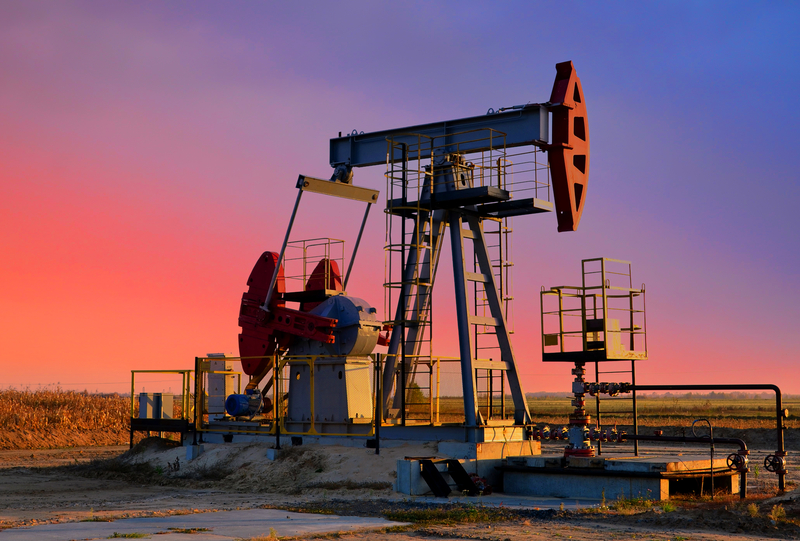
Brent crude surged past $115 per barrel as geopolitical tensions in the Middle East intensified, triggering a sell-off in Asian equities. Nikkei 225 and Kospi indices dropped over 4% amid fears of Strait of Hormuz closures. Global supply chains face immediate disruption as energy costs spike.
The market does not price in probability anymore; it prices in certainty. With Brent crude crossing the $115 threshold, the fifth week of the conflict involving US and Israeli forces has shifted from a regional skirmish to a global liquidity crisis. Asian trading sessions opened red, with Japan’s Nikkei 225 shedding 4.5% and South Korea’s Kospi sliding 4%. Investors are scrubbing exposure to energy-intensive sectors, rotating capital into defensive bonds and gold. This is not a correction. It is a structural repricing of risk.
Volatility stems from direct threats to critical chokepoints. Approximately 20% of global petroleum supply typically traverses the Strait of Hormuz. Recent maneuvers suggest stagnation in flow rates. Teheran has retaliated against American and Israeli strikes by threatening vessels attempting passage. U.S. Energy Information Administration data indicates that even a partial blockade triggers exponential price elasticity. Sean Foley from Macquarie University warns that Houthi involvement expands the threat perimeter to the Bab al-Mandeb strait. A blockade there compromises another 10% of worldwide supply. Supply chain managers are now calculating force majeure clauses rather than delivery windows.
The Kharg Island Variable
Political rhetoric is accelerating fiscal uncertainty. In a Sunday interview with the Financial Times, President Donald Trump suggested the US could seize Iranian oil assets, specifically targeting the Kharg Island distribution hub. He dismissed Iranian defensive capabilities, drawing parallels to US operations in Venezuela following the January removal of Nicolás Maduro. Treasury Department offices are now monitoring sovereign asset freezes. Such a move would nationalize energy infrastructure under foreign control, creating a precedent that unsettles emerging market debt holders.
Corporate treasurers face an immediate margin compression event. Energy inputs account for a significant portion of operating expenses across manufacturing and logistics. When crude moves from $72 to $115 in five weeks, EBITDA margins evaporate. Companies lacking hedging instruments are exposed to spot market violence. This environment favors entities with robust risk management frameworks. Mid-cap firms are urgently consulting with specialized risk management and insurance brokers to secure political risk coverage. Standard policies do not cover acts of war involving major powers. Customized coverage is now a prerequisite for operational continuity.
“The biggest fear is a global economic slowdown because consumers are simply running out of money as they spend more on energy and food.”
Andrew Lipow of Lipow Oil Associates projects Brent could hit $130 per barrel in coming weeks. His assessment highlights the demand destruction waiting in the wings. When household disposable income funnels into fuel and groceries, discretionary spending collapses. Retailers and consumer goods manufacturers will see Q2 revenue guidance slashed. The ripple effect moves beyond energy. Logistics costs rise, forcing a reevaluation of inventory models. Just-in-time delivery becomes financially untenable when freight rates double. Enterprises are pivoting to enterprise supply chain logistics providers capable of multimodal rerouting. Reliability now outweighs efficiency.
Three Structural Shifts for Q2 Fiscal Planning
- Capital Expenditure Freezes: Non-essential CAPEX will be deferred as companies preserve cash reserves against potential oil shocks. CFOs are prioritizing liquidity over growth, leading to a slowdown in infrastructure projects and technology upgrades.
- M&A Defensive Posturing: Valuation multiples are contracting. Distressed assets in energy-dependent sectors may turn into acquisition targets, but deal financing is tightening. Companies are engaging M&A advisory firms to explore defensive buyouts before credit markets seize further.
- Sovereign Debt Repricing: Yield spreads on emerging market bonds are widening. Investors demand higher premiums for exposure to regions near conflict zones. Refinancing debt becomes costly, increasing default risk for leveraged firms in affected zones.
Institutional money is moving fast. A Chief Investment Officer at a major global asset management firm, speaking on condition of anonymity, noted that portfolio rebalancing is occurring daily rather than quarterly. “We are treating geopolitical headlines as earnings data,” she stated. “If a missile hits a tanker, that is a direct hit to our NAV. We cannot wait for the weekly report.” This sentiment echoes across Wall Street. The Bureau of Labor Statistics occupational data shows a spike in demand for financial analysts specializing in crisis management. The skill set required has shifted from valuation modeling to scenario planning.

Consumer behavior is the lagging indicator that will confirm the recession. Lipow’s warning about consumers running out of money is not hyperbole. It is a mathematical inevitability at $130 oil. Inflationary pressure will force central banks into a dilemma: raise rates to combat energy inflation or cut rates to save growth. Either choice damages equity valuations. The capital markets career landscape is shifting to accommodate this complexity, requiring analysts who understand both derivatives and defense policy.
Volatility is the new baseline. Companies that survive this quarter will be those that anticipated the shock rather than reacted to it. Supply chains must be diversified away from single points of failure like Hormuz. Balance sheets necessitate deleveraging immediately. The window for passive management has closed. Executive teams must engage with corporate restructuring and turnaround specialists to stress-test their operations against a $150 oil scenario. The market does not reward hope. It rewards preparation.
World Today News Directory connects leadership with the vetted partners required to navigate this turbulence. From sovereign risk insurance to liquidity advisory, the right B2B infrastructure determines survival. The next five weeks will define the fiscal year. Ensure your counterparties are ready.