
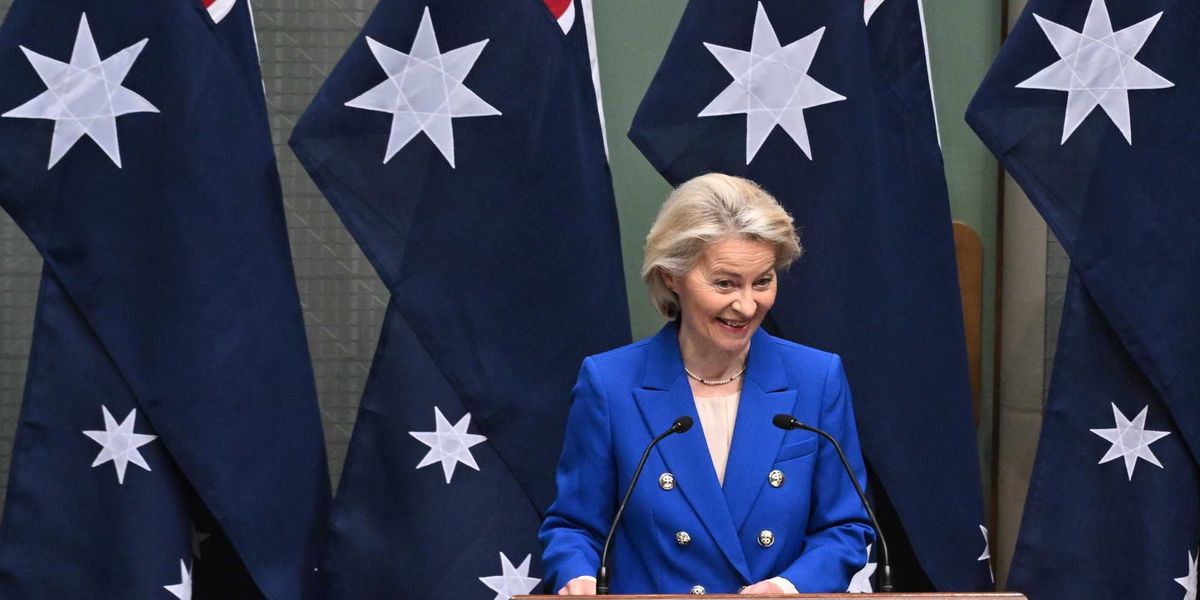
The European Commission’s ambitious Startup Act promises a unified digital single market, yet political volatility in Rome suggests a starkly different reality for capital allocation. As the Meloni government faces a potential early election following a divisive referendum, the disconnect between Brussels’ regulatory optimism and Italy’s legislative gridlock creates a critical liquidity trap for high-growth ventures. Investors are not buying the narrative of stability; they are hedging against sovereign risk, forcing founders to seek specialized counsel to navigate the widening gap between EU policy and national execution.
Market confidence is fragile. When a Finance Minister like Giancarlo Giorgetti admits to external shocks comparable to the Ukraine crisis, the cost of capital for Italian SMEs and startups inevitably spikes. The “bluff” lies in the assumption that EU-level frameworks can insulate local ecosystems from domestic political implosion. They cannot. The spread between Italian BTPs and German Bunds serves as the canary in the coal mine, widening whenever the Quirinale (Presidential Palace) hints at technical government interventions. For the venture capital community, this isn’t just political noise; it is a direct correlation to valuation compression.
The Sovereign Risk Premium on Innovation
Francesco Giavazzi, a vocal critic of the current administration’s economic pacing, argues that “taking time means effectively losing time.” In the context of venture capital, time is liquidity. The source material highlights a specific friction point: the Ministry of Enterprise and Made in Italy (MIMIT), currently led by Adolfo Urso, faces intense pressure from Confindustria (the national manufacturers’ association). When the primary lobby group for Italian industry publicly withdraws trust, citing unreliable fiscal norms, the signal to the market is clear. Policy risk has become the dominant variable in financial modeling for the region.
Consider the fiscal implications. The recent “dl Fisco” (Fiscal Decree) revisions, justified by external shocks, have eroded the predictability required for long-term R&D investment. Startups operate on thin runways. A sudden shift in tax incentives or energy subsidies—areas where Minister Urso has faced scrutiny—can burn cash reserves faster than operational inefficiencies. This environment favors incumbents with deep balance sheets over agile disruptors, effectively stifling the innovation cycle the EU claims to champion.
“Political uncertainty in the Eurozone periphery is no longer priced as a temporary anomaly; it is being underwritten as a structural discount on equity valuations. We are seeing a flight to quality that bypasses Southern European growth assets entirely.”
This sentiment is echoed by institutional investors who are increasingly cautious about exposure to jurisdictions with high election volatility. According to data from the European Central Bank’s yield curve reports, the term premium for Italian debt has remained elevated, signaling that bond markets anticipate prolonged instability. For a startup founder, this macro backdrop translates to harder terms sheets and more aggressive due diligence from limited partners.
Navigating the Regulatory Labyrinth
The disconnect creates a specific operational problem: how does a company scale when the rules of engagement change with every cabinet reshuffle? The potential for a “technical government” or early elections introduces a legislative vacuum. During these transition periods, bureaucratic approvals stall, and grant disbursements from the National Recovery and Resilience Plan (PNRR) face delays. This represents where the value proposition of specialized B2B services shifts from optional to essential.

Companies cannot rely on generalist advice. They require government relations firms capable of decoding the nuance between Brussels’ directives and Rome’s implementation. The “bluff” of a seamless market is exposed when local bureaucracy bottlenecks cross-border expansion. As the text notes, Confindustria’s loss of faith suggests that traditional lobbying channels are fracturing. Businesses require corporate law partners who specialize in regulatory arbitration to protect intellectual property and fiscal positions against retroactive policy changes.
Three Structural Shifts for Q3 and Beyond
The trajectory for the remainder of the fiscal year points toward a defensive posture for capital. Based on the current political entropy, three key trends will define the investment landscape:
- Liquidity Hoarding: With the potential for early elections in late 2026 or early 2027, cash preservation becomes the primary KPI. Startups will delay IPO preparations, opting instead for bridge financing secured against hard assets rather than growth projections.
- Regulatory Arbitrage: Firms will increasingly incorporate in jurisdictions with higher legislative stability, even if operational headquarters remain in Milan or Rome. This decoupling of legal and physical presence requires sophisticated tax consulting services to manage transfer pricing and compliance across borders.
- The Energy Cost Variable: As noted in the source text, energy responses remain inadequate. High energy costs disproportionately impact hardware and deep-tech startups. Expect a surge in M&A activity where larger energy conglomerates acquire innovative firms solely to secure their technology pipelines, bypassing the public markets entirely.
The narrative from the Commission may speak of unity and growth, but the ledger tells a different story. Giorgia Meloni’s willingness to risk an early vote demonstrates a prioritization of political mandate over economic continuity. For the private sector, this is a volatility event. The “fate presto” (act fast) warning from 2011 is relevant again, but the solution is no longer just about government formation; it is about corporate resilience.
Investors are watching the spread, not the speeches. As the political horizon extends toward the 2027 presidential term limits mentioned in the source text, the window for stable policy narrows. Companies that treat this political turbulence as a manageable risk factor, rather than a systemic threat, will survive. Those that wait for clarity from the Palazzo Chigi may find themselves waiting for a market that has already moved on. The smart capital is already repositioning, securing legal fortifications and diversifying jurisdiction exposure before the next ballot is even counted.