
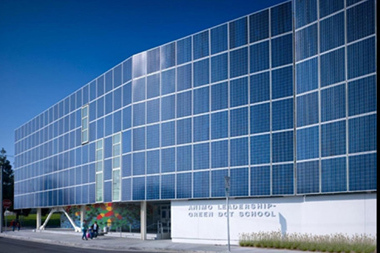
Prof. YAO Ling’s team at the Chinese Academy of Sciences quantified façade-integrated photovoltaics (FIPV) potential. Their Nature Climate Change model reveals 732.5 TWh annual generation globally. Urban developers face immediate pressure to retrofit vertical surfaces for carbon compliance and reduced operational expenditures.
This data lands while institutional capital rotates heavily into climate-resilient infrastructure. Cities burn cash on cooling. FIPV cuts that burn. The study indicates an 8.1% average reduction in building electricity demand. For commercial real estate holders, that margin expansion moves directly to the bottom line. Operational expenditure compression becomes a competitive moat in high-density urban zones.
Market participants must assess the capex required against lifetime yield. The research notes more than 80% of simulated districts show reductions in net lifetime electricity expenditures. Yet, implementation friction remains high. Zoning laws lag behind technology. Supply chains for specialized photovoltaic glass face bottlenecks. Companies navigating this transition require specialized sustainable construction consultants to audit structural load capacities and energy output models.
Capital Allocation Shifts in Vertical Energy
Financial markets price inefficiency. Vertical surface energy generation removes a specific inefficiency from the urban grid. Rooftops saturate quickly. Façades offer untapped surface area. The Chinese Academy of Sciences model links generation–demand interactions on an hourly basis. This granularity matters for grid stability. Intermittency risks drop when generation sources diversify across building orientations.
Investors tracking the U.S. Department of the Treasury domestic finance offices note increased bonding for green infrastructure. Policy support drives adoption. The study emphasizes targeted policies and adaptive planning are required. Variations in urban morphology dictate ROI. A glass tower in Shanghai behaves differently than a concrete structure in Berlin. Localized strategies win.
Carbon mitigation remains the primary driver for regulatory compliance. Cumulative carbon emissions could drop by 37.7 Gt CO2 if FIPV adoption reaches maximum potential by mid-century. Carbon credits trade at volatile premiums. Locking in reduction technology hedges against future tax hikes. Corporate treasurers view this as balance sheet protection. Carbon accounting services now verify these specific façade reductions for ESG reporting standards.
Three Structural Market Shifts
Integration of photovoltaics into building envelopes triggers three distinct changes in the industrial landscape. These shifts redefine risk profiles for developers and insurers alike.
- Valuation Recalibration: Properties with embedded generation assets command higher multiples. Net operating income rises as utility costs fall. Appraisers struggle to model this value accretion without specialized commercial real estate appraisers trained in energy-positive structures.
- Supply Chain Realignment: Traditional glass manufacturers pivot to photovoltaic integration. Margins expand for those who secure patents on transparent solar tech. Competitors relying on standard cladding face obsolescence.
- Insurance Liability Updates: Façade panels introduce new failure modes. Hail damage or thermal stress risks require updated underwriting models. Insurers adjust premiums based on panel durability ratings and maintenance contracts.
Execution risk remains the primary barrier. The study highlights variations in socioeconomic circumstances. Emerging markets lack the capital for upfront retrofitting. Developed nations face labor shortages. The U.S. Bureau of Labor Statistics tracks business and financial occupations seeing demand spikes in energy analysis. Talent wars intensify for engineers who understand both construction and grid dynamics.
“Vertical solar integration is not merely an aesthetic upgrade; it is a fundamental shift in how we underwrite urban asset longevity. The capex is front-loaded, but the opex relief creates a defensive cash flow stream that institutional mandates crave.”
— Managing Partner, Global Infrastructure Fund (Q1 2026 Investor Letter)
Legal frameworks must evolve to support these installations. Property rights regarding energy generation on shared walls remain ambiguous in many jurisdictions. Developers engage energy infrastructure legal counsel to navigate easements and grid interconnection agreements. Clarity here prevents litigation that could stall projects for years.
The ROI of Climate Adaptation
Climate adaptation is no longer theoretical. Heat exposure increases electricity demand for cooling. FIPV reduces that demand while generating power. The dual benefit creates a compounding return. The study published in Nature Climate Change provides the empirical backbone for this thesis. Investors demand empirical data, not optimistic projections.
Corporate finance institutes like CFI note capital markets careers shifting toward sustainability modeling. Analysts must now incorporate climate resilience into discounted cash flow models. Ignoring façade potential understates asset value. Overlooking implementation costs overstates it. Precision matters.
Global competitors move rapid. Chinese researchers lead the modeling. Western firms must lead the deployment. Supply chains for photovoltaic materials remain concentrated. Diversification is a strategic imperative. Companies securing long-term contracts for solar glass lock in margins. Those waiting spot market prices face volatility.
Urban density demands energy density. Façade panels offer a path to self-sufficiency without expanding land use. The fiscal problem is clear: rising energy costs erode commercial viability. The solution lies in vertical integration. World Today News Directory connects enterprises with the vetted B2B partners needed to execute this transition. From legal structuring to engineering verification, the infrastructure for this shift exists. Capital must follow the data.