
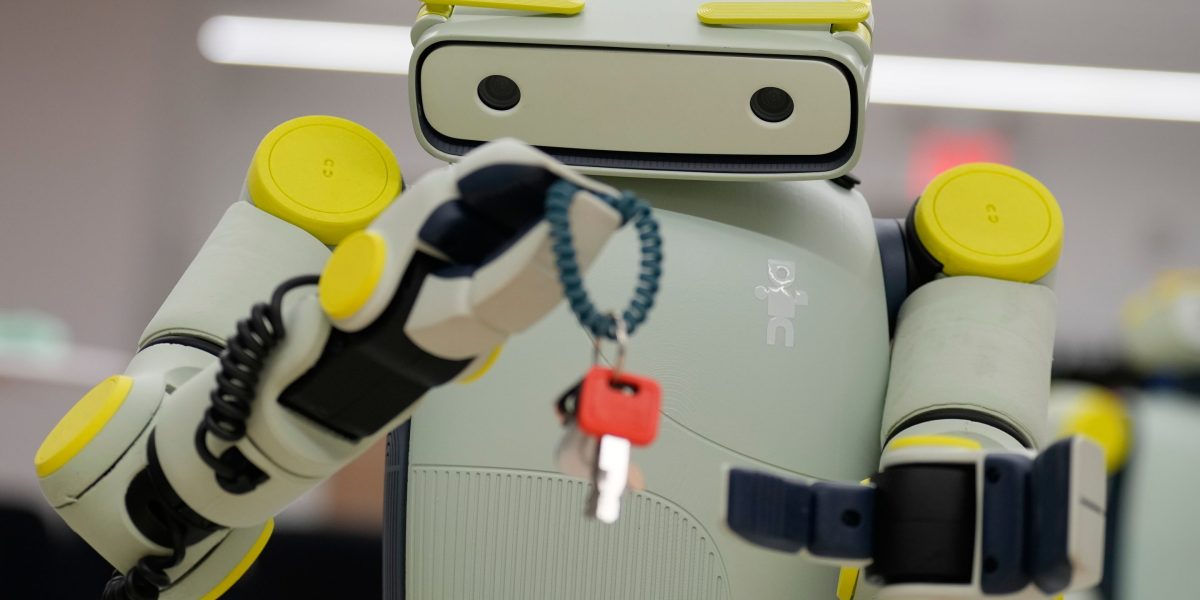
Amazon has officially acquired Fauna Robotics, the New York-based creator of the Sprout humanoid, marking a decisive pivot from failed logistics automation toward social consumer robotics. This strategic buyout, finalized in late March 2026, bypasses the regulatory gridlock that stalled the iRobot deal, positioning Amazon to dominate the emerging “home OS” market through a software-first hardware approach.
The e-commerce giant isn’t merely stocking shelves with more metal; it is attempting to solve a critical fiscal problem that has plagued its consumer division for three years: stagnation in household engagement. Whereas Amazon Web Services continues to print cash, the retail arm faces saturation. The acquisition of Fauna provides an immediate injection of proprietary kinematic technology and a developer ecosystem that Amazon previously lacked. For mid-market hardware startups watching this consolidation, the message is clear: standalone viability is becoming a liability. Companies unable to secure scale are now aggressively engaging M&A advisory firms to structure defensive exits before valuation multiples compress further.
The Pivot from Logistics to Social Presence
Amazon’s robotics history is defined by heavy lifting. The deployment of over one million Kiva-style units in fulfillment centers optimized the supply chain, but the consumer side remained a graveyard of discontinued projects. The collapse of the $1.7 billion iRobot acquisition in 2024 due to European Commission antitrust concerns forced a strategic recalibration. Amazon needed a robot that regulators couldn’t classify as a monopoly on floor cleaning, but rather as a novel social interface.
Enter Sprout. At 3.5 feet tall with a rectangular head and a price point of $50,000, the Sprout was never intended for mass retail. It was a developer platform. By acquiring Fauna, Amazon inherits a customer base that includes Disney and top-tier academic labs. This shifts the revenue model from unit sales to SDK licensing and ecosystem lock-in. It is a classic platform play: give away the razor, sell the blades, or in this case, sell the API access to the robot’s motor functions.
“Amazon is buying time. Developing social robotics in-house would have taken five years and billions in R&D burn. Fauna gives them a year-two product on day one.” — Marcus Thorne, Senior Analyst at Horizon Capital.
The financial logic holds up under scrutiny. According to Amazon’s Q4 2025 earnings call transcript, R&D spending in the “Other” category—which houses Alexa and devices—had ballooned by 18% year-over-year with diminishing returns on hardware launches. Acquiring a pre-vetted, functional humanoid allows Amazon to capitalize existing infrastructure. The Sprout’s ability to dance, fetch objects, and navigate social spaces integrates directly with the Alexa voice ecosystem, creating a unified home intelligence layer that competitors like Google and Apple are scrambling to replicate.
Regulatory Arbitrage and IP Defense
The structure of this deal suggests Amazon’s legal team learned hard lessons from the iRobot fallout. By keeping Fauna as a distinct operating unit initially, Amazon mitigates immediate antitrust scrutiny. However, the integration of Fauna’s intellectual property into Amazon’s broader patent portfolio creates a complex web of liability and ownership that requires immediate stabilization.
For the broader market, this highlights a surge in demand for specialized legal counsel. As robotics firms merge with tech giants, the overlap of software patents, hardware design rights, and data privacy compliance creates a friction point that generalist firms cannot handle. We are seeing a spike in retainer agreements with boutique intellectual property law firms capable of navigating the intersection of AI ethics and hardware patent law. The value of Fauna lies not just in the robot, but in the clean title to its motion algorithms.
the supply chain implications are non-trivial. Fauna’s components are sourced from a niche network of actuators and sensor manufacturers. Integrating these into Amazon’s global logistics network requires a complete overhaul of vendor contracts. What we have is where the friction lies for similar deals in 2026. Companies attempting to scale hardware post-acquisition often fail due to supply chain bottlenecks, necessitating the intervention of supply chain logistics consultants to harmonize procurement strategies between the acquirer and the target.
The Developer Ecosystem Gamble
Fauna’s CEO, Rob Cochran, noted that the firm would operate as “Fauna Robotics, an Amazon company.” This branding retention is strategic. It signals to the developer community that the open-source spirit of the Sprout SDK will remain intact, at least initially. Amazon is betting that by controlling the hardware standard for social robots, they can grow the Android of the home.

The risk, however, is adoption. A $50,000 robot is a research tool, not a consumer good. To create this acquisition accretive to earnings, Amazon must drive the unit cost down by an order of magnitude within 24 months. This requires aggressive manufacturing optimization. Per data from the Semiconductor Industry Association, the cost of LIDAR and haptic sensors has dropped 12% annually, but labor costs for assembly remain a bottleneck. Amazon’s leverage in manufacturing contracts could be the catalyst that brings Sprout technology to the mass market, potentially under a new, consumer-facing brand by 2027.
Investors should watch the “Devices & Services” segment in the upcoming Q1 2026 report for signs of this integration. If Amazon can successfully merge Fauna’s kinematics with Alexa’s natural language processing, they unlock a new revenue stream: service-based robotics. Imagine a robot that doesn’t just play music, but physically assists with elderly care or inventory management in smart homes. The total addressable market for such services is projected to reach $45 billion by 2030.
Market Trajectory and Strategic Takeaways
The Amazon-Fauna deal is a bellwether for the rest of the tech sector. We are moving away from the era of “move swift and break things” into an era of “buy fast and integrate carefully.” The low-hanging fruit of software disruption has been picked; the next decade belongs to those who can successfully marry digital intelligence with physical action.
For business leaders and investors, the takeaway is twofold. First, hardware is back, but only when paired with a robust software ecosystem. Second, the complexity of these integrations demands specialized B2B support. Whether it is securing the IP portfolio of a acquired robotics firm or restructuring the supply chain to handle sensitive electronic components, the winners will be those who leverage the right partners. As the dust settles on this acquisition, the World Today News Directory remains the primary resource for identifying the vetted corporate service providers capable of executing these high-stakes transitions.