
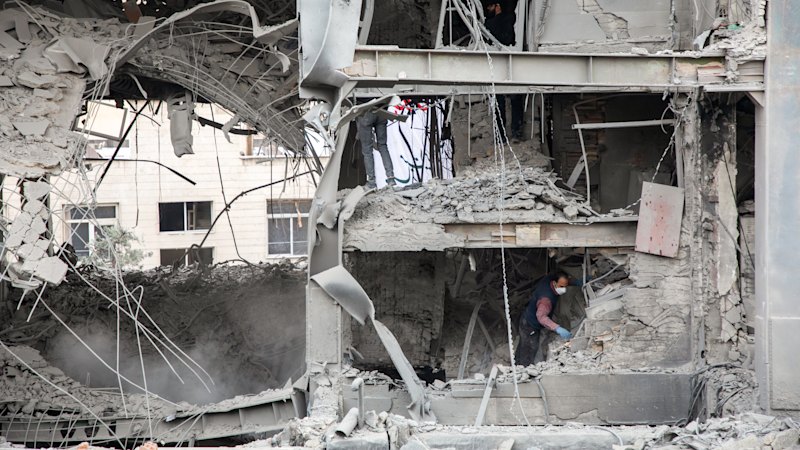
Iran’s parliament speaker threatened US forces with destruction as 3,500 troops deployed. Simultaneously, Israel expands Lebanon operations even as regional diplomats convene in Pakistan. This convergence signals a critical inflection point for global security and trade routes.
The rhetoric has shifted from diplomatic posturing to explicit kinetic warning. Mohammad Bagher Ghalibaf, the Speaker of Iran’s Parliament, did not mince words regarding the arrival of American service members. His message was clear: any ground incursion will be met with overwhelming force. This is not merely a statement of defense; it is a declaration of intent that ripples through global markets.
Why does this matter to you today? Due to the fact that geopolitical instability is no longer contained within borders. It affects supply chains, insurance premiums, and the legal liability of multinational corporations operating near conflict zones. The deployment of 3,500 US personnel marks a tangible escalation, moving beyond aerial surveillance or naval positioning to potential ground engagement.
The Tri-Front Escalation
We are witnessing a synchronized surge in tension across three distinct theaters. Understanding the relationship between these events is crucial for risk assessment.
In the south, Israeli Prime Minister Benjamin Netanyahu has confirmed an widening of military operations into southern Lebanon. This opens a second front that complicates any broader regional stabilization efforts. Meanwhile, diplomatic channels remain active but fragile. Regional powers are gathering in Pakistan, attempting to negotiate a cessation of hostilities before the situation becomes irreversible.
Ghalibaf accused Washington of duplicity. He argued that while public messages suggest a willingness to negotiate, private intelligence indicates planning for a ground attack.
“The enemy, openly, sends messages of negotiation and dialogue, but secretly is planning a ground attack,” Ghalibaf stated in a broadcast addressed to the nation.
This perception of poor faith undermines the talks in Pakistan. If one party believes the other is negotiating in bad faith, the diplomatic off-ramp closes.
The stakes extend beyond military casualties. Consider the Strait of Hormuz. Any conflict involving Iran threatens one of the world’s most critical oil chokepoints. Disruption here spikes energy costs globally, impacting everything from local municipal budgets to international logistics contracts.
Operational Risks for Global Business
For organizations with assets or personnel in the Middle East, the threat landscape has changed overnight. The problem is no longer just physical security; it is regulatory and legal complexity. Sanctions regimes tighten during conflicts. Compliance becomes a minefield.
Companies must navigate overlapping jurisdictions. US sanctions, EU regulations, and local laws often conflict during wartime. A business continuing operations in a sanctioned region risks severe penalties back home. Conversely, abrupt withdrawal might breach local contracts, leading to litigation.
Security protocols need immediate revision. Standard travel advisories are insufficient for this level of volatility. Organizations are increasingly turning to private security contractors to assess physical risks and evacuate personnel if necessary. These firms provide the real-time intelligence that public news cycles cannot match.
legal exposure is significant. Contract force majeure clauses are being tested. Did the government warning constitute a force majeure event? Legal teams are scrambling to interpret these definitions under international law. Engaging sanctions attorneys is no longer optional for firms with exposure in the Gulf region. They provide the shield against regulatory fallout.
Regional Economic Impact Analysis
The economic fallout is already visible in futures markets. Energy sectors are bracing for volatility. But the impact is uneven. Some regions benefit from increased defense spending, while others suffer from trade interruptions.

Below is a breakdown of the current operational status across the key conflict zones:
| Region | Primary Actor | Current Status | Business Impact |
|---|---|---|---|
| Iran/US Border | Iranian Parliament / US Defense | High Alert / Troop Deployment | Supply Chain Disruption |
| Southern Lebanon | Israel Defense Forces | Active Invasion Widening | Infrastructure Damage |
| Pakistan | Regional Diplomats | Negotiation Phase | Policy Uncertainty |
This table illustrates the fragmentation of the crisis. There is no single solution. Each front requires a specific mitigation strategy.
Expert Insight on Diplomatic Viability
Can the talks in Pakistan succeed? Sources close to the negotiation team suggest the window is narrowing. A senior defense analyst based in Islamabad, speaking on condition of anonymity due to the sensitivity of the talks, noted the difficulty of the current environment.
“When troop movements accelerate alongside diplomatic meetings, it signals that parties are preparing for failure rather than success. The logistics of withdrawal are far more complex than the logistics of deployment.”
This insight highlights the urgency. Businesses cannot wait for a peace treaty to secure their assets. They must act while the window remains open.
Logistics providers are also adjusting routes. Shipping lanes in the Persian Gulf are seeing increased insurance premiums. Some carriers are rerouting around the Cape of Good Hope, adding weeks to delivery times. For just-in-time manufacturing, this is catastrophic. Consulting crisis logistics providers helps companies model these delays and adjust inventory levels accordingly.
The Path Forward
Transparency is vital. Organizations must communicate clearly with stakeholders about their risk exposure. Hiding vulnerability during such times erodes trust. The US Department of State regularly updates travel warnings that should guide corporate policy. Similarly, monitoring AP News Taxonomy feeds ensures you are categorizing risk data correctly for internal reporting.
Historical precedents suggest that escalations of this nature can persist for months. The 2026 timeline indicates a long-term shift in regional stability. This is not a flashpoint that will vanish in a week. It requires sustained attention and resource allocation.
Local municipalities in affected regions are also preparing emergency protocols. Civil infrastructure may be repurposed for defense needs. Businesses relying on public utilities should have contingency plans for power or water interruptions. Audience persona tools can aid newsrooms and organizations tailor their crisis messaging to specific stakeholder groups, ensuring clarity during confusion.
The convergence of military posturing and diplomatic effort creates a paradox. Hope for peace must be balanced with preparation for war. Ignoring the warning signs because diplomats are meeting is a strategic error. The troops on the ground are the reality; the talks are the variable.
As the situation evolves, the distinction between news and operational intelligence blurs. For the global community, the priority is resilience. We must bridge the gap between breaking headlines and actionable safety measures. Whether you require legal counsel to navigate sanctions or security experts to protect physical assets, the directory stands ready to connect you with verified professionals. In times of uncertainty, verified expertise is the only stable currency.