
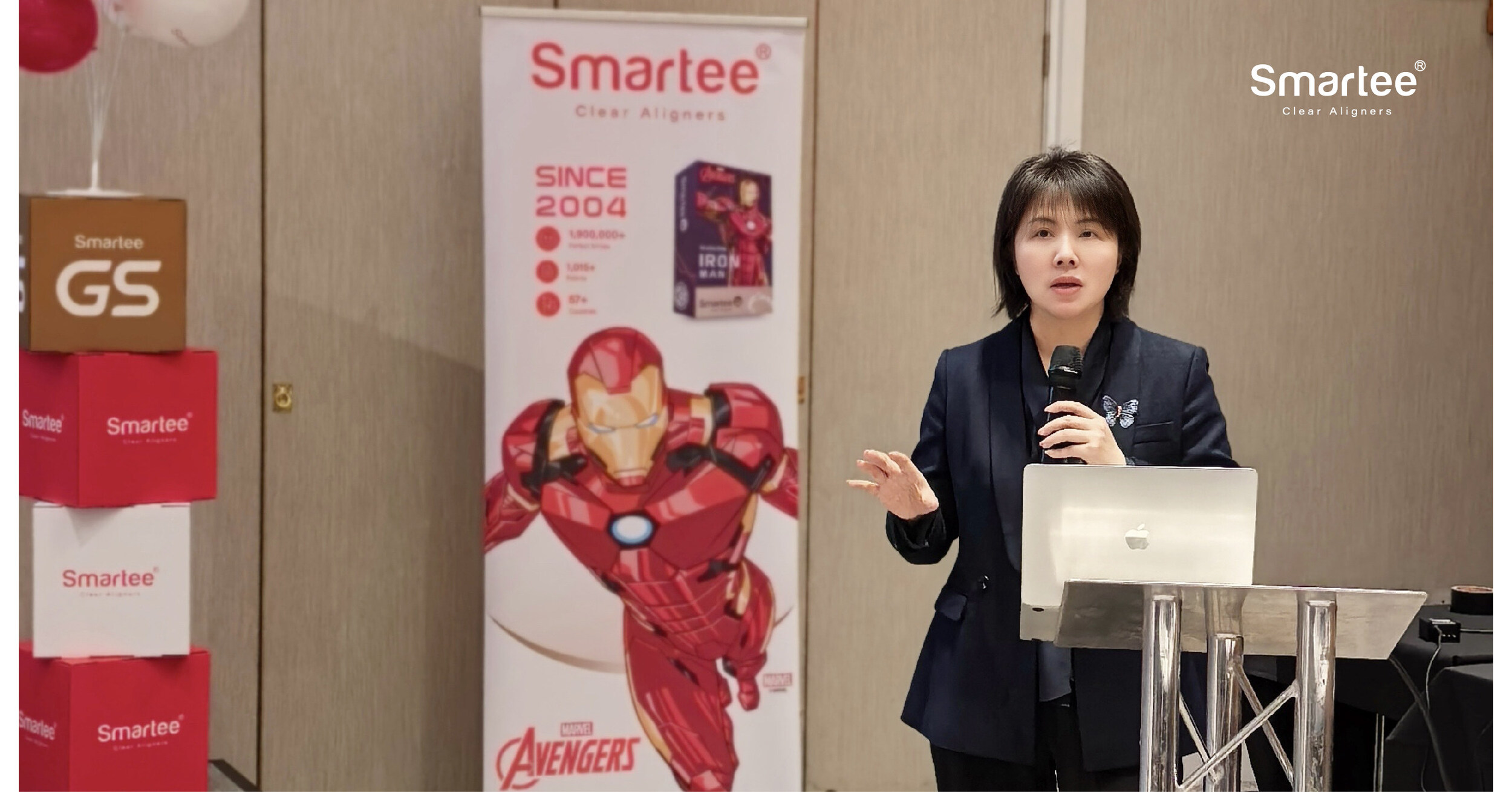
Smartee Denti-Technology convened 50 UK clinicians in London to deploy its Mandibular Advancement Repositioning Technology (MART). This move targets high-margin Class II malocclusion cases, bypassing surgical interventions to capture premium market share in the saturated European orthodontic sector.
The clear aligner market is bleeding red. Commoditization has crushed margins for generic providers, turning what was once a high-growth tech play into a volume game with diminishing returns. Smartee’s recent clinical conference at the London Heathrow Marriott signals a pivot away from this race to the bottom. They aren’t just selling plastic trays; they are selling a diagnostic protocol. By focusing on skeletal discrepancies and facial convexity, Smartee is attempting to carve out a defensible niche in the UK’s National Health Service (NHS) adjacent private market.
The Fiscal Logic of Clinical Complexity
Standard clear aligner therapy addresses dental occlusion. It is a tooth-moving exercise. Smartee’s S8-SGTB solution targets the jaw. This distinction is critical for capital allocation. Treating skeletal Class II malocclusion typically requires orthognathic surgery or extraction—procedures with high overhead and significant patient friction. By offering a non-invasive orthopedic alternative, Smartee reduces the cost of customer acquisition while increasing the average revenue per user (ARPU).
The introduction of Prof. Gang Shen’s diagnostic classification system changes the unit economics. It moves the decision matrix from “does this fit?” to “does this cure the etiology?” For investors, this suggests a shift in revenue recognition models. We are looking at longer treatment cycles and higher retention rates, provided the clinical outcomes hold up under peer review.
“The shift from vanity to function is where the margin expansion lies. Investors should watch for companies that can prove clinical efficacy in skeletal cases, not just dental alignment.”
This sentiment echoes broader market data. According to the Grand View Research clear aligners market report, the sector is projected to expand at a CAGR of 25.0% from 2024 to 2030. However, that growth is uneven. The premium segment, driven by complex case management, is outpacing the entry-level cosmetic sector by a factor of three. Smartee is positioning its London infrastructure to capture exactly this delta.
Infrastructure as a Competitive Moat
Announcing a product is cheap. Building the supply chain to support it is expensive. Smartee’s establishment of a dedicated European Orthodontic Clinical Support Center in the UK is a significant capital expenditure. It solves the latency problem that plagues cross-border medtech firms. When a clinician in Leeds submits a scan, they cannot wait ten days for a treatment plan from Shanghai.

This localized support structure requires robust logistical partnerships. As Smartee scales its four global production bases to serve the UK, the risk of supply chain bottlenecks increases. Medical device logistics require temperature control, sterilization verification, and just-in-time delivery. Failure here results in inventory write-downs and reputational damage. To mitigate this, growth-stage medtech firms often engage specialized third-party logistics providers who understand the regulatory nuances of cross-border medical transport.
The operational complexity of maintaining a clinical support center also demands rigorous compliance oversight. The UK’s Medicines and Healthcare products Regulatory Agency (MHRA) maintains strict post-Brexit standards. Navigating these waters requires more than a legal team; it requires strategic advisory. Companies expanding into the UK health sector frequently retain regulatory compliance consultants to ensure their diagnostic protocols meet local statutory requirements before they hit the market.
The Consolidation Horizon
Smartee’s aggressive expansion into the UK is not happening in a vacuum. The European dental sector is fragmenting. Large DSOs (Dental Support Organizations) are acquiring independent practices at a record pace, seeking to standardize treatment protocols across their networks. A proprietary diagnostic system like Shen’s classification offers a DSO exactly what it needs: standardization of complex care.
This dynamic creates a potential M&A catalyst. If Smartee can prove that its MART technology reduces chair time and improves patient throughput for large clinic chains, it becomes an acquisition target or a strategic partner for major dental conglomerates. The valuation multiples for medtech firms with proprietary IP in high-growth markets often command a premium over pure-play manufacturers.
However, execution risk remains high. The “logical rigor” praised by attendees at the Marriott must translate into repeatable clinical success. If the S8-SGTB system fails to deliver on its orthopedic promises, the brand equity evaporates. Investors watching this space should monitor patient retention rates and referral patterns in the UK over the next two fiscal quarters.
- Market Positioning: Shift from cosmetic alignment to functional skeletal correction.
- Operational Strategy: Localized clinical support to reduce treatment planning latency.
- Growth Vector: Targeting high-complexity cases to avoid commoditization.
The London conference was a statement of intent. Smartee is betting that the future of orthodontics lies in biology, not just geometry. For the broader market, this signals a maturation of the clear aligner industry. The low-hanging fruit of mild crowding is gone. The next wave of value creation belongs to firms that can solve the hard problems of facial morphology.
As this sector consolidates, mid-market competitors lacking this level of clinical infrastructure will locate themselves squeezed. They will face a choice: innovate or exit. Many will likely seek exit strategies, consulting with top-tier M&A advisory firms to explore defensive buyouts before their margins compress further. Smartee’s move in London suggests they intend to be the acquirer, not the acquired.
The trajectory is clear. Clinical rigor is the recent currency. Companies that can bridge the gap between engineering and biology will dictate the terms of the next decade in dental finance. For World Today News readers, the directive is simple: watch the clinical data, not just the press releases. The real story is in the patient outcomes, and that is where the alpha lies.