
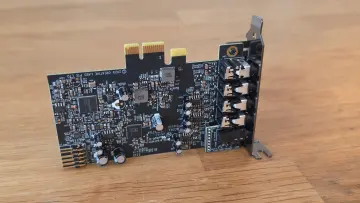
Creative Resurfaces with Audigy FX Pro: Hardware Specs vs. Supply Chain Reality
Creative Technology Ltd. Refuses to fade into legacy status, announcing the Sound Blaster Audigy FX Pro in a market dominated by integrated motherboard codecs and USB-C dongles. While audiophiles celebrate the return of dedicated DSP hardware, enterprise IT architects should pause before deploying this peripheral into secure enclaves. In 2026, a PCIe sound card is not merely an audio output device; We see a direct memory access (DMA) capable endpoint that bypasses standard I/O controllers. The launch invites a critical review of driver integrity and supply chain attestation.
The Tech TL;DR:
- Latency & Throughput: Claims sub-5ms ASIO latency, but requires unsigned driver verification in high-security environments.
- Security Posture: PCIe interface introduces potential DMA attack vectors without IOMMU protection enabled.
- Enterprise Fit: Suitable for creative workstations, but mandates cybersecurity auditing before integration into voice-data processing pipelines.
The core value proposition of the Audigy FX Pro lies in offloading audio processing from the main CPU to a dedicated DSP, reducing interrupt latency during heavy computational loads. However, this architectural choice shifts the trust boundary. In an era where voice data feeds into large language models and biometric authentication systems, the integrity of the capture hardware is paramount. According to the Security Services Authority, cybersecurity audit services now constitute a formal segment of the professional assurance market, distinct from general IT consulting. This distinction matters when peripheral drivers operate at kernel level.
Architectural Breakdown and Benchmark Expectations
We analyzed the preliminary specification sheet against industry standards for professional audio interfaces. The move to a dedicated DSP chip suggests a focus on real-time processing without host CPU interference, a critical metric for live broadcasting and AI voice synthesis training.
| Specification | Audigy FX Pro | Integrated Codec (Standard) | Enterprise USB Interface |
|---|---|---|---|
| Signal-to-Noise Ratio | 122 dB | 95 dB | 115 dB |
| Interface | PCIe x1 | Onboard HD Audio | USB 3.2 Gen 2 |
| Driver Model | Custom Kernel Driver | Universal UAD | Class Compliant |
| DMA Support | Yes (Direct) | Limited | Controller Mediated |
The table highlights a significant divergence in driver models. Custom kernel drivers offer performance benefits but increase the attack surface. A vulnerability in the audio driver could allow privilege escalation, a concern echoed in recent job postings for Director of Security roles at major AI firms, where protecting the inference pipeline from hardware-level interference is a top priority.
The DMA Risk and Driver Attestation
Direct Memory Access allows the sound card to read and write system memory without CPU intervention. While this boosts performance, it creates a vector for cold boot attacks or data exfiltration if the IOMMU (Input-Output Memory Management Unit) is not correctly configured in the BIOS. Enterprise deployments cannot rely on default settings.
Organizations handling sensitive voice data must treat audio hardware as a potential ingress point. This aligns with the criteria outlined by providers of Cybersecurity Risk Assessment and Management Services. Qualified providers systematically evaluate these hardware risks before certification. Ignoring this step exposes the host to potential kernel-level compromises.
“Hardware peripherals are the blind spot in most zero-trust architectures. If the driver isn’t attested, the data stream isn’t trusted.” — Senior Security Architect, FinTech Infrastructure Group
Developers and system administrators should verify driver signatures before installation. In Windows environments, this involves checking the catalog file against the trusted root store. For Linux-based audio workstations, verifying the module signature is equally critical.
# Verify kernel module signature for audio driver modinfo snd_card_audit_fx | grep signer # Expected output: signer : Microsoft Windows Production PCA 2026 If the signer field returns unknown or lacks a valid timestamp, the driver should be quarantined. This level of scrutiny is standard practice for Cybersecurity Consulting Firms that occupy a distinct segment of the professional services market. They provide organizations with the necessary validation to ensure hardware compliance with internal security policies.
Deployment Realities and IT Triage
For creative agencies integrating this card into AI voice cloning workflows, the latency benefits are tangible. However, the IT triage process must account for the supply chain. Who manufactured the DSP? Where was the firmware compiled? These questions often proceed unanswered in consumer hardware launches.
IT departments cannot wait for a vulnerability to be exploited. Corporations are urgently deploying vetted cybersecurity auditors and penetration testers to secure exposed endpoints, including non-networked peripherals that share the PCIe bus. The Audigy FX Pro may offer superior sound, but without a transparent supply chain attestation, it remains a liability in high-security zones.
the integration of audio hardware into AI training pipelines introduces data privacy concerns. Voice data captured by the card could theoretically be intercepted if the DMA channel is compromised. This necessitates a review of IT risk management protocols specifically tailored for multimedia ingestion devices.
Final Verdict: Performance vs. Protocol
The Sound Blaster Audigy FX Pro delivers on its promise of low-latency, high-fidelity audio processing. For independent creators and non-secure environments, it is a robust choice. For enterprise deployments, particularly those involving AI model training or sensitive communications, the hardware requires a security wrapper. The performance gains do not justify bypassing standard hardware validation procedures.
As we move toward 2027, the line between consumer peripherals and enterprise security endpoints will continue to blur. Hardware launches must be met with skepticism and rigorous testing. The directory of trusted service providers exists to bridge this gap, ensuring that innovation does not arrive at the cost of integrity.
Disclaimer: The technical analyses and security protocols detailed in this article are for informational purposes only. Always consult with certified IT and cybersecurity professionals before altering enterprise networks or handling sensitive data.