
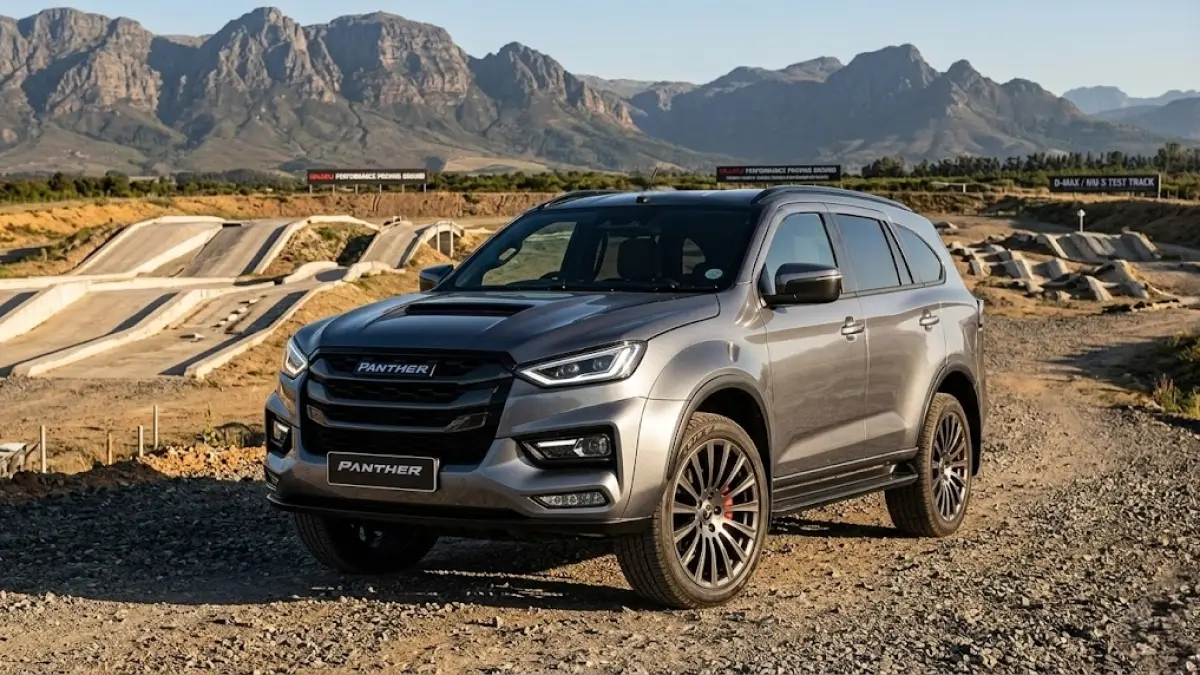
The Isuzu Panther Mini 2026 re-enters the Indonesian market at a projected price point of IDR 280 million ($17,500 USD), targeting the commercial fleet sector with a diesel turbo powertrain delivering 20 km/L efficiency. This strategic pivot addresses the high total cost of ownership (TCO) associated with hybrid transitions in emerging economies, offering a pragmatic alternative for logistics operators and large families prioritizing fuel economy over electrification mandates.
The automotive sector in Southeast Asia is currently witnessing a bifurcation in capital allocation. Even as original equipment manufacturers (OEMs) in developed markets pour billions into electrification infrastructure, the fiscal reality in Indonesia tells a different story. The reintroduction of the Isuzu Panther Mini is not merely a nostalgic play; it is a calculated response to the liquidity constraints facing mid-market logistics firms. As the price of battery-electric vehicles (BEVs) remains prohibitive for modest-to-medium enterprises (SMEs), the demand for high-efficiency internal combustion engines (ICE) remains inelastic.
Isuzu’s strategy leverages the established supply chain for diesel distribution, bypassing the CAPEX heavy requirements of charging networks. For a fleet manager, the decision matrix is simple: does the operational expenditure (OPEX) savings of a hybrid justify the upfront premium? In the context of the 2026 fiscal year, the answer for many remains negative.
Comparative Total Cost of Ownership: Diesel vs. Hybrid
To understand the market positioning of the Panther Mini, one must analyze the unit economics against its primary competitor, the Toyota Innova Zenix. The following breakdown illustrates the projected five-year cost implications for a standard commercial operator in Java.
| Metric | Isuzu Panther Mini (2026 Diesel) | Toyota Innova Zenix (Hybrid) | Mitsubishi Xpander (ICE) |
|---|---|---|---|
| Entry Price (Est.) | IDR 280 Million | IDR 390 Million | IDR 240 Million |
| Fuel Efficiency | 20 km/L (Diesel) | 23 km/L (Hybrid) | 14 km/L (Petrol) |
| Fuel Cost per Km* | IDR 260 | IDR 310 | IDR 450 |
| Maintenance Cycle | 10,000 km | 10,000 km | 5,000 km |
| Resale Value (3-Year) | High (Legacy Brand) | Medium (New Tech Risk) | Medium |
*Based on projected 2026 subsidized diesel (Solar) vs. Pertamax pricing in Indonesia.
The data reveals a critical arbitrage opportunity. While the hybrid offers marginally better distance per liter, the price differential of the fuel itself—subsidized diesel versus premium gasoline—tilts the scale heavily toward Isuzu. For high-mileage operators, the Panther Mini offers a lower break-even point.
The Supply Chain Reality Check
Isuzu’s decision to double down on diesel turbo technology acknowledges a infrastructure lag that government policy often ignores. The transition to EVs requires a grid stability that rural Indonesia, including hubs like Madura, simply does not possess. By focusing on the “legendary” durability of their diesel engines, Isuzu mitigates the risk of downtime—a catastrophic expense for logistics firms.
However, this reliance on legacy technology creates a specific friction point for corporate buyers: asset depreciation and regulatory compliance. As carbon taxes loom in the ASEAN region, holding a fleet of diesel vehicles becomes a balance sheet liability. What we have is where the role of specialized fleet management consultants becomes vital. These firms do not just track vehicles; they model the regulatory risk, helping CFOs decide when to hold diesel assets and when to divest before emission penalties erode margins.
“The Panther Mini is a hedge against infrastructure failure. In emerging markets, reliability is the only currency that matters. Companies aren’t buying a car; they are buying uptime.”
This sentiment is echoed by regional analysts who view the 2026 lineup as a defensive maneuver. The 9-seater configuration specifically targets the “family-business” demographic in Indonesia, where the vehicle serves dual purposes: school run and goods transport. This versatility maximizes asset utilization, a key metric for any commercial vehicle financing institution assessing loan risk.
Financing the Legacy Fleet
With a price tag hovering around IDR 280 million, the Panther Mini sits in a sweet spot for SME financing. It is accessible enough for owner-operators yet robust enough for corporate leasing. The challenge lies in structuring debt for assets that may face future regulatory headwinds. Lenders are increasingly scrutinizing the “green score” of collateral.
Isuzu’s value proposition here is volume. By keeping the entry price low, they ensure high turnover. High turnover means liquidity. For banks and leasing companies, a liquid asset is a safe asset. The corporate asset management sector is already adjusting its risk models to account for this diesel resurgence, recognizing that in the short term, cash flow trumps carbon footprint.
The Verdict on Market Trajectory
The launch of the Isuzu Panther Mini 2026 is a stark reminder that global market trends do not always trickle down uniformly. While Wall Street cheers EV adoption, the streets of Jakarta run on diesel economics. Isuzu has identified a gap between policy ambition and fiscal reality.
For investors and business leaders, the lesson is clear: do not bet against the incumbent technology until the replacement is economically viable, not just environmentally superior. As we move through Q2 2026, expect to see a surge in demand for diesel utility vehicles, accompanied by a parallel rise in demand for B2B services that optimize the lifecycle of these assets. The market isn’t dying; it’s adapting to the constraints of the real world.