
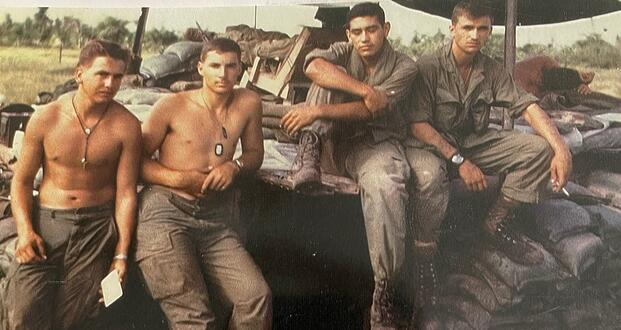
On March 29, Vietnam Veterans Day, the nation honors over 58,000 fallen soldiers, yet for survivors like Florencio Aguayo, the conflict remains a daily physical and psychological reality. Now 75 and living in Big Sur, California, Aguayo battles severe PTSD and retained shrapnel, illustrating the enduring crisis facing the aging veteran population. While organizations like Semper Fi & America’s Fund provide critical home modifications and financial aid, thousands of veterans remain disconnected from essential trauma-informed care providers and specialized support networks necessary to navigate life decades after the war.
The war in Vietnam officially ended half a century ago, but for the “Wolfhounds” of the 25th Infantry Division, the timeline is different. Florencio Aguayo, drafted in 1968, represents a demographic now entering their late 70s and 80s. The problem is not just memory; We see biology. As these veterans age, the physical toll of combat—specifically retained shrapnel and orthopedic injuries—intersects with the neurological degradation of Post-Traumatic Stress Disorder (PTSD). This creates a complex medical profile that standard geriatric care often fails to address.
Aguayo’s story is a stark case study in delayed trauma. Drafted into the Army, he found initial purpose in the structure of the 27th Regiment. “I didn’t know what I was going to do in life,” Aguayo admitted, reflecting on his initial optimism. That optimism shattered in the “Hobo Woods” near Fire Support Base Mahone. On September 18, 1968, his unit walked into an ambush. The chaos of that night, where Aguayo had to carry a fallen comrade to a helicopter, etched a permanent scar on his psyche. “You gotta be scared, or you’re crazy,” he recalled. “Otherwise, you just push forward.”
The physical wounds were equally unforgiving. During a rocket attack in December 1968, shrapnel tore through Aguayo’s left leg, buttocks and back. Unlike modern conflicts where immediate evacuation and advanced surgical removal are standard, many Vietnam-era injuries resulted in retained foreign bodies. Aguayo still carries these fragments. “During the winter, it feels like it’s stabbing me,” he said. “When the summer comes along, it feels like it’s trying to come out of me.” This phenomenon, known as migratory shrapnel, creates chronic pain cycles that exacerbate mental health struggles, often leading veterans to isolate themselves from family and community.
The Silent Epidemic of Aging Combat Veterans
Aguayo’s isolation is not unique; it is systemic. For decades, the Department of Veterans Affairs (VA) struggled to diagnose PTSD in Vietnam veterans, often dismissing symptoms as personal failings rather than combat injuries. It wasn’t until 2003, thirty years after his service, that Aguayo finally accessed group therapy. This delay highlights a critical gap in the healthcare infrastructure: the lack of continuity in mental health support for aging veterans.
Dr. Elena Rossi, a senior clinical psychologist specializing in geriatric combat trauma, notes that the intersection of aging and PTSD is a growing crisis. “We are seeing a resurgence of symptoms in Vietnam veterans as they face age-related cognitive decline,” Rossi explained in a recent briefing on veteran health. “The coping mechanisms that held for forty years—working long hours, suppressing emotion—start to fail. The brain loses its ability to compartmentalize the trauma. This is why connecting veterans with specialized senior care coordinators who understand military culture is not a luxury; it is a medical necessity.”
The macro-economic impact of this neglect is significant. When veterans like Aguayo cannot maintain their homes or manage their health, the burden shifts to municipal social services and emergency rooms. In California alone, the cost of emergency interventions for untreated veteran mental health crises runs into the hundreds of millions annually. Proactive care is not just humane; it is fiscally responsible.
Bridging the Gap: From Crisis to Stability
The solution often lies in non-profit intervention where government bureaucracy moves too slowly. For Aguayo, the turning point came through the Semper Fi & America’s Fund and the LCpl Parsons Welcome Home Fund. These organizations identified a specific, tangible problem: Aguayo did not feel safe in his rural home. A broken patio and a compromised front door were not just maintenance issues; they were triggers for a man hypervigilant about security.

Through the fund, Aguayo received critical home modifications. “They took care of my front door since one of my neighbors was robbed,” Aguayo said. “My patio was falling apart, and they helped me replace that too.” This type of support goes beyond charity; it is environmental therapy. By securing the physical perimeter of a veteran’s home, organizations reduce the psychological load of constant vigilance.
However, finding these resources remains a logistical hurdle for many. The landscape of veteran support is fragmented. A veteran in Big Sur might qualify for federal VA benefits but require state-level grants for home accessibility. Navigating this maze often requires professional guidance. This is where the role of specialized veterans’ legal advocates becomes crucial. These professionals do not just file paperwork; they audit a veteran’s life to uncover every eligible benefit, from disability compensation to home improvement grants.
The Path Forward
The story of Florencio Aguayo is one of survival, but it is also a warning. There are fewer than 500,000 Vietnam veterans remaining today. As this generation passes, the window to provide them with dignity and comfort is closing. The “Information Gap” is no longer about the history of the war, but the logistics of care for the survivors.
Communities must recognize that the war did not end in 1975 for those who fought it. The shrapnel is still moving. The memories are still fresh. Supporting these veterans requires a coordinated effort between medical providers, home modification contractors, and legal experts. It requires a directory of trust where a veteran in Big Sur, or a family member in Ohio, can find verified professionals who understand the unique syntax of military trauma.
“The only person who can understand is another vet. You do demand help to get through it. That really helped me because things were getting pretty rough. I was planning on taking my rifle to the garage, and I wasn’t planning on cleaning it. But I was able to make it through.”
Aguayo’s admission reveals the precipice many veterans face. He found his way back through faith, salsa dancing, and the tangible support of the Semper Fi fund. But for every Aguayo who finds a lifeline, there are others lost in the bureaucracy of their own survival. As we observe Vietnam Veterans Day, the mandate is clear: we must move beyond commemorative pins and parades. We must build the infrastructure of care that ensures no veteran has to face the winter of their life feeling the shrapnel trying to come out, alone.
The World Today News Directory remains committed to bridging this divide, connecting those in need with the verified non-profit organizations and civic leaders equipped to turn stories of struggle into stories of hope.