
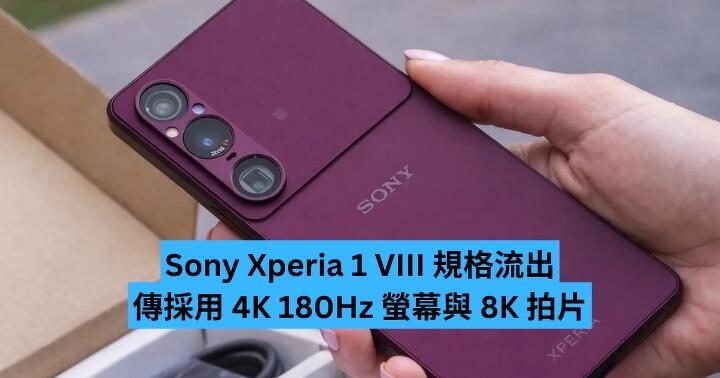
Sony Group Corporation faces a critical margin test with the leaked specifications of the Xperia 1 VIII, featuring a 4K 180Hz OLED panel and 8K 120fps video capture. While technically superior, the fiscal implication of integrating Alpha-grade imaging into a shrinking mobile segment raises immediate concerns regarding Cost of Goods Sold (COGS) and return on invested capital (ROIC) for the Image & Sensing Solutions division.
The leaked specification sheet for the Xperia 1 VIII reads less like a consumer product roadmap and more like a balance sheet liability. In an era where smartphone ASPs (Average Selling Prices) are stagnating globally, Sony’s decision to double down on hyper-specialized hardware—specifically the reported 4K 180Hz display and silicon-carbon anode battery—suggests a strategy detached from mass-market volume realities. This is not merely a product launch; We see a high-stakes wager on niche dominance that demands rigorous supply chain validation.
From a fiscal perspective, the integration of a 6.5-inch 4K HDR OLED panel with a 180Hz refresh rate presents a significant procurement challenge. Panel manufacturers like Samsung Display and JOLED have historically priced 4K mobile panels at a premium that erodes hardware margins. According to Sony’s consolidated financial statements for the fiscal year ending March 2025, the Mobile Communications segment operated with razor-thin operating margins compared to the robust profitability of the Game & Network Services division. Pushing a device with this level of display fidelity requires a supply chain capable of yielding high-quality panels without the defect rates that typically plague 4K mobile production.
Companies scaling hardware production under these constraints often face bottlenecks in component sourcing. To mitigate these risks, enterprise leaders are increasingly engaging with specialized supply chain logistics firms that can secure priority allocation for high-end OLED substrates. Without such partnerships, Sony risks inventory stockouts that would render the Q3 launch window irrelevant, ceding ground to competitors with more agile procurement networks.
The Cannibalization Risk of 8K Video Capture
The most contentious financial variable in this leak is the camera system. Reports indicate a triple 50MP setup utilizing Exmor T sensors capable of 8K recording at 120fps. While this aligns with Sony’s “One Sony” synergy strategy, it introduces a dangerous internal conflict. The Alpha camera division, a cash cow for the conglomerate, relies on the technological gap between mirrorless cameras and smartphones to justify four-figure price tags.
If a smartphone can replicate 80% of an Alpha 7 series camera’s video performance, the value proposition of the dedicated hardware segment erodes. This is a classic case of product cannibalization that requires careful market segmentation. Institutional investors watching Sony’s stock (SNE) closely will be scrutinizing whether the Xperia 1 VIII drives incremental revenue or merely shifts sales from higher-margin camera bodies to lower-margin handsets.
“The mobile segment has long been the ‘black sheep’ of Sony’s portfolio. Integrating cinema-grade specs is a brilliant marketing play, but unless they can monetize the software ecosystem around it, the hardware margins will remain under pressure from component inflation.” — Senior Technology Analyst, Global Market Insights
Protecting the proprietary software that enables this “Creator Mode” is as vital as the hardware itself. The algorithms driving the 1200-point autofocus and real-time HDR processing represent significant R&D expenditure. As Sony pushes these boundaries, the risk of IP infringement from Shenzhen-based competitors copying the feature set increases exponentially. Multinational corporations in this sector are retaining top-tier intellectual property law firms to fortify their patent portfolios in key markets like the EU and North America before the official unveiling.
Battery Chemistry and Thermal Management Costs
Perhaps the most technically ambitious claim is the inclusion of a 5200mAh silicon-carbon anode battery. This chemistry offers higher energy density than traditional lithium-ion but comes with complex manufacturing requirements and higher unit costs. In 2026, the global supply of silicon-anode materials remains constrained, driving up input costs for premium devices.

driving a 4K 180Hz screen while recording 8K video generates immense thermal load. The engineering required to dissipate this heat without throttling performance necessitates advanced thermal interface materials and vapor chamber technologies. These are not commodity components; they are specialized B2B inputs that require long-term contracts with chemical suppliers. Failure to secure these materials could lead to thermal throttling issues that damage brand equity, a risk that product testing and compliance agencies are frequently hired to mitigate prior to mass production.
The pricing rumor of 210,000 to 240,000 JPY places the Xperia 1 VIII firmly in the ultra-premium tier, competing directly with foldable devices that offer more physical utility. In a saturated market, justifying this price point requires more than just specs; it requires a narrative of exclusivity that resonates with professional creators who bill by the hour.
Market Trajectory and Fiscal Outlook
The Xperia 1 VIII represents a divergence from the industry trend of cost-cutting and AI-driven software features. Sony is betting on raw hardware performance. While this appeals to a specific demographic, the addressable market is small. For the fiscal year 2026, the success of this device will not be measured in units sold, but in its ability to bolster the brand’s premium perception, thereby supporting the pricing power of the wider Alpha and Bravia ecosystems.
However, the path to profitability is narrow. The convergence of high-cost display panels, expensive sensor arrays, and novel battery chemistry creates a perfect storm for margin compression. Investors should watch the upcoming Q1 earnings call for guidance on Mobile Communications operating income. If Sony cannot demonstrate a clear path to positive cash flow from the Xperia line despite these technological leaps, the pressure to spin off or restructure the mobile division will intensify.
For B2B stakeholders observing this launch, the lesson is clear: innovation without supply chain resilience is a liability. As the industry moves toward 8K and high-refresh standards, the winners will be those who secure their component pipelines and protect their IP aggressively. The World Today News Directory connects decision-makers with the vetted enterprise partners necessary to navigate these complex fiscal and operational landscapes, ensuring that technological ambition translates into sustainable shareholder value.