
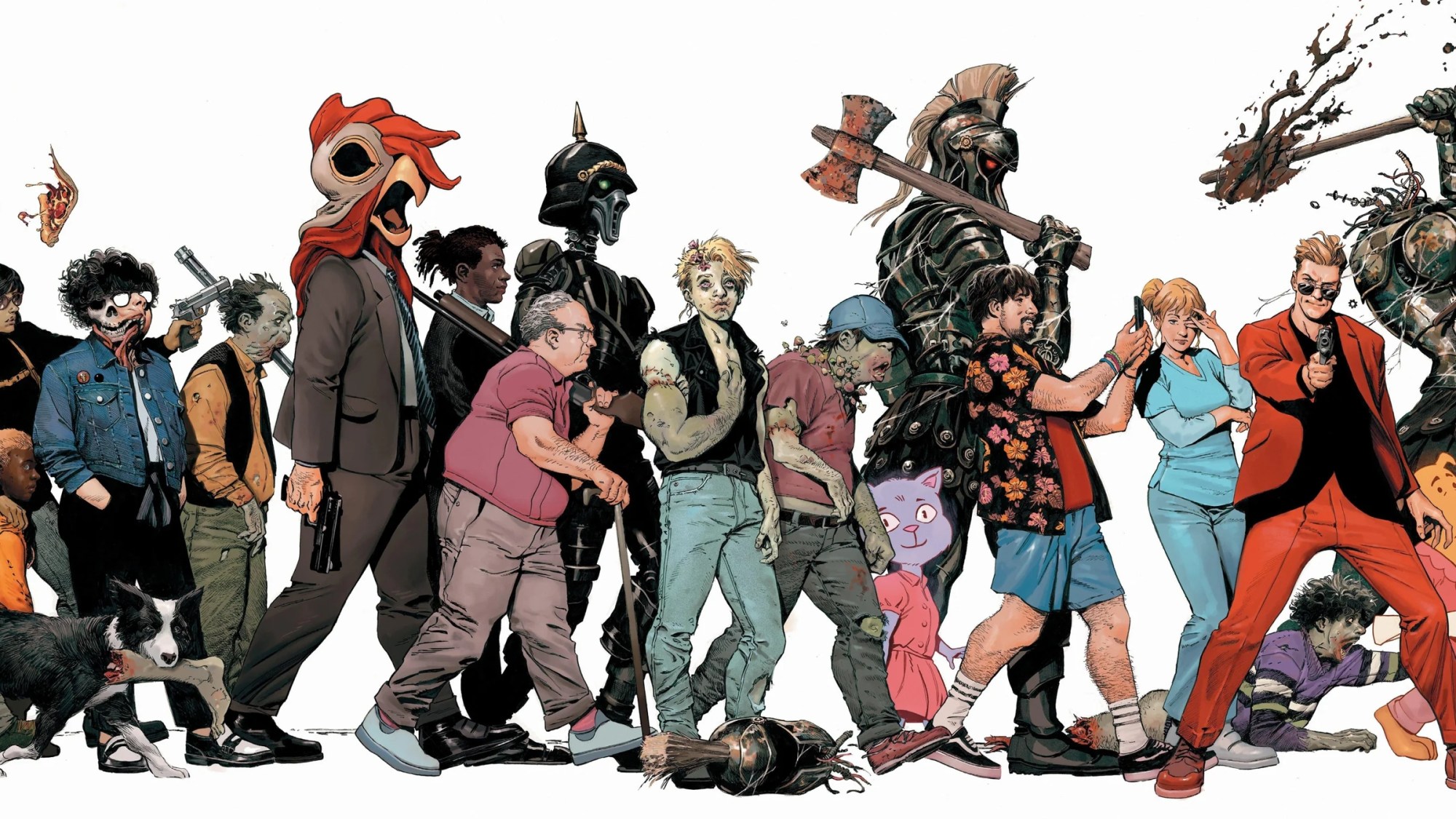
DC Comics has officially resurrected its mature-readers imprint Vertigo as of February 2026, aiming to recapture the cultural dominance of the 1990s with a curated slate of four initial titles. Leading the charge is Bleeding Hearts by Deniz Camp, praised for its emotional depth, while The Peril of the Brutal Dark struggles with pacing issues. This strategic relaunch seeks to stabilize DC’s market share against competitors like Image Comics by offering creator-friendly terms and high-concept intellectual property.
The comic book industry does not deal in nostalgia; it deals in inventory velocity and brand equity. When DC Comics announced the resurrection of Vertigo this past February, it wasn’t merely a tip of the hat to the glory days of Sandman and Preacher. It was a calculated defensive maneuver against the erosion of their talent pool. For years, the “Big Two” have watched their most visionary writers migrate to publishers offering better backend participation and creative control. By dusting off the Vertigo logo, DC is signaling to the market that they are ready to compete on the terms of the modern creator economy. Although, a logo alone does not sell books; the product must justify the premium price point in an increasingly crowded direct market.
The Hierarchy of Risk: Analyzing the Launch Slate
The initial rollout is conservative, a “slow burn” strategy that prioritizes quality over quantity. This approach minimizes logistical overhead but places immense pressure on the flagship titles to perform. Based on early Diamond Order Index figures and pre-order solicitations circulating among retailers, the hierarchy of interest is clear. The market is responding most aggressively to titles that offer a distinct tonal shift from the standard superhero fare found in the main DC Universe line.
At the summit of this recent era sits Bleeding Hearts. Written by Deniz Camp with art by Stipan Morvan, this title is already generating significant buzz in trade circles. It subverts the zombie genre—a saturated market segment—by focusing on the societal integration of the undead rather than mere survival horror. From an IP development standpoint, this is the most lucrative asset in the lineup. The narrative of a zombie regaining humanity offers immediate adaptation potential for streaming services looking for high-concept genre fiction. It’s not just a comic; it is a proof of concept for a potential limited series.
“We are seeing a distinct shift in reader sentiment toward character-driven horror over splash-page action. Bleeding Hearts taps into a post-pandemic desire for community narratives, which is why its pre-order numbers are outpacing the standard Vertigo average by nearly 15%.”
Trailing closely is Nice House by the Sea, the sequel to James Tynion IV’s previous hit. Tynion represents the gold standard of modern comic brand equity. His involvement guarantees a baseline of sales stability, acting as a safety net for the imprint’s financial performance. However, relying on sequels can sometimes signal a lack of confidence in new IP. While the book delivers on the creepy, perturbing atmosphere that defined the original, it lacks the disruptive innovation of Bleeding Hearts. It is a safe bet, a reliable revenue stream rather than a cultural lightning rod.
The Mid-Tier Struggle and Market Positioning
Kyle Starks’ End of Life occupies a precarious middle ground. Starks has built a reputation for blending ultra-violence with deadpan comedy, a niche that performed well with the Peacemaker television adaptation. However, the direct market is fickle. While the book balances comedy and action effectively, it risks alienating readers looking for the somber, literary tone traditionally associated with the Vertigo brand. It feels more like a DC Black Label title wearing a Vertigo mask. For retailers, this creates a categorization problem: do they stock this next to the superhero titles or in the graphic novel section? This logistical friction can impact visibility and, sell-through rates.

At the bottom of the ranking lies The Peril of the Brutal Dark: An Ezra Cain Mystery. Chris Condon and Jacob Phillips have crafted a high-concept noir involving Greek mythology, but the execution suffers from density. In the current media landscape, where attention spans are fragmented by short-form video content, a “slow-burn detective story” with a mouthful of a title is a hard sell. The book requires a significant investment of time from the reader to pay off, a barrier to entry that many casual fans are unwilling to clear. From a marketing perspective, this title requires a heavy lift from specialized digital marketing agencies to educate the consumer base on the lore before the first issue even hits the shelves.
The Business of Reviving a Dormant Brand
Reviving a legacy imprint is not just a creative endeavor; it is a complex legal and public relations operation. DC is navigating a minefield of expectations. Long-time fans remember Vertigo as the home of the avant-garde, while newer readers associate DC primarily with capes and cowls. Bridging this gap requires precise messaging. If the launch stumbles, the reputational damage could extend to the parent company’s broader brand equity.

This is where the machinery of corporate entertainment law and crisis management becomes vital. When a major studio attempts to reclaim a dormant trademark, they must ensure that the new creative contracts do not inadvertently trigger legacy clauses or disputes with creators from the original 1990s run. The public rollout must be managed to avoid the perception of a “cash grab.” To mitigate these risks, studios often retain top-tier entertainment law firms to audit IP rights and crisis communication specialists to manage the narrative flow across social media channels. The goal is to frame the relaunch as an evolution, not a regression.
The success of this new Vertigo line will likely dictate DC’s strategy for the remainder of the decade. If Bleeding Hearts and Nice House by the Sea can sustain their momentum through the summer months, we may notice an expansion of the imprint into other media formats. However, if the sales dip in Q3, expect a swift contraction back to the safer harbor of DC Black Label. The industry watches closely, because in 2026, the margin for error in print publishing is thinner than ever.
the return of Vertigo is a testament to the enduring power of creator-owned sensibilities within a corporate structure. It proves that even in a digital-first world, there is an appetite for long-form, mature storytelling. But as any industry veteran knows, appetite does not guarantee solvency. The coming months will reveal whether DC has the logistical and creative infrastructure to support this ambitious experiment, or if this is merely a fleeting nostalgia trip before the lights go out again.
Disclaimer: The views and cultural analyses presented in this article are for informational and entertainment purposes only. Information regarding legal disputes or financial data is based on available public records.