
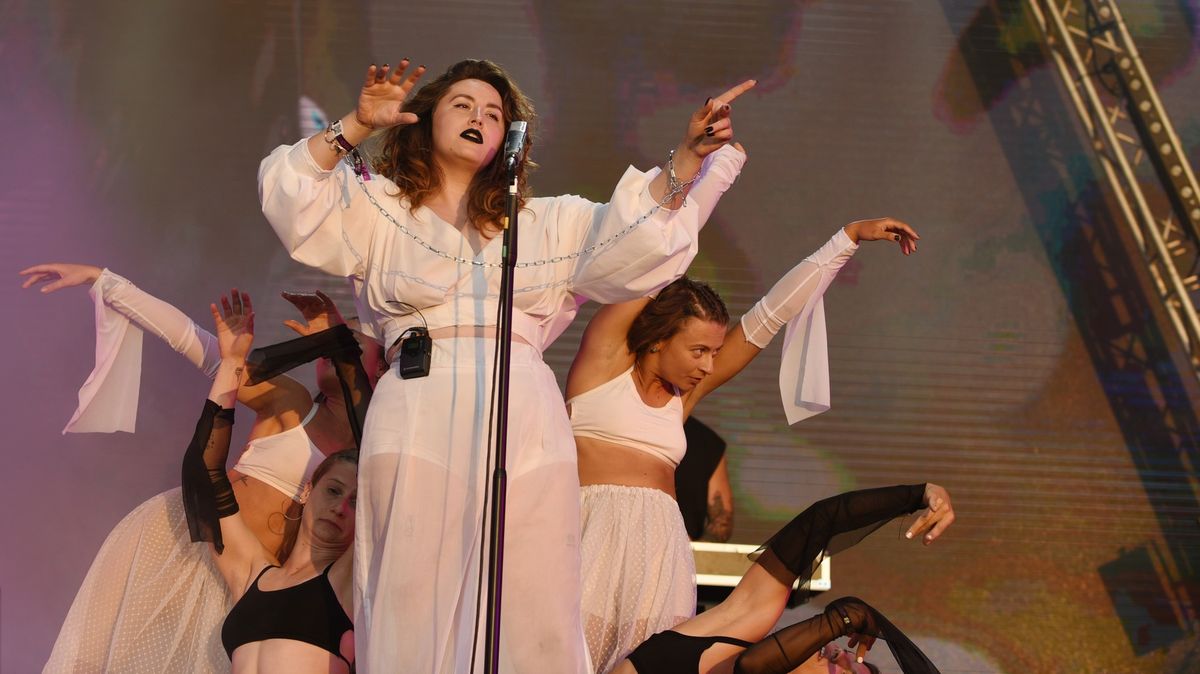
Slovak Television (RTVS) has cancelled the broadcast of the Radio_Head Awards, citing political speeches by winners as “divisive.” Director Martina Flašíková labeled the move a protection of public space, while artists including Nora Ibsenová and Dorota Nvotová condemn the decision as state censorship and a return to “normalization” tactics.
In the high-stakes ecosystem of global entertainment, the spotlight is usually a privilege fought for with blood, sweat, and marketing budgets. In Bratislava last weekend, however, that spotlight became a liability. The Radio_Head Awards, Slovakia’s premier music ceremony organized by public broadcaster RTVS, was scheduled to air this Sunday. Instead, viewers were met with a black screen and a bureaucratic justification that has sent shockwaves through the Central European cultural sector. This isn’t just a scheduling conflict; It’s a stark case study in the collision between artistic expression and state apparatus control.
The Silent Airwaves: A Breach of Public Trust
The incident unfolded immediately following the live ceremony on Friday evening. While the event proceeded, the subsequent television broadcast was axed by RTVS General Director Martina Flašíková. In an open letter that reads more like a political manifesto than a programming decision, Flašíková argued that artists had “misused public space for political speeches.” She claimed these contributions exacerbated social division and tension, asserting her duty to protect the public broadcaster from individual opinions.
From a brand equity perspective, What we have is a catastrophic miscalculation. Public broadcasters rely on a fragile social contract: they provide a platform for national culture in exchange for public funding. By unilaterally deciding which artistic expressions are “too political,” the leadership effectively admits that the platform is not neutral. It is curated by ideology. As the civic initiative Open Culture noted, the delay between the event and the broadcast was likely a tactical window for censorship, but the volume of critical commentary was too high to edit out without leaving only the sound of people walking to the podium.
“This is normalization in a live broadcast. Only now we don’t have a live broadcast. Today I add that we don’t even have a recording.”
— Dorota Nvotová, Folk Music Category Winner
Nvotová’s comparison to the communist era “normalization” period is not hyperbole; it is a specific cultural trigger in this region. When a state-funded entity begins policing the content of award acceptance speeches, it signals a shift from curator to gatekeeper. For the artists involved, including Fallgrapp producer Juraj Líška and musician Michal Kaščák, the speeches were not political grandstanding but responses to a deteriorating cultural climate. Líška spoke of colleagues being persecuted and institutions working against culture, a direct critique of the current Ministry of Culture led by Martina Šimkovičová.
The Legal and Logistical Fallout
The immediate problem for the stakeholders here is contractual. Nora Ibsenová, vocalist for the award-winning band Fallgrapp, stated she was unaware of violating any terms, noting that her contract only prohibited hate speech. This raises a critical question for the industry: What are the boundaries of editorial control in public service media? When a broadcaster pulls a program post-production due to content disputes, they risk litigation over breach of contract and reputational damage that far outweighs the cost of airing a controversial speech.
In scenarios where brand reputation is under fire from state-level interference, standard press releases are insufficient. Organizations facing this level of public fallout require immediate deployment of elite crisis communication firms and reputation managers. The goal shifts from promotion to damage control, requiring legal teams to parse the fine print of broadcasting agreements while PR strategists manage the narrative across social channels to prevent the “censorship” label from sticking permanently to the broadcaster’s brand.
Systemic Pressure on the Arts Sector
This censorship incident is not an isolated anomaly; it is the symptom of a broader systemic infection. The tension between the Slovak cultural community and the Ministry of Culture has been boiling for months. We are seeing a pattern of personnel purges at the Slovak National Theatre and the Slovak National Gallery, alongside the abrupt cancellation of multi-year grants for festivals and cultural centers by the Arts Support Fund. A coalition of 23 organizations has already labeled these moves as illegal interventions in the rule of law.

Contrast this with the structural stability seen in major Western media conglomerates. Just weeks ago, Dana Walden unveiled a new leadership team for Disney Entertainment, spanning film, TV, and streaming, designed to streamline creative oversight and protect intellectual property across global markets (Deadline). While corporate giants like Disney face their own criticisms regarding creative freedom, their leadership structures are designed to maximize output and engagement, not suppress it to fit a political narrative. The Slovak model, by comparison, is actively shrinking its own cultural footprint.
The Path Forward: Independence and Infrastructure
For the Slovak music industry, the lesson is clear: reliance on state-funded platforms is a vulnerability. The Radio_Head Awards, established in 2008 as a counterweight to commercial polls like Slávik, now face an existential crisis. If the public airwaves are compromised, the industry must look to private infrastructure. This necessitates a shift toward independent production models that are immune to government editorial interference.
Building a resilient awards ecosystem requires more than just a venue; it demands robust regional event security and A/V production vendors capable of handling live broadcasts without state mediation. As artists navigate this hostile environment, the need for specialized media and entertainment law attorneys becomes paramount. These professionals are essential for negotiating contracts that explicitly protect artistic freedom and for challenging unlawful grant cancellations in court.
The silence imposed on the Radio_Head Awards broadcast may last only one evening, but the echo will resonate for years. As Dorota Nvotová warned, future generations will remember who stood against culture and who stood for it. For the World Today News Directory, this serves as a reminder that in 2026, the most valuable asset in entertainment isn’t just talent—it’s the independence to showcase it. As the industry navigates these turbulent political waters, the demand for vetted, independent B2B partners who understand the intersection of art, law, and logistics has never been higher.