
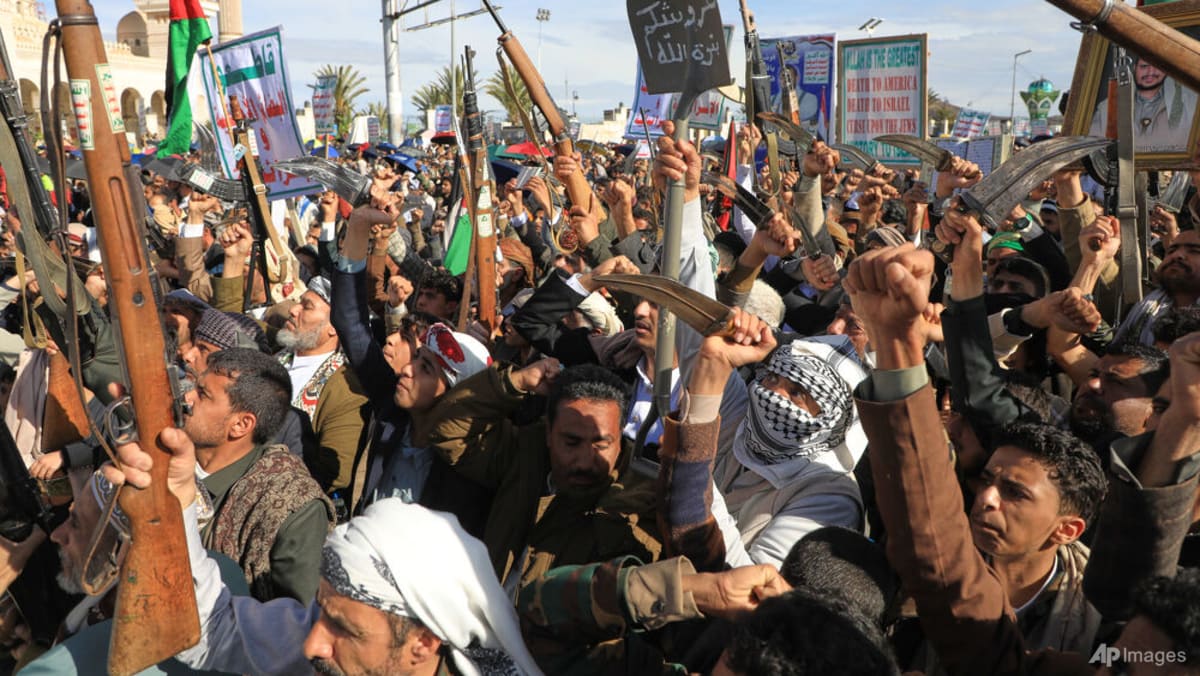
Yemen’s Houthi forces have initiated direct strikes against Israel, marking a significant escalation in the broader Iran conflict. Simultaneously, thousands of US Marines are deploying to the Middle East to bolster regional defense. This dual movement signals a potential shift from aerial containment to ground-level engagement across multiple sovereign borders.
This is not merely a shift in troop movements. It is a fundamental restructuring of regional security architecture.
The arrival of US amphibious assault ships off the coast signals a readiness for prolonged engagement. Washington is positioning itself for flexibility. Secretary of State Marco Rubio confirmed that even as ground troops are not the primary objective, their presence grants the administration maximum strategic leverage. This ambiguity creates a volatile environment for international businesses and civilians alike.
The Red Sea Chokepoint and Economic Fallout
Global energy supplies face the biggest-ever disruption. The war, launched in late February, has already rippled through municipal economies far beyond the Middle East. Port authorities in Singapore, Rotterdam, and Los Angeles are recalibrating intake schedules as insurance premiums for vessels traversing the Bab el-Mandeb strait skyrocket.
Supply chain managers are no longer dealing with simple delays. They are navigating active war zones.
The involvement of Yemen-based forces introduces a asymmetric threat to commercial shipping. Unlike state-sponsored navies, non-state actors operate outside traditional rules of engagement. This complicates liability insurance and force majeure claims. Companies relying on just-in-time delivery models must now consult with international freight forwarders who specialize in conflict-zone routing. The cost of hesitation is measured in lost market share.
Historical data suggests that prolonged instability in the Red Sea correlates with a 15 percent increase in global consumer goods pricing within six months. We are currently in week four.
Legal Gray Zones and Military Deployment
The Pentagon is considering ground operations within Iran. This raises profound questions regarding international law and sovereignty. Deploying conventional infantry troops into sovereign Iranian territory without a declared war status challenges existing treaties.
Legal experts warn of the complexities involved in cross-border raids.
“When special operations cross sovereign boundaries without explicit congressional declaration, it creates a jurisdictional vacuum. Corporations operating in these regions need to understand that standard liability protections may vanish instantly.”
— Senior Counsel, International Humanitarian Law Institute
US officials indicate that President Donald Trump has not yet approved the deployment plans. Though, the preparation itself alters the risk profile for American assets abroad. Diplomatic compounds, energy infrastructure, and private contractors become high-value targets in anticipation of ground incursions.
For businesses with exposure in the Gulf Cooperation Council states, this is the time to audit contractual obligations. Force majeure clauses must be reviewed by commercial litigation attorneys specializing in geopolitical risk. Waiting for a formal declaration of war is often too late to secure assets.
The deployment of the 82nd Airborne Division adds another layer of complexity. These are rapid deployment forces. Their presence suggests a timeline measured in days, not months.
The Human Cost: Press Freedom and Civilian Safety
The conflict has spilled into Lebanon with devastating consequences. Three Lebanese journalists were killed in a strike on a media vehicle. Israel’s military accused one of being part of a Hezbollah intelligence unit. This allegation complicates the protection usually afforded to press personnel under international conventions.
Rescue workers sent to assist the journalists were also hit. Fatalities occurred.
This pattern indicates a widening target set. Non-combatants providing essential services are increasingly caught in the crossfire. The strike on the home of the Iraqi Kurdish ruling party leader in Erbil further demonstrates the conflict’s reach. Air defenses intercepted a drone near the residence, highlighting the vulnerability of political infrastructure even in semi-autonomous regions.
Security protocols for NGOs and media organizations require immediate overhaul. Standard insurance policies rarely cover active conflict zones involving drone swarms and ballistic missiles. Organizations must engage private risk assessment firms to evaluate physical security measures for staff and infrastructure. The distinction between civilian and combatant zones is blurring.
Iranian President Masoud Pezeshkian is engaging diplomatic channels. He spoke to Prime Minister Shehbaz Sharif of Pakistan. Talks involving Turkish and Saudi foreign ministers are scheduled to ease tensions. Diplomacy is moving parallel to the military buildup.
Strategic Implications for Global Stakeholders
The convergence of Houthi naval threats, US Marine deployments, and Israeli aerial campaigns creates a multi-domain battlefield. This is not contained.
- Energy Sector: Oil prices remain volatile due to threats against Saudi infrastructure.
- Defense Contractors: Increased demand for air defense systems and drone interception technology.
- Humanitarian Aid: Access corridors through Yemen and Lebanon are severely compromised.
The Pentagon’s consideration of weeks-long ground operations suggests a shift from punitive strikes to regime destabilization efforts. This long-term horizon requires stakeholders to plan accordingly.
Regional economies are bracing for impact. Municipal laws in host nations may shift to accommodate increased military presence. Curfews, movement restrictions, and asset freezes could be implemented with little notice. Local businesses must remain agile.
Verification of information is critical. Rumors of troop movements can shift markets instantly. Relying on primary sources is essential. The US Department of State continues to update travel advisories for the region. Similarly, the United Nations is monitoring humanitarian access points.
We are witnessing a recalibration of power dynamics that will define the next decade of geopolitical stability.
The smoke over Tehran and the ships off Yemen are not isolated incidents. They are symptoms of a fractured security order. For those navigating this landscape, uncertainty is the only constant. Professional guidance is no longer a luxury. it is a survival mechanism. Whether securing legal counsel to protect assets or finding verified security experts to safeguard personnel, the directory remains a vital tool. In times of global fracture, connecting with verified professionals is the most strategic move you can make.