
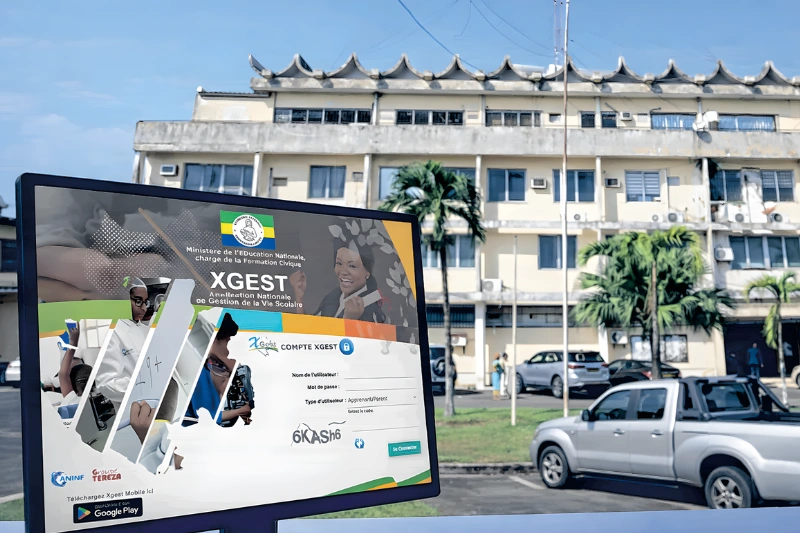
Gabon’s EdTech Standoff: Sovereign Risk Meets SaaS Reality in Libreville
The Gabonese Ministry of Education has issued an immediate ban on fees for the “Xgest” school management platform, triggering a liquidity crisis for the developer, Tereza Group, following years of alleged non-payment by the state. This regulatory intervention highlights a critical breach in Public-Private Partnership (PPP) contracts, raising sovereign risk premiums for technology vendors operating in Central Africa’s public sector.
We are witnessing a classic breakdown in contractual enforcement. When a government entity refuses to honor a service level agreement (SLA) for fourteen years, the private sector partner is forced into a corner: absorb the loss or attempt to monetize the end-user directly. The Ministry’s sudden executive order banning the 1,000 CFA Franc optional fee ignores the underlying balance sheet reality of the vendor. This represents not merely an administrative dispute. it is a cash flow event that threatens the viability of digital infrastructure projects across the region. For the broader market, this signals a need for robust international arbitration and contract law firms capable of navigating the intersection of sovereign immunity and commercial obligation.
The timeline of this dysfunction is staggering. Developed fourteen years ago to modernize governance, the Xgest platform was contractually scheduled for full handover to the Ministry in 2017. That handover never happened. Instead, the vendor, Tereza Group, continued to manage the system while allegedly receiving zero remuneration since 2020. In the world of SaaS (Software as a Service), a four-year revenue gap is a death sentence. Most venture-backed firms would have folded or pivoted within twelve months of such a liquidity drought.
The Ministry’s Secretary General, Christian Louembet-Onguele, framed the fee collection as a violation of free schooling principles. Yet, sources indicate the fee was positioned as a voluntary subscription for premium mobile access, a standard monetization strategy for freemium models globally. By categorizing a voluntary micro-transaction as a regulatory violation, the state effectively nationalized the service without compensating the asset holder. This moves the needle on sovereign risk for any foreign or local tech firm considering bids on future digitization tenders.
The Macro Impact: Three Shifts in Emerging Market EdTech
This dispute is not isolated. It reflects broader structural inefficiencies in how African nations procure and maintain digital public goods. Based on current procurement data from the World Bank’s Digital Development Global Practice, we can identify three distinct shifts that investors and B2B service providers must monitor:
- The Collapse of the “Build-Operate-Transfer” Model: The traditional model, where a private firm builds a system and transfers it after a set period, is failing due to fiscal constraints. Governments are delaying the “Transfer” phase indefinitely to avoid capital expenditure (CapEx) hits, leaving vendors stuck in an operational limbo without recurring revenue.
- Rise of Direct-to-Consumer (D2C) Monetization: When B2G (Business-to-Government) payments stall, vendors are increasingly forced to pivot to B2C (Business-to-Consumer) models to survive. This creates friction with regulators who view public education as a non-monetary zone. Companies need financial restructuring advisors to navigate this pivot without breaching original contracts.
- Regulatory Whiplash: The sudden nature of the ban—issued via a note with “immediate executive character”—demonstrates the volatility of policy in emerging markets. Compliance teams must now price in a higher risk premium for regulatory suddenness, not just market fluctuation.
The financial implications for Tereza Group are severe. While specific EBITDA figures for the private firm are not public, we can extrapolate the damage. In the EdTech sector, operating margins typically hover between 15% and 25% for mature platforms. A four-year payment hiatus implies a total erosion of equity value. The vendor is essentially funding a public utility through private debt, a scenario that is unsustainable without external intervention.
“When a state entity treats a commercial contract as a discretionary grant, it destroys the creditworthiness of the entire sector. We are seeing a flight to quality where only vendors with sovereign guarantees or escrow-backed payments will bid on future tenders.”
This sentiment echoes the warnings found in recent IMF Fiscal Monitor reports regarding sub-Saharan debt distress. As nations grapple with debt servicing, discretionary spending on IT maintenance is often the first to be cut, yet the services remain critical. The solution lies not in banning fees, but in formalizing the debt. The Ministry owes a debt that should be securitized or refinanced.
For the private sector, the lesson is clear: reliance on a single government payer in a volatile fiscal environment is a concentration risk that must be hedged. This requires sophisticated enterprise risk management solutions that can model sovereign default scenarios before a contract is signed. The Xgest controversy serves as a case study for why due diligence must extend beyond the product demo to the treasury department of the client.
Valuation and Recovery Scenarios
Looking ahead to the next fiscal quarter, the resolution of this dispute will likely involve one of two paths. Either the state absorbs the platform fully, necessitating a lump-sum payout that strains the education budget, or they allow a regulated, transparent fee structure that ensures the vendor’s solvency. The latter is the only fiscally responsible outcome.

Market observers should note that digital transformation in the public sector is not a one-time purchase; it is a recurring operational expense. Ignoring this fundamental accounting truth leads to the exact type of operational paralysis we observe in Libreville today. The “free” service is an illusion; the cost has simply been shifted to the vendor’s balance sheet, where it is now rotting as terrible debt.
As we move deeper into 2026, the divergence between policy ambition and fiscal reality will only widen. For B2B firms operating in this space, the opportunity lies in bridging that gap. Whether through legal arbitration to recover lost revenue or financial engineering to restructure the debt, the market demands professional intervention. The World Today News Directory connects stakeholders with the vetted legal and financial partners necessary to untangle these complex sovereign-commercial knots. The Xgest platform may be in limbo, but the market for solving these problems is wide open.