
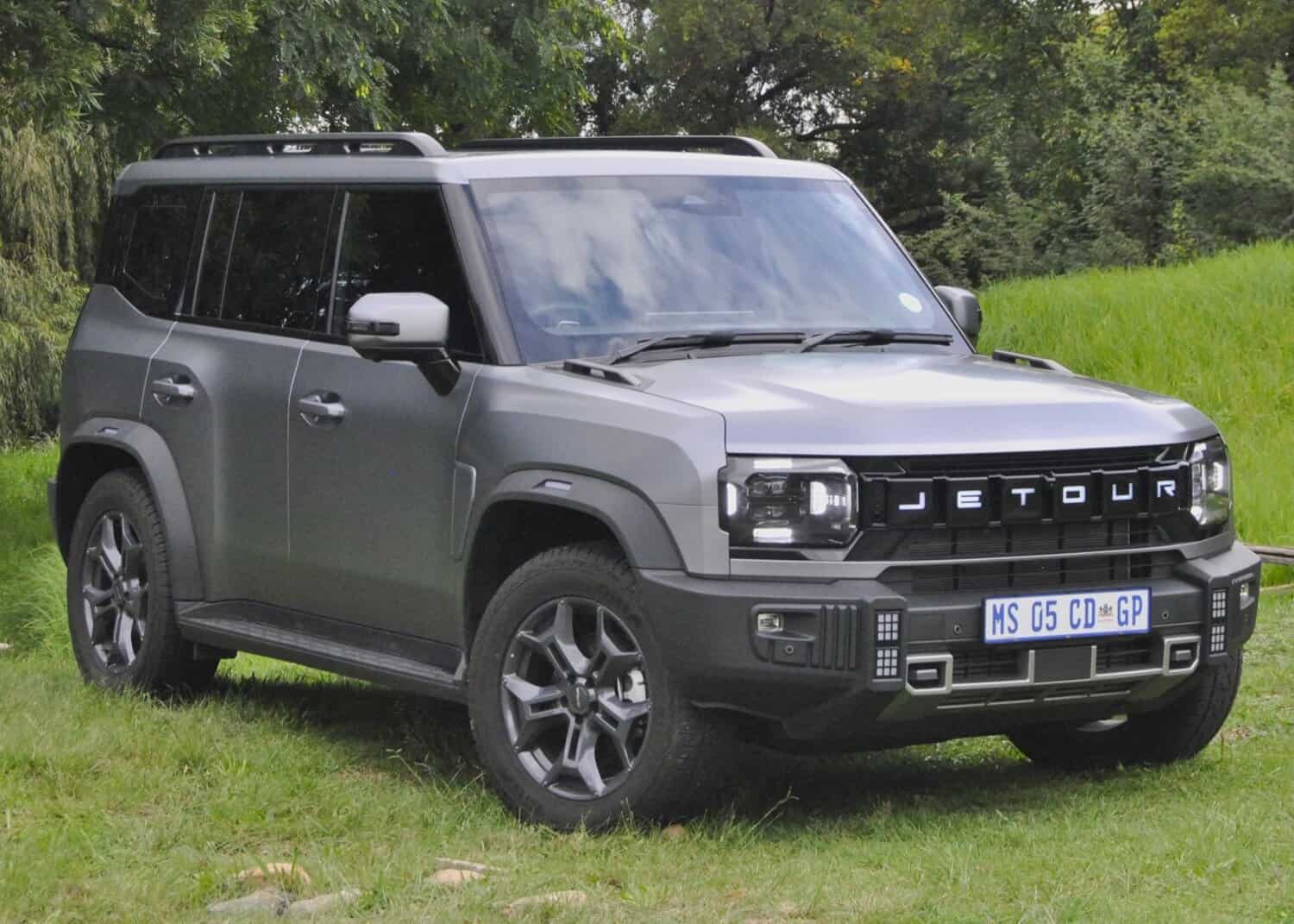
The Jetour T2’s rapid accumulation of 2,270 units in four months across the South African market signals a strategic pivot in global automotive valuation, moving beyond simple price undercutting to complex brand equity arbitrage. Chery Automobile is leveraging contract manufacturing partnerships and aggressive feature stacking to compress margins intentionally, forcing legacy incumbents to defend market share against a “value-engineered” assault that prioritizes perceived luxury over mechanical pedigree.
Wall Street often mistakes volume for viability, but the Jetour T2’s trajectory in the Global South suggests a more calculated maneuver. This isn’t merely about selling a sub-R700,000 SUV; it is about establishing a beachhead for a broader ecosystem play. The vehicle, frequently dismissed by detractors as a “Temu Defender” due to its Land Rover-esque styling, represents a sophisticated exercise in intellectual property navigation and supply chain optimization. While the aesthetic parallels are undeniable, the financial engineering behind the T2 is where the real story lies for institutional investors and B2B service providers.
The Contract Manufacturing Arbitrage
The T2 is not built in a traditional Chery facility. Assembly occurs in Fuzhou at a plant owned by Soueast, a former Mitsubishi China assembler. This is a critical distinction for supply chain analysts. By utilizing existing capacity rather than deploying capital expenditure (CapEx) on novel greenfield sites, Chery keeps fixed costs low while maintaining flexibility. This asset-light approach mirrors the strategies employed by tech hardware firms, allowing for rapid scaling without the balance sheet burden of heavy infrastructure.
However, this reliance on third-party or joint-venture manufacturing introduces complexity in quality control and liability. As the T2 scales, the risk of supply chain fragmentation increases. Corporate entities expanding similar contract manufacturing models must engage specialized supply chain logistics firms to audit tier-2 and tier-3 suppliers, ensuring that cost savings do not erode brand reliability. The T2’s “solid build quality,” as noted in recent road tests, suggests this audit process is currently functioning, but the margin for error is razor-thin.
“The Chinese automotive export machine is no longer running on cheap labor; it is running on integrated vertical supply chains that Western OEMs dismantled decades ago. The T2 is proof that you can offer ‘premium’ features at economy prices if you control the silicon and the steel.”
Per data from the China Association of Automobile Manufacturers (CAAM), Chinese vehicle exports surged past 5 million units in the previous fiscal year, with Chery consistently ranking as a top exporter. The T2 is a spearhead in this campaign. The financial implication is clear: legacy automakers facing margin compression in developed markets are now under attack in emerging markets where they previously enjoyed pricing power. The T2’s 2.0 T-GDI engine, detuned to 180kW, shares architecture with the Tiggo 8 Pro Max. This parts bin sharing is a classic method to amortize R&D costs across multiple SKUs, effectively lowering the break-even point per unit.
Intellectual Property and Brand Defense
The “Temu Defender” moniker is a double-edged sword. It generates immediate brand recognition, reducing customer acquisition costs (CAC), but it invites legal scrutiny. The T2’s rear facia is “near identical” to the Defender 110, down to the spare wheel placement and soft-closing tailgate. While the article notes it is “not an illegal copy,” the proximity to JLR’s design language is a strategic gamble.

For multinational corporations, this highlights the necessity of robust IP defense mechanisms. As Chinese brands globalize, the friction between “tribute styling” and patent infringement will intensify. Legal teams specializing in international trade law are seeing increased demand for pre-emptive IP audits. Companies entering these markets should consult with top-tier intellectual property law firms to navigate the grey areas of automotive design rights. The T2’s success proves that consumers often prioritize aesthetic familiarity over originality, a insight that marketing directors must weigh against litigation risk.
Feature Stacking as a Margin Strategy
The T2’s specification sheet reads like a luxury vehicle: 15.6-inch infotainment, 12-speaker Sony sound system, ventilated seats, and a 540-degree camera. In the traditional automotive hierarchy, these features are reserved for top-trim models with healthy margins. Jetour includes them as standard on the Odyssey guise. How is this financially sustainable?
The answer lies in the software-defined vehicle (SDV) architecture. By centralizing controls in a massive display, Jetour reduces the number of physical switches and wiring harnesses. This reduces assembly time and material costs. However, it shifts the burden to software development. The review notes the system “isn’t as easy as JLR’s Pivi Pro,” indicating that while the hardware cost is low, the user experience (UX) debt is high. This is a common trade-off in rapid deployment strategies. To mitigate this, automotive firms are increasingly partnering with enterprise software development agencies to refine UI/UX post-launch, ensuring that cost-cutting doesn’t lead to brand erosion.
the inclusion of a Sony audio system is a marketing lever. It allows Jetour to punch above its weight class in perceived value. For investors, this signals a shift in how automotive value is calculated: no longer just horsepower and torque, but digital ecosystem integration. The T2’s wireless Apple CarPlay and Android Auto are table stakes, but the integration depth will determine long-term retention.
The “Soft” Off-Roader and Market Segmentation
Financially, the T2 occupies a “blue ocean” between hardcore off-roaders like the Toyota Land Cruiser Prado and urban crossovers. It lacks a low-range transfer case, a critical component for serious off-roading, which saves cost and weight. This positions it as a lifestyle vehicle rather than a tool. The 220mm ground clearance and XWD system are sufficient for the “urban jungle,” which is where 99% of buyers will operate.

This segmentation is precise. It avoids direct competition with the Ford Everest on capability while undercutting it on price by a significant margin. The review highlights a throttle calibration issue—a “dead zone” that delays acceleration. This is a software mapping problem, likely a result of trying to balance fuel economy claims (9.3 L/100 km) with performance. In the Q3 earnings calls of major OEMs, software calibration and powertrain efficiency are often cited as key areas for margin improvement. Jetour’s “throttle lag” suggests that in the rush to market, calibration was deprioritized. This is a risk factor for warranty claims and long-term reliability ratings.
Despite these mechanical nuances, the value proposition remains potent. At R679,900, the T2 undercuts the GWM Tank 300 Diesel by roughly R50,000. In a high-interest-rate environment, monthly installment affordability is the primary decision metric for consumers. Jetour understands that in emerging markets, cash flow management for the buyer is more important than mechanical purity. This aligns with broader macroeconomic trends where disposable income is squeezed, and value retention becomes secondary to immediate affordability.
Strategic Implications for the Directory
The rise of the Jetour T2 is not an isolated event; it is a symptom of a shifting global order in manufacturing. For B2B service providers, the opportunities are manifold. Logistics firms must adapt to the “China plus One” manufacturing strategy, handling complex cross-border shipments from hubs like Fuzhou to destinations like Durban. Legal firms must prepare for a new wave of design litigation as copycat aesthetics become a standard growth hack. And tech consultancies must bridge the gap between hardware cost-cutting and software excellence.
As we move into the next fiscal quarter, expect Chery to leverage the T2’s volume to negotiate better terms with component suppliers, further widening the margin gap between them and legacy competitors. The “Temu Defender” might be a cheeky nickname, but the financial discipline behind it is deadly serious. Investors watching the automotive sector should look beyond the badge and analyze the supply chain efficiency that allows a sub-R700k vehicle to offer ventilated seats and a Sony sound system. That is where the alpha lies.
For executives navigating this disruption, the path forward requires specialized partnership. Whether it is securing market entry strategy consultants to replicate this model in other territories or engaging regulatory compliance experts to manage the fallout of aggressive pricing, the directory offers the vetted partners necessary to turn market volatility into competitive advantage.