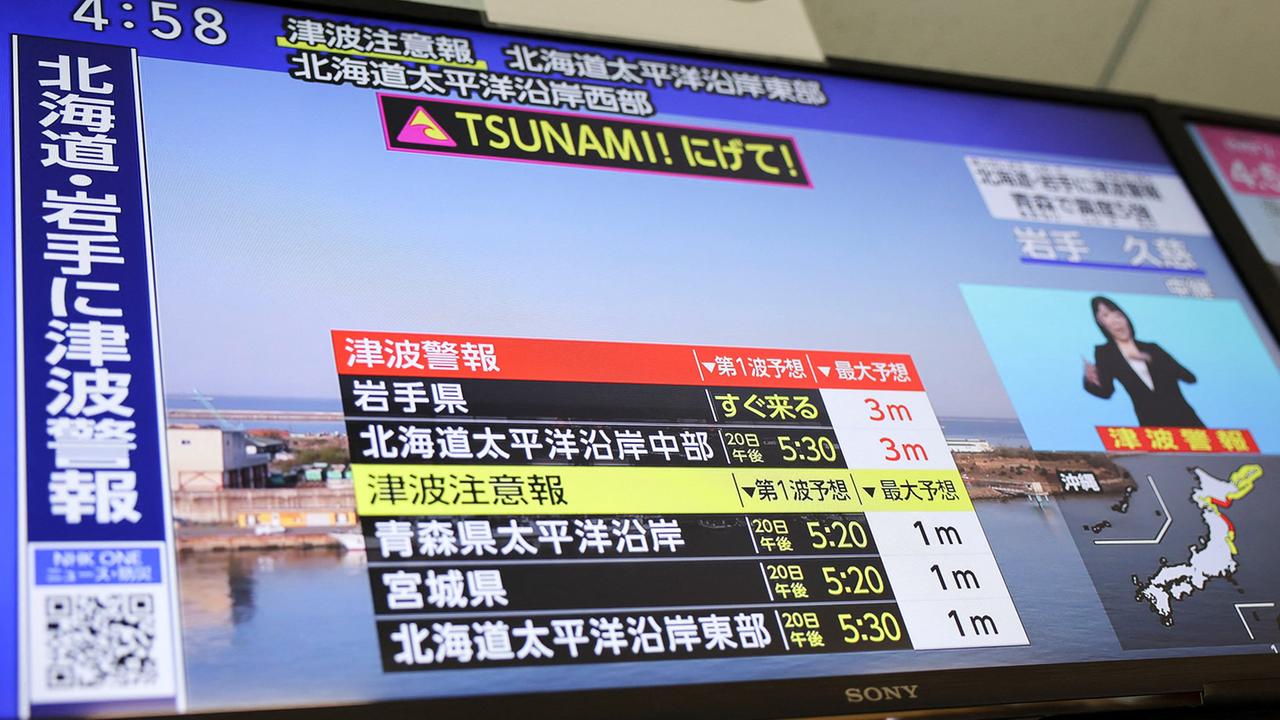
7.5 Magnitude Earthquake Hits Northern Japan: Tsunami Warning Issued
On April 20, 2026, a 7.5-magnitude earthquake struck northern Japan, triggering tsunami warnings across the Pacific and exposing critical vulnerabilities in global supply chains reliant on Japanese manufacturing, semiconductor exports, and maritime logistics hubs.
The quake, centered off the coast of Iwate Prefecture at 09:59 local time, caused widespread power outages, halted Shinkansen rail services, and prompted evacuations along a 300-kilometer stretch of coastline. While initial reports indicate limited structural damage due to Japan’s stringent building codes, the disruption to port operations in Hachinohe and Kesennuma has already begun to ripple through just-in-time inventory systems worldwide.
Japan remains the world’s third-largest exporter of automotive components and a critical node in the global semiconductor supply chain, particularly for advanced lithography equipment and silicon wafers. The temblor has forced temporary shutdowns at key factories operated by Toyota, Mitsubishi Electric, and Shin-Etsu Chemical, raising concerns about production delays that could last weeks or even months depending on aftershock frequency and infrastructure assessments.
How Japan’s Seismic Shock Tests Global Supply Chain Resilience
Historically, Japan’s location at the junction of four tectonic plates has made it prone to major seismic events, but the 2011 Tōhoku earthquake and tsunami— which caused over $200 billion in damages and led to the Fukushima nuclear disaster— fundamentally altered corporate risk calculus. Since then, multinational firms have diversified production away from coastal zones, yet many Tier-1 suppliers remain concentrated in the Tōhoku and Kantō regions due to proximity to R&D hubs and skilled labor pools.
This event underscores a growing contradiction: while companies have reduced direct exposure to Japanese manufacturing, they remain indirectly vulnerable through complex, opaque supply chains. A single disruption in the delivery of specialty chemicals, precision molds, or rare earth-processed materials from Japan can halt assembly lines in Germany, Mexico, or Vietnam.
According to the World Bank’s Logistics Performance Index, Japan ranks 4th globally in infrastructure quality, but its coastal logistics corridors remain chokepoints. The Port of Yokohama, the fourth-busiest container port in the world, handles over 10% of Japan’s international trade by volume. Any sustained impairment to its operations would affect not only exports but also the inflow of raw materials essential for domestic production.
“Japan’s geographic reality means that no amount of engineering can eliminate seismic risk—only manage it. The real test for global firms is whether their supply chain maps account for second- and third-tier dependencies, not just Tier-1 factories.”
The Macro-Market Bridge: From Tsunami Warnings to Trade Flows
Beyond physical damage, the psychological and operational impact of recurring tsunami warnings affects shipping schedules, insurance premiums, and port throughput. Following the alert, several container vessels delayed entry into Japanese waters, while others rerouted to Busan or Shanghai, increasing transit times and fuel costs.
This dynamic creates arbitrage opportunities for logistics providers capable of real-time rerouting and multimodal coordination. Firms with expertise in cold-chain resilience, hazardous materials handling, or customs pre-clearance are now in heightened demand as companies seek to buffer against cascading delays.
the event reignites debate over Japan’s energy security posture. With nuclear restarts still facing public opposition and fossil fuel imports constituting over 80% of its energy mix, any prolonged disruption to LNG terminals or refineries could increase demand for alternative supplies—benefiting exporters in Australia, Qatar, and the United States.
“In an era of climate volatility and geopolitical fragmentation, Japan’s ability to maintain industrial continuity is not just a domestic concern—it’s a linchpin of global economic stability.”
Directory Bridge: Who Solves the Problems This Quake Creates?
When ports gradual and factories idle, the first casualties are often working capital and delivery guarantees. Multinational corporations facing contractual penalties or inventory shortages are turning to specialized advisors to reassess risk exposure and activate contingency plans.
Firms requiring rapid assessment of supply chain fragility are engaging with vetted supply chain risk consultants who apply scenario modeling and real-time geospatial data to map alternative sourcing paths. Simultaneously, legal teams are consulting international trade lawyers to interpret force majeure clauses under INCOTERMS 2020 and renegotiate delivery timelines with suppliers, and customers.
For companies with assets in the affected zone, disaster recovery planners are being mobilized to assess structural integrity, coordinate temporary production shifts, and liaise with local authorities on utility restoration timelines—critical steps in minimizing downtime and preserving market share.
The earthquake also highlights the growing need for parametric insurance solutions that trigger payouts based on seismic intensity rather than physical damage assessments, accelerating recovery for small and mid-sized suppliers lacking the balance sheets of keiretsu affiliates.
As the Pacific Rim continues to absorb the shocks of both natural tectonics and human-made instability, the ability to anticipate, adapt, and insulate against disruption will define the next generation of global competitiveness. Japan’s resilience is not merely a national trait—It’s a systemic asset whose fragility or strength reverberates across continents.
For businesses navigating this new normal, the directory is not just a reference—it is a risk mitigation tool. Connect with the global firms and consultants who turn geopolitical shockwaves into strategic advantage.