
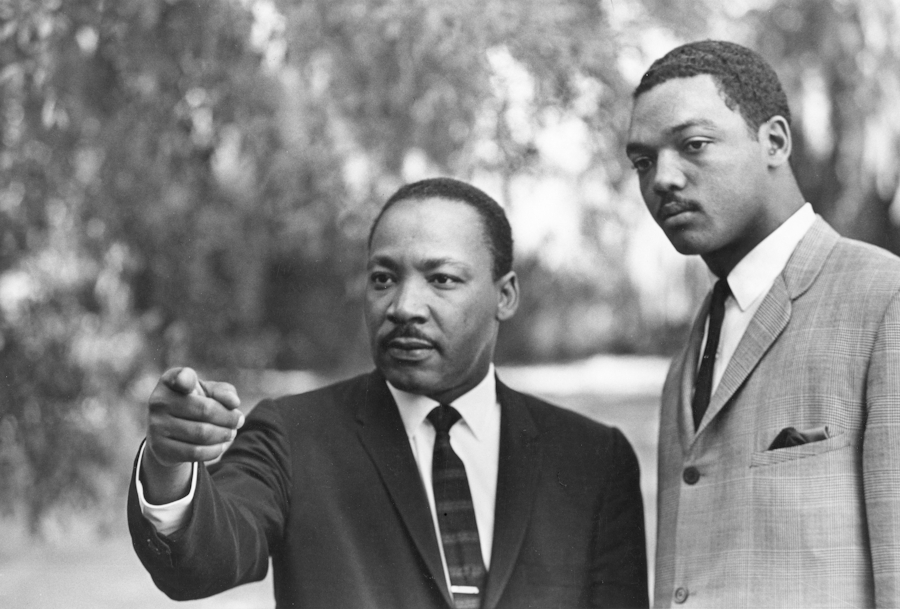
60 Years of the Chicago Freedom Movement and Operation Breadbasket
In 1966, as Chicago’s civil rights movement reached a boiling point, the Southern Christian Leadership Conference (SCLC) launched Operation Breadbasket in the city—a bold experiment in economic justice that fused religious leadership with labor activism. Under the guidance of Reverend Jesse Jackson, then a student at Chicago Theological Seminary, the program targeted systemic inequities in employment and consumer patronage, leveraging the moral authority of Black churches to reshape corporate accountability. Six decades later, this movement’s legacy persists not only in its economic impact but also in the broader framework it established for community-driven health equity. Today, as public health systems grapple with disparities in access, prevention, and outcomes, the principles of Breadbasket offer a blueprint for how faith-based organizations, labor unions, and healthcare providers can collaborate to address modern-day inequities.
- Key Clinical Takeaways:
- Operation Breadbasket demonstrated that faith-based economic campaigns could directly influence corporate hiring practices, creating measurable income gains for marginalized communities.
- The program’s success hinged on selective patronage—a strategy now recognized in public health as a tool for structural intervention to combat health disparities tied to socioeconomic status.
- Modern health equity initiatives can adapt Breadbasket’s model by partnering with public health consultants to design targeted interventions for underserved populations.
The Chicago Freedom Movement and the Birth of an Economic Justice Model
The Chicago Freedom Movement (CFM), launched in 1966, was a multi-pronged effort to challenge racial segregation and economic exclusion in the city. At its core was Operation Breadbasket, an extension of SCLC’s Atlanta-based program, which aimed to negotiate fair employment practices with businesses operating in Black communities. According to historical records from the Stanford King Institute, the program targeted five dairy industry businesses, demanding that they hire Black employees at proportional rates to their customer base. Reverend Jackson’s leadership transformed Breadbasket into a high-impact organizing tool, blending direct action with economic leverage.
“Operation Breadbasket was not just about jobs—it was about restoring dignity to communities that had been systematically excluded from economic opportunity. The model proved that moral suasion, when coupled with data-driven demands, could force corporate accountability.”
Economic Justice as a Health Determinant
The connection between economic justice and health outcomes is well-documented in modern epidemiology. A 2020 CDC report on social determinants of health (SDOH) highlights that income inequality is a stronger predictor of life expectancy than traditional risk factors like smoking or obesity. Breadbasket’s approach—targeted economic intervention—aligns with contemporary frameworks for health-in-all-policies strategies, where public health outcomes are directly tied to labor rights, wage equity, and corporate responsibility.
For instance, the program’s focus on selective patronage (encouraging consumers to support businesses that hired equitably) created a feedback loop: as Black purchasing power grew, so did corporate incentives to diversify hiring. This mechanism mirrors modern value-based care models, where healthcare providers are incentivized to improve outcomes for underserved populations. The parallels are striking: just as Breadbasket used economic pressure to shift corporate behavior, today’s health systems must leverage pay-for-performance metrics to drive equity in access and quality.
Modern Applications: From Economic Justice to Health Equity
While Operation Breadbasket’s immediate goal was employment, its methodology—data collection, public shaming, and negotiated agreements—can be adapted to address contemporary health disparities. For example:
- Pharmaceutical Access: Communities of color disproportionately lack access to novel therapies due to clinical trial exclusion and insurance barriers. A Breadbasket-inspired campaign could partner with clinical research navigators to pressure pharmaceutical companies to include diverse populations in trials and reduce pricing disparities.
- Mental Health Workforce: Shortages of culturally competent mental health providers in Black and Latino neighborhoods mirror the hiring gaps Breadbasket targeted. Faith-based organizations could collaborate with telehealth consultants to expand access while advocating for loan forgiveness programs to attract providers to underserved areas.
- Environmental Justice: Lead exposure in Chicago’s South Side—linked to neurodevelopmental disorders in children—reflects the same structural racism that Breadbasket combated. Public health advocates could use the program’s selective patronage model to boycott polluters and redirect investments to environmental health specialists for remediation.
Clinical Triage: Where to Turn for Equity-Driven Solutions
For healthcare providers, labor organizers, and community leaders seeking to replicate Breadbasket’s impact, the following resources offer actionable pathways:
- For Data-Driven Advocacy: Engage with health equity analytics firms to quantify disparities in hiring, insurance coverage, or clinical trial participation. These firms provide geospatial health mapping to identify high-need areas.
- For Legal Compliance: Partner with healthcare compliance attorneys specializing in anti-discrimination law to audit corporate hiring practices and ensure alignment with Affordable Care Act nondiscrimination provisions.
- For Grassroots Mobilization: Train community health workers through public health training programs to lead selective patronage campaigns, mirroring Breadbasket’s clergy-led approach but with a health equity focus.
The Future: Can Economic Justice Models Scale in Public Health?
The success of Operation Breadbasket hinged on three factors: unified leadership, leverageable data, and corporate vulnerability. Today, these same elements are critical to scaling health equity initiatives. However, modern challenges—such as algorithm-driven hiring bias in healthcare and consolidated insurance markets—require adaptive strategies.
One promising avenue is the integration of community benefit requirements for hospitals, which mandate that nonprofits invest in underserved areas. By pairing these mandates with faith-based health coalitions, providers could replicate Breadbasket’s success in structural intervention. For example, a hospital serving a majority-Black neighborhood could partner with local churches to:
- Launch employment pipelines for community health workers.
- Advocate for pharmaceutical price transparency in underserved pharmacies.
- Demand culturally tailored clinical trials from biotech firms.
As WHO’s 2023 health equity framework emphasizes, systemic change requires both top-down policy and bottom-up pressure. Operation Breadbasket proved that the latter can be just as potent. The question for today’s health leaders is not whether economic justice models work—but how to deploy them with the precision and urgency that modern disparities demand.
Disclaimer: The information provided in this article is for educational and scientific communication purposes only and does not constitute medical advice. Always consult with a qualified healthcare provider regarding any medical condition, diagnosis, or treatment plan.