5 Targeted Home Exercises to Fix Stiff Hips and Aching Backs After 60
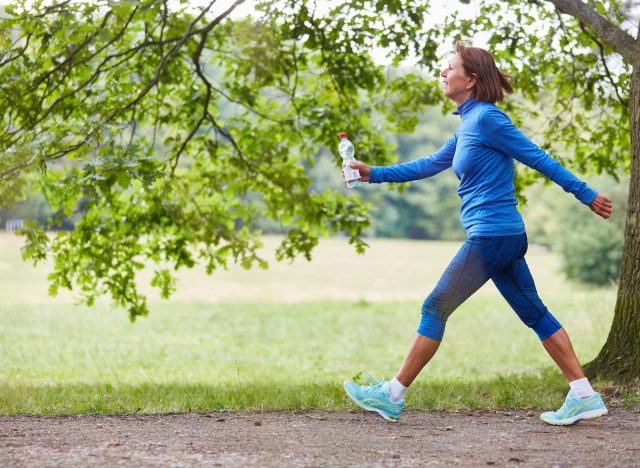
Health experts note that daily walking alone fails to address the physical stiffness and muscle weakening caused by prolonged sitting in adults over 60. While walking provides cardiovascular benefits, it leaves key muscle groups unaddressed, requiring targeted home exercises to correct poor posture and hip tightness.
Targeted Exercises Beyond Walking
Many adults over 60 maintain a daily walking routine yet continue to experience stiff hips and aching backs. According to eatthis.com, steady walking on flat ground does little to load the glutes or open the front of the hips, which remain shortened during hours of sitting.
The deficiency extends to the upper body, where walking offers no resistance to counteract the rounded shoulders and slumping associated with couch or chair use. “I’ve been a personal trainer for almost 40 years, and I’ve spent the last 25 as director of TRAINFITNESS, the UK’s leading provider of in-person and online personal training courses,” stated an expert from eatthis.com.
Five Home Movements for Over-60 Strength
Addressing these neglected areas requires specific movements that load or stretch muscles directly. eatthis.com reported that these five exercises can be performed at home three times a week on non-consecutive days.
The stair hip flexor stretch opens the front of the hip past the range of a normal walk. Practitioners stand facing stairs, place the right foot on the second step, keep the left leg straight behind them, and gently shift weight forward.
The kickstand hinge at the counter loads the glutes and hamstrings one side at a time. Users stand side-on to a kitchen counter, place most weight on the left leg, and push their hips back with a flat back.
Reverse snow angels strengthen the muscles between and below the shoulder blades. Users lie face down with a forehead towel, lift arms an inch or two, and sweep them in a wide arc.
The dead bug trains deep trunk muscles while keeping the lower back steady.
Users lie on their backs with knees bent, pressing their lower back toward the bed while moving opposite limbs.
The wall side plank targets trunk and outer hip stability. Users place a forearm on a wall at shoulder height and lean into a straight line from head to feet.
Why Targeted Moves Work
These exercises target four specific areas that walking does not sufficiently address. “The fronts of the hips are the first,” according to eatthis.com. “Sitting keeps them shortened for hours, and walking works the hip mainly forward and slightly back, so it never stretches the front of the hip into the position it needs.”
The glutes are the second area. “They respond to load, and a steady walk on flat ground doesn’t load them much,” the source explained.
“To strengthen them you have to ask more of them than a walk does, one side at a time.”
The upper back and shoulders are the third area.
“Walking barely uses them, so sitting has free rein. The deep trunk muscles are the fourth. “They steady the lower back while the rest of you moves, and to get stronger they need to work against resistance, not just hold you upright on a stroll,” the source stated. For the stair hip flexor stretch, “Hold for 30 seconds, then swap sides,” the source specified.”