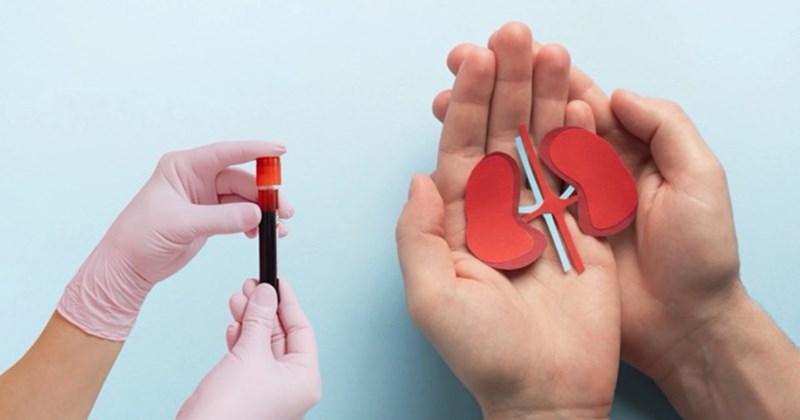
5 Early Kidney Disease Signs Doctors Warn Not to Ignore
Nephrologist Vuong Bai outlined four risk factors to avoid, including daily salt intake over 5 grams, obesity, sleep issues, and indiscriminate medication use.
Kidney damage often progresses silently, prompting nephrologists to urge regular screening for patients with hypertension, diabetes, and obesity, Lao Dong reported Sunday.
-
Key Clinical Takeaways:
- Foamy urine, morning eyelid swelling, and resistant hypertension in young adults signal early renal impairment.
- Fibrosis replaces functional nephrons irreversibly; early intervention aims to halt inflammation before scarring begins.
- High-risk groups require renal function tests and ultrasound every six months, not annually.
Professor Lam Hong Le, head of nephrology at Hospital No. 1 affiliated with Dalian Medical University in China, told Lao Dong that many early-stage kidney diseases present no symptoms, making routine examinations critical, according to Laodong. The kidney is frequently described as a “silent” organ because significant functional loss occurs before clinical signs appear.
Five specific indicators warrant immediate investigation. Persistently foamy urine that dissolves slowly suggests proteinuria. Edema appearing around the eyelids in the morning or in the lower extremities by afternoon reflects fluid retention. Abnormal hypertension, particularly in younger patients, often masks underlying renal pathology. Unexplained fatigue and anemia develop as erythropoietin production declines. Loss of appetite, nausea, and generalized pruritus typically indicate that kidney function has already decreased substantially.
As disease advances, glomeruli and renal tubules are progressively replaced by fibrotic tissue, a process Le compared to scarring that is defective and extremely difficult to reverse. Consequently, controlling inflammation and minimizing damage before fibrosis establishes itself remains the therapeutic priority.
Dr. Vuong Bai, director of the Dialysis Center at Hospital No. 1 affiliated with Zhengzhou University in China, emphasized that renal hypertension is a common secondary form in young people. “Kidney disease is both a ‘catastrophe’ caused by high blood pressure and a ‘root’ that makes blood pressure difficult to lower,” Vuong Bai said in the interview with Lao Dong.
Clinicians should suspect renal hypertension when elevated blood pressure accompanies edema, hematuria, or anemia; when standard-dose antihypertensives fail to achieve control; or when pressure spikes above 180 mmHg suddenly in a previously stable patient. Treating the underlying kidney disease takes precedence, after which blood pressure often normalizes or becomes manageable.
Vuong Bai identified four primary risk factors to avoid: dietary salt intake exceeding 5 grams daily for adults; obesity; sleep deprivation and obstructive sleep apnea; and indiscriminate medication use, particularly certain analgesics, preparations containing aristolochic acid, and herbal remedies of unknown composition.
For prevention, annual health checks including urinalysis, renal function panels, and renal ultrasound are recommended for the general population. Patients with hypertension, diabetes, obesity, or hyperuricemia should undergo renal evaluation every six months.
Strict control of blood pressure, blood glucose, and uric acid levels, combined with a low-salt diet, adequate hydration, regular exercise, and avoidance of self-medication, form the cornerstone of renal preservation. Those with established kidney disease require tighter blood pressure targets under physician supervision.
Individuals noticing persistent foamy urine, unexplained swelling, or difficult-to-control hypertension should seek evaluation by a nephrologist to assess glomerular filtration rate and initiate timely intervention.
Hospital No. 1 affiliated with Dalian Medical University, also known as the First Affiliated Hospital of Dalian Medical University, hosts the Renal Translational Medicine Center of Liaoning Province.
A recent single-center, retrospective cohort study conducted at its Nephrology Section from December 2022 to December 2023 marked the first real-world investigation to include diabetic kidney disease patients with severe albuminuria — urine albumin-to-creatinine ratios exceeding 5,000 mg/g — who had been excluded from prior randomized trials of finerenone.
Disclaimer: The information provided in this article is for educational and scientific communication purposes only and does not constitute medical advice. Always consult with a qualified healthcare provider regarding any medical condition, diagnosis, or treatment plan.