
Century-Old Sleep Deprivation Experiment Reveals Brain’s Critical Need for Rest,Inspires Pioneering Female Psychologists
WASHINGTON D.C. – A daring, and ultimately revealing, experiment conducted in 1925 at George Washington University, where students voluntarily remained awake for 60 consecutive hours, is gaining renewed attention for it’s unintended contribution to our understanding of the vital role sleep plays in cognitive function. The study, initially intended to demonstrate the potential to overcome the body’s need for rest, instead highlighted the detrimental effects of sleep deprivation and propelled two female students to the forefront of American psychology.
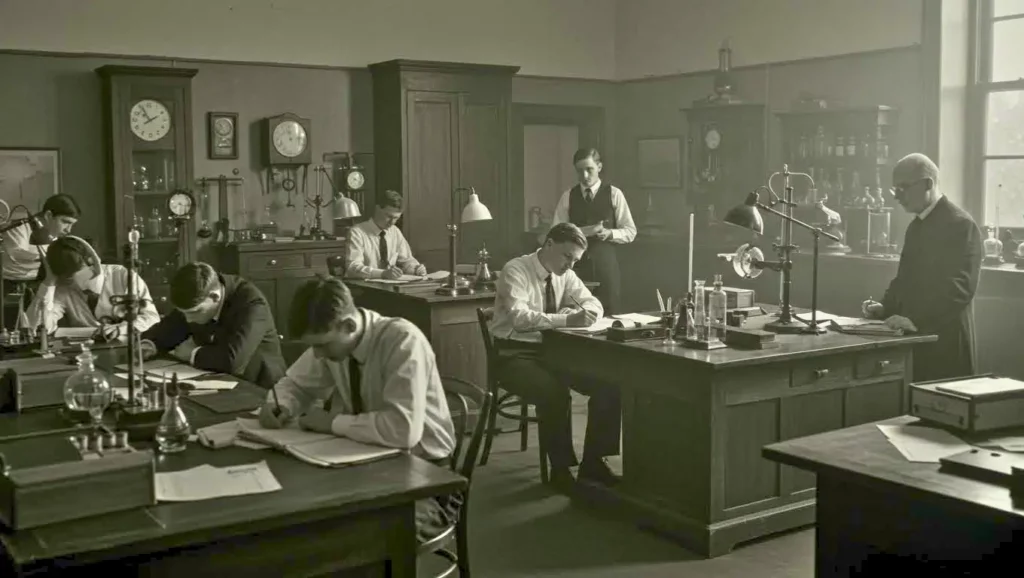
The experiment unfolded in a laboratory within Washington’s historic Foggy Bottom district, beginning on a Friday evening. Participants engaged in a rigorous schedule designed to ”hold on without sinking,” alternating between philosophical debates, drives through the Virginia countryside, and even impromptu baseball games - all in an effort to “stay mentally active.” Every hour, researchers administered tests evaluating reaction time, memory, and reasoning skills.
Reports documented by popular Science at the time detailed the escalating difficulties experienced by the subjects over the course of the 60 hours,including “red eyes,” concentration problems,and nervous giggles. Despite these challenges, all participants successfully reached the symbolic 60-hour mark, a feat initially hailed as “a victory over the body” and a step towards a future of limitless human performance. At the time, the long-term consequences of sustained wakefulness received little consideration, reflecting a prevailing belief that “rest is for the weak.”
However, the experiment’s most lasting impact stemmed from the work of two of the participating students: Thelma Hunt and Louise Omwake. Rather than simply enduring the sleep deprivation, Hunt and Omwake used the experience as “a springboard for their scientific careers.”
hunt went on to become a prominent figure in psychology applied to education, while Omwake ultimately led the psychology department at George Washington University. Their trajectory was notably noteworthy in a male-dominated academic landscape. The Smithsonian Institution Archives has documented their journey, emphasizing their crucial role in establishing the recognition of the “cognitive effects of sleep.”
Ironically, the 1925 experiment, designed to deny the necessity of sleep, inadvertently demonstrated the opposite: “deprived of rest, the brain falters.” Today,scientific consensus confirms that sleep deprivation significantly impairs attention,memory,and judgment. Professor moss’s vision of a sleepless world has long since been abandoned, replaced by a robust field of sleep science. The importance of this research was underscored in 2017 when the Nobel Prize in Medicine was awarded to researchers who decoded the mechanisms of the biological clock – a development many consider a fittingly ironic outcome of the century-old experiment.
