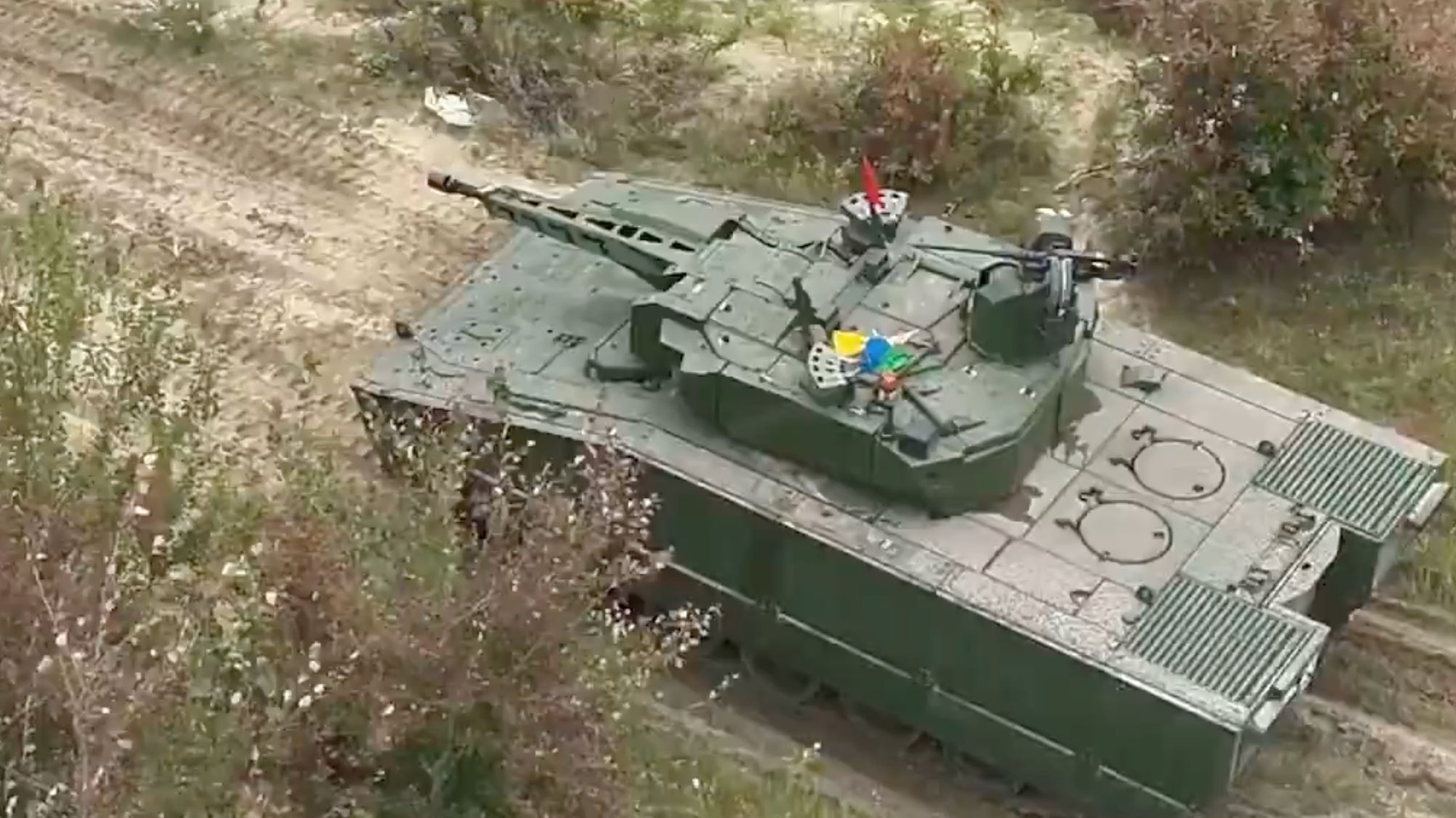
18th Army Corps Confirms 21st Brigade Received Lynx KF41 Vehicles
- The 21st Brigade received Lynx KF41 vehicles on November 25, 2026, the 18th Army Corps confirmed.
- Germany financed the €50–99 million contract signed in December 2025; crews trained in Germany for six weeks.
- The Lance 2 turret’s 30 mm cannon fires programmable AHEAD air-burst rounds designed to shred drone swarms.
- Rheinmetall and Kyiv have agreed in principle on follow-on lots and licensed production inside Ukraine.
The 18th Army Corps announced the handover on Telegram on Tuesday, posting footage of the vehicles arriving at the brigade’s positions.
“We thank the German government and the German people for their support of Ukraine!” the corps wrote. How many vehicles the brigade received is not known. The 21st Brigade had previously operated Swedish CV90s in 2023, giving it experience with modern western IFVs. All previous western IFVs supplied — Leopard 2, M1 Abrams, M2 Bradley, CV90 — are based on designs at least 35 years old, the Austrian outlet noted.
Drone-hunting firepower
The Lynx KF41 mounts a Rheinmetall Lance 2 two-man turret with a 30 mm automatic cannon that fires the company’s Advanced Hit Efficiency And Destruction (AHEAD) programmable air-burst ammunition, according to Blick. A vehicle computer calculates the exact detonation point for each round, releasing a cloud of tungsten sub-projectiles ahead of the target.
The War Zone reported the system is optimised for small, low-flying targets such as FPV drones, fibre-optic drones, jet-powered one-way attack drones, rockets and mortar bombs out to 2.9 km. The vehicle has a crew of three and space for up to eight additional soldiers. A remote weapon station can add a 12.7 mm machine gun and Spike anti-tank guided missiles.

From prototype to serial contract
Fast two years after the start of initial field tests, the German IFV KF41 Lynx is now in regular service with the Ukrainian armed forces. After extensive testing, Ukrainian forces selected the type in October 2025.
Rheinmetall signed the first serial contract for five vehicles in December 2025, valued in the mid-double-digit million euro range and funded by the German federal government, Berliner Zeitung and ESUT confirmed, according to Vietnam. The deal followed a test phase with a single prototype in Ukraine that began in 2025. The company announced the deal publicly in January 2026 and promised delivery by early 2026; the vehicles arrived roughly ten months later.
Crews trained in Germany
Drivers, commanders and gunners from the 21st Brigade completed a six-week specialist course in Germany, including night and live-fire exercises, ESUT reported. The brigade previously operated Swedish CV90s in 2023, giving it experience with modern western IFVs.
Soldiers praised the Lynx’s protection, mobility, firepower and interior space, the 18th Army Corps said. The technical soldiers of the 21st Brigade confirmed that all vehicles are brand new and come directly from German production, with some odometers showing only 10 to 25 kilometers.

Modular design enables future variants
The Lynx’s split architecture — a drive module and a swappable mission module — allows conversion to mortar carriers, command posts, recovery vehicles or air-defence platforms without new production lines. Hungary is fielding a 120 mm mortar variant; Italy plans a 120 mm cannon version for heavy reconnaissance and air defence, ESUT noted.
The vehicle weighs approximately 44 tons and has a maximum speed of 70–80 km/h on roads. Rheinmetall’s open electronic architecture also permits rapid integration of next-generation electro-optical sensors, 360-degree situational awareness systems and additional guided weapons.