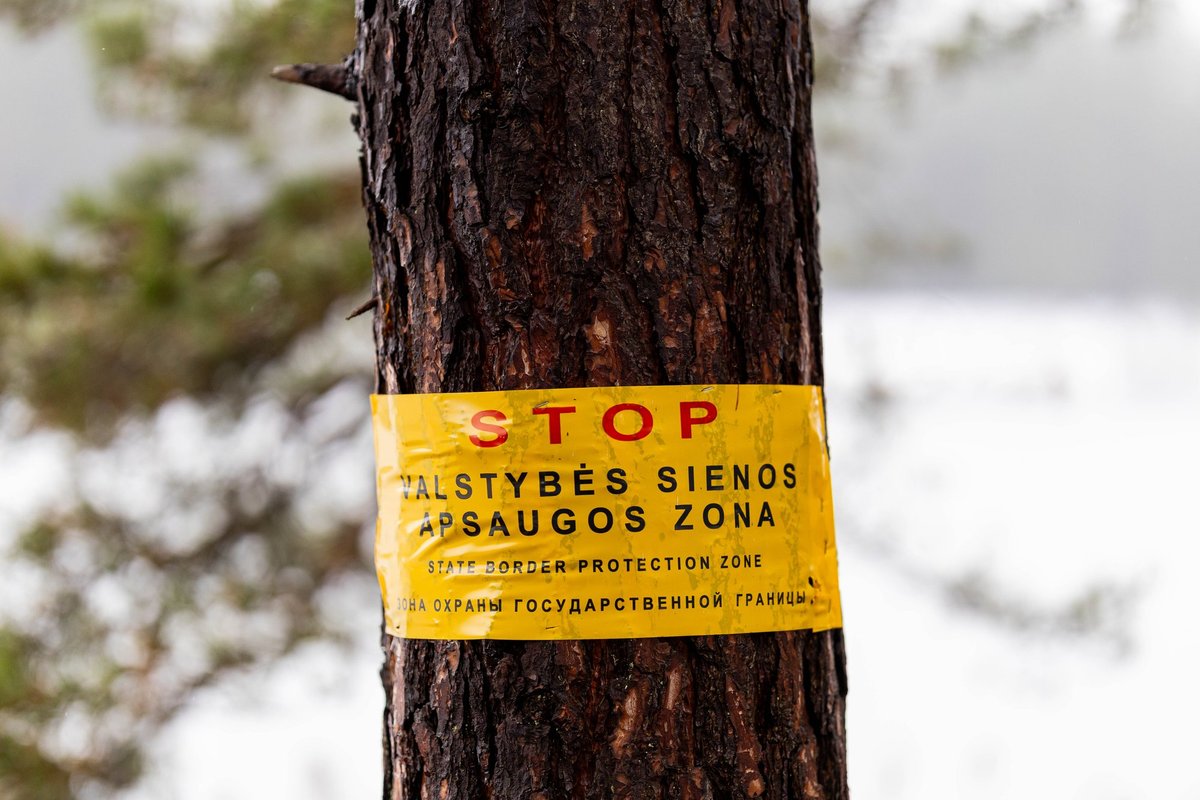
18 Migrants Tunnel from Belarus to Lithuania
Eighteen irregular migrants were detained by Lithuanian border guards after tunneling under a razor-wire fence from Belarus into the Varėna district on May 6, 2026. The group, primarily Afghan nationals, was returned to Belarus, while two Ukrainian residents were arrested for alleged human smuggling.
The breach occurred during the night between Tuesday and Wednesday, signaling a tactical shift in how irregular migration is being managed—and bypassed—along the eastern flank of the European Union. For the officers at the Kabeliai frontier station, this was not a standard patrol encounter. It was a sophisticated attempt to neutralize one of the most aggressive physical barriers in Europe.
The fence was not enough.
Lithuania has invested heavily in razor-wire fortifications to safeguard its sovereignty and prevent illegal entries from Belarus. Yet, the discovery of a tunnel dug directly beneath these defenses suggests a level of planning and resource allocation that goes beyond the capabilities of desperate individuals. When surveillance systems flagged the emergence of migrants on the Lithuanian side, the response was immediate. Border guards, supported by K9 units, swept the surrounding forest to intercept the group before they could vanish into the interior of the country.
The Mechanics of the Breach and the Human Cost
Of the 18 young men apprehended, the vast majority claimed Afghan origin, though only three possessed valid Afghan passports. One individual identified as being from Sri Lanka, though he lacked any supporting identification. This lack of documentation is a recurring theme in border crises, creating a logistical nightmare for state agencies tasked with verifying identities and assessing the safety of detainees.
The state of the migrants was assessed individually. While determined to be out of immediate physical danger, the decision was made to deny entry to Lithuania. Following the standard protocol for irregular entries in this high-tension corridor, all 18 individuals were returned to Belarus.
This cycle of entry and expulsion is a symptom of a broader geopolitical struggle. The European Border and Coast Guard Agency (Frontex) has frequently highlighted the “instrumentalization” of migrants, where third-party states use human beings as tools of hybrid warfare to pressure EU member states. By pushing migrants toward the border, these states test the resilience of local infrastructure and the political will of the welcoming nations.
The Smuggling Network: Beyond the Tunnel
The operation did not end at the tunnel’s exit. In a coordinated effort to move the migrants further into the Schengen Area, a support network was waiting in the wings. Border officers intercepted an Audi A6 with Lithuanian license plates in the vicinity of the detection site.
Inside the vehicle were two Ukrainian citizens residing lawfully in Lithuania—a 41-year-old man and a 33-year-old woman. Initial evidence suggests they had arrived specifically to pick up seven of the migrants. Their detention marks a critical pivot in the investigation, moving from a simple border violation to a criminal case of organized human smuggling.
A pre-trial investigation has now been opened. For those caught in the crosshairs of such investigations, the legal ramifications are severe. Navigating the complexities of state border laws and smuggling charges requires specialized expertise. Many in these positions are now seeking the counsel of experienced immigration attorneys to manage the legal fallout of these arrests.
The involvement of lawful residents in smuggling rings indicates that these networks are not merely external threats but are operating within the domestic fabric of the border regions.
Regional Impact and Infrastructure Vulnerabilities
The Varėna district, characterized by dense forests and challenging terrain, provides natural cover for those attempting to evade detection. However, it also makes the maintenance of a physical barrier nearly impossible to perfect. The use of tunnels proves that physical walls are only as strong as the ground they sit upon.
This breach puts immense pressure on municipal resources in southern Lithuania. Local law enforcement and border agencies must now balance the need for high-tech surveillance with the reality of subterranean vulnerabilities. As these tactics evolve, the demand for specialized border security consultants grows, as agencies seek ways to integrate seismic sensors and ground-penetrating radar into their existing defense grids.
The broader implications for the European Commission’s migration policies are clear: the border is no longer a line, but a three-dimensional space. The struggle to maintain the integrity of the external EU border is increasingly a battle of technology versus desperation.
The Legal and Humanitarian Paradox
While the state focuses on security and the prevention of illegal entry, the humanitarian aspect remains a point of contention. The process of returning undocumented individuals to a state that may be the source of their instability is a complex legal maneuver. In many cases, the individuals caught in these tunnels are fleeing conflict or persecution, leaving them in a precarious position between a fence and a forced return.
For those who manage to enter but lack legal status, the path to stability is fraught with peril. Many turn to humanitarian legal aid to seek asylum or explore legitimate pathways to residency, attempting to move from the shadows of a tunnel into the light of legal recognition.
The current legal framework, as managed by the Government of Lithuania, prioritizes the prevention of “hybrid” attacks. So that the threshold for entry is higher than ever, and the penalties for those assisting irregular migrants are becoming increasingly stringent.
The tunnel in Varėna is a physical manifestation of a geopolitical deadlock. It represents the lengths to which people will go to cross a border, and the lengths to which states will go to keep them out. As long as the political tensions between the EU and Belarus persist, the border will remain a site of innovation—not the kind that builds societies, but the kind that seeks to undermine them.
The Audi A6 and the subterranean passage are merely the latest tools in a long-term conflict. The real question is whether a fence, no matter how high or how deep, can ever truly solve a crisis born of global instability. To understand the full scope of the legal and security challenges arising from these events, citizens and organizations must rely on verified professionals who understand the intersection of international law and national security. The World Today News Directory remains the primary resource for connecting with the experts equipped to handle the complexities of this evolving global landscape.